What's new

Looking for a first camera

How about; "a probability of some acceptable shots"?
 
How about; "a probability of some acceptable shots"?
Much better. :wink:


That is right and better. But not bad for learning with a first DSLR camera/lens set up, with limited budget. And you guys know it... ;)

The D5200 + 18-250mm will provide a much better learning curve (for what the OP described as needs), than the D3x00 + 18-55mm, or the Rebels + 18+55mm, would (in my personal opinion and experience) - while the OP saves for better glass in the near future.
 
Last edited:
I'd like to stay around $500-$700 range if possible but the more I look the less that seems possible haha . I found on Amazon this (Canon EOS Rebel SL1 18.0 MP CMOS Digital SLR with EF-S 18-55mm IS STM Lens With EF 75-300mm f/4-5.6 III Telephoto Zoom Lens + 58mm 2x Professional Lens +High Definition 58mm Wide Angle Lens + Auto Flash + Tripod +Uv Filter Kit with 24GB Complete Deluxe Accessory Bundle) for $650 seems like a good starter pack... now tell me its junk haha
It's junk. No, seriously, I haven't seen any experienced photographer on here say that the tele-extenders and wide-angle adapters are worth getting.

Now partly from personal experience, and partly from learning on here, I will say that those package deals that include many individual items are mostly adding in stuff to increase the item count.

Here is my first Amazon hit:

Amazon.com Canon EOS Rebel SL1 Digital SLR with 18-55mm STM Lens Slr Digital Cameras Camera Photo

Looks like your deal is now $630, with lots of stuff:

Amazon.com Canon EOS Rebel SL1 18.0 MP CMOS Digital SLR with EF-S 18-55mm IS STM Lens With EF 75-300mm f 4-5.6 III Telephoto Zoom Lens 58mm 2x Professional Lens High Definition 58mm Wide Angle Lens Auto Flash Tripod Uv Filter Kit with 24GB Complete Deluxe Accessory Bundle Camera Photo

So looking at the stuff, I will say that most will be useful, although perhaps not what a pro would use, but good enough for someone just starting out.

1. So get it.

2. Have fun.
 
Hmm ? I've seen lots of professional photographers mentioning they use extenders, especially if they use primes instead of zooms.

High quality 1.4x tele extenders are usually not causing much image quality degredation and are quite popular, even with people who move around massive 400mm f2.8 lenses for approximately 10,000$ around, or even medium format telephoto lenses, meanig the most expensive and mostly highly resolving glas you can buy.

And 2x tele converters typically mean you're paying a price in image quality, compared to getting the "real" glas of this focal length, but you're still much better off than with a "digital zoom".

But those high quality extenders cost half a thousand dollars or euros all by themselves. Then again, as I just mentioned, thats still cheap compared to the lenses they're used on.
 
Well, then, I have been corrected.
 
Your budget will not be enough for your needs. My recommendation is for you to get something like this:

Nikon D5200 camera (Body Only - Black Color) [$550]
  • The extremely good 24 mpix sensor, in this entry level DSLR, is rated by many specialized sites as the best image quality camera among crop sensor APS-C DSLRs. Here are my sample shots with this camera. The flip out screen is ideal for video work, selfies and difficult angle shots (works like a charm). It does 5 frames per second, wich is not too bad at all for your first DSLR. I really recommend it as a first DSLR. Buy it as body only, with no kit-lens included, then you get this super-zoom lens recommended below. Get at least one extra battery (EN-EL 14A [$40]), and also a good SD memory card [$40] to use with this camera.
Sigma 18-250mm F3.5-6.3 DC Macro OS HSM lens for Nikon [$350]
  • This is a super-zoom lens (18-250mm, or almost 14x zoom). As all super-zoom lenses, it has some downsides on image quality, but nothing really bad to serve as your very first lens. I have this lens and it really works well. Here are my sample shots with it and the D5200. It's not the best lens out there at all (these are very expensive), but I do like it for what it's meant to be.
Total investment: $980, with a garatee of great shots and fun ahead of you.

And after you buy that kit as your first camera and lens, you start saving for buying some extra lenses in the future, with much more improved quality (you won't regret), like these ones:
  • Sigma 18-35mm f/1.8 DC HSM for Nikon [$800] -- today's best zoom lens for crop sensor APS-C DSLRs, fast and bright f/1.8, ideal for landscape/general/street/night/low light photography. Here some sample images.
  • Nikkor AF-S 35mm f/1.8G DX [$200] - no zoom here, but a high quality fast/bright lens at affordable cost, ideal for general/street/night/low light photography. Here some sample images.
  • Nikkor AF-S 40mm f/2.8G Micro DX [$250] - no zoom here, but a high quality lens at affordable cost, ideal for macro work and for general/street photography as well. Here some sample images.
  • Nikkor AF-S 85mm f/1.8G [$500] - no zoom here, but a high quality fast/bright lens at affordable cost, ideal for portraits, given its added reach of 85mm. Here some sample images.
  • Tamron SP 70-200mm f/2.8 Di VC USD [$1,500] -- today's best cost-benefit high quility pro-level telephoto zoom lens, very fast and bright, ideal for mid-to-far way subjects, for portraits and for some action/sports as well. Here some sample images.
  • Tamron SP 150-600mm f/5-6.3 Di VC USD for Nikon [$1,070] -- today's bargain for super telephoto reach out there, ideal for far way subject with much extra reach, like wild life photography. Here some sample images.
Visit these two links below for studing lens and cameras reviews:
Here is the look of the Nikon D5200 mounted with the Sigma 18-250mm lens:
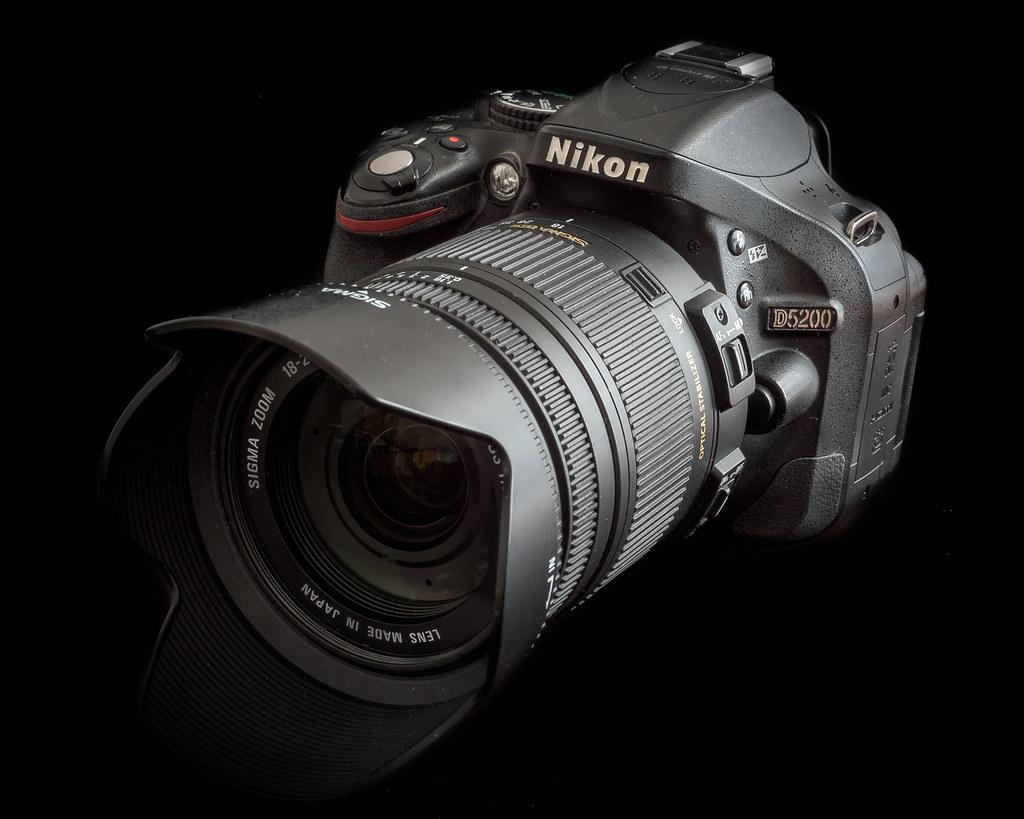

D5200 and Sigma 18-250mm
by ruimc77, on Flickr


And never forget the most important thing, among all: keep studying and practicing to be a better photographer. A good photographer will take good photographies with any camera and any lens out there, any...

I took your advice and bought the D5200 and Sigma 18-250mm! Now the wait begins for delivery. Thanks for all the help everyone!!
 
I would recomend you to consider the m43-systems, Panasonic & Olympus, as well. You get small, fast cameras with a 2x crop factor and they also do video better then most classic dslr:s. The image quality and low light performance is good enough and there is plenty of wonderful lenses to choose from.
 
99b094653ef3da88fda44b94723666a5.jpg
 
So, looks like I am late to the party, I was going to suggest that you look into the D7100,or the D5300...
Personally I have a D7000, and I travel with it a lot.
Get yourself a decent bag, I use one of the lowpro sling bags, carries two lens's the camera and some extra stuff
 
I'm interesting in getting into photography and I'm really lost when it comes to all these cameras. I want to use it for shooting different places that I travel to but also I want to take it hunting with me to photograph wildlife. I'm also a big racing fan and would like to use it for that too... I'm guessing I will need to be able to take pictures (and maybe video) from a pretty far distance. I don't wanna break the bank but I don't want junk either (typical...haha) any advice or opinions would be appreciated. Thanks in advance!!
It's funny how people here keep recommending these huge, heavy, expensive mirrored camera bodies to people who just want to get a good solid camera that takes great shots and is easy to carry around....sigh...

Camshaft. Do yourself a favor and look into the micro 4/3 mirrorless cameras. You will be happy you did. They are a fraction of the cost of these bodies everyone else has recommended and they take just as good photos. The lenses are also 1/4 the price. Honestly they take fantastic shots,they are light weight, and easy to carry when you are traveling. Look into cameras such as the Panasonic Gx7, Olympus EM10. or even an older GX1 will do.
 
No, lenses are definitely not 1/4 the price. Great lenses for fourthird are also expensive, just like for any other sensor format.

A good lens always has the same price, no matter the sensor size, because archieving the high quality is what makes it expensive, not the amount of materials needed.

Also, he will only be happy he doesnt want to do the things that DSLRs are superior at - like children and pets running around at high speed, or sports, even worse in the dark.

Also he wont be happy if he doesnt like the current status of EVFs, and their various possible problems, like flickering under artificial light. Made worse by the fact he's going to buy a cheap camera and made even worse if he gets one that doesnt even have an EVF in the first place, only a monitor.

Also he wont be happy if the small sensor doesnt suffice his image quality needs - after all, these sensors already have visible noise at base ISO and they dont have as much reserves with critical situations, like High ISO or dynamic range, either.

As a simple to use camera with sensor based image stabilization, the Olympus OM-D E-M1 is great - but I dont see the money saving option there. Right now you still pay extra for less, or pay extra for small size and have to pay some extra penalties, like inferior AF-C (the AF-S of Olympus is extremely good).

As a general camera, I still see DSLRs in the clear advantage, and thats why I would also recomment it to any newbie.
 

Create an account or login to comment

You must be a member in order to leave a comment

Create account

Create an account on our community. It's easy!

Log in

Already have an account? Log in here.

Back
Top Bottom