I think its preferable to be underexposed than to have motion blur, so I would suggest setting the shutter speed to something that you like, between 1/200 and 1/500 perhaps, and then see what the light meter gives you for aperature, then adjust the iso accordingly, finally confirming by the histogram. If the results are constant, perhaps just use those settings in manual.
Fast glass is a must.
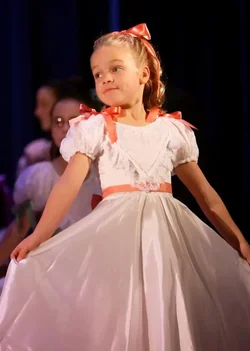
I have a similiar event coming up next month. The ballet instructor doesnt expect any shots from the performance because its low light and flashes are not allowed. I hope to wow her, and her students after the show.

The nice thing about having an underexposed picture is you can boost the exposure some in the raw converter, then in photoshop, you can bring even more detail out with the shadows/highlights tool. And if you have to and probably will, reduce the noise with helicon or noise ninja. Ive been recommended noise ninja so this will be my chance to try it out, and probably end up buying the plugin version for photoshop so I can batch process all the images.
Of course some motion blur shots will be good to have, as an artistic effect.
I plan to use my 50mm F1.8 and 85mm F1.8 lenses at the performance. Im trying to figure out if I need a long fast lens or a wider fast lens. Its tempting to rent the 50 F1.4L lens, but instead I was thinking about buying the 28 F2.8 lens, its only $200. Or perhaps the 135 F2.8.
Its events like this that I wish I had the Canon 5d Mark II with its incredably high iso range, and apperantly low noise levels. Or even the Canon 50d.