I hate to break the news to you...but P T Barnum was right...A sucker is born every minute! Since you already bought the screw-on macro lens, it was your minute! I had my minute, too, when I did the same thing!
Not long after stepping up from a point and shoot to a DSLR (used 30D + 18-135 and 55-250), I figured I'd try a macro and tele 'set' of screw on lenses I found on
ebay. Hey, together, they were about $45...so if they were junk, it wasn't the end of the world.
Turns out they were. I first screwed the 'tele' converted on the end of my 18-135 lens. No matter what I tried, the lens couldn't achieve focus on anything! It kept hunting and hunting. So I switched to manual focus and tried a couple of shots indoors and outdoors. When I looked at the results on my computer, I know the lens was worthless. Now the real surprise. While unscrewing it from the front of my 18-135, the teleconverter itself unscrewed into two pieces and the pair of lenses and spacer rings inside fell to the floor. Both the tele and macro 'converters' went immediately to the trash. Lesson learned the hard way. At least it wasn't as expensive of a lesson as some I've had.
Perhaps the best way to try out macro photography without any great expense is to purchase one or more macro extension tubes of varying lengths. They mount to the back end of your lens(es) and thence to the camera. They are merely hollow tubes that (optionally) provide the appropriate contact connections between the lens and the camera. By physically moving the lens further away from the camera sensor, the image coming out of the rear of the lens is 'expanded' when it hits the sensor. Multiple extension tubes can be mounted for even more 'expansion', although 2 is a practical maximum due to structural considerations.
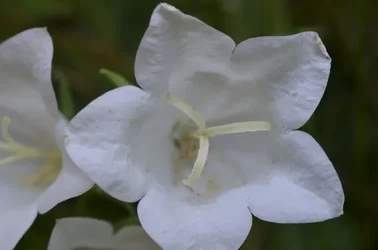
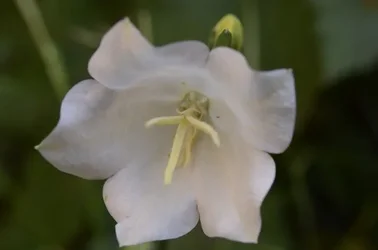
Not being particularly interested in macro photography, I did do a couple of shots with my 18-135 lens zoomed in from about 4-5 feet away from the subject (a flower), just to see what it could do. It was good enough for me. But if I wanted to do macro photography with limited expenditure, macro tubes are the way to go.
If you think you'd really like to do close up photography of coins, stamps, jewelry, insects, etc, the best option is a lens specifically designed to as a macro lens. I know Canon makes a 60mm macro lens and 100mm macro lens, perhaps others, too. The only 'trick' to using them is to realize that the depth of field from really close distances (6-12", typically) is perhaps 1/2" 'thick'. So the eyes of a bumble bee may be in perfect focus, but its back end will not be perfectly sharp.