First: Welcome to TPF.
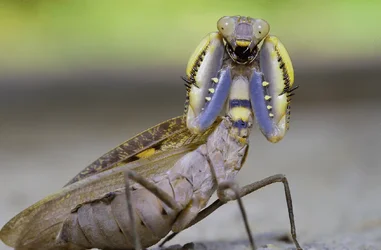
Second: If those are not YOUR photos, you'll need to remove them and post a link to them instead. TPF does not allow posting photos that do not belong to you.
Oh, and if they ARE your photos, you don't need to be asking for help with a macro setup.

Orionmystery's stuff is stellar, to be sure, and some of the advice he gives is very helpful, so do check it out.
Just don't expect results like his without years of effort and practice. And also recognize that he has a Canon MPE 65mm macro lens, the Holy Grail of macro shooting, and a lens with a steep learning curve. NOT to say that the lens is why Orion gets the shots; he was already doing great work before that. I'm just saying recognize that you'll need some equipment, but you'll need LOTS and lots of time and patience and practice.
I'd suggest starting with either some really nice extension tubes (I have Kenko--as long as they make electronic contact with your camera, you're good to go) OR, if you really know you're into macro, go for the dedicated macro lens. I have a Tokina 100mm f/2.8 lens; it is one of my very favorite lens. I wouldn't go with anything less than about 90mm for a macro lens, especially if you want to shoot critters.
I got my Tokina used, but I think you can get one new well within your budget. There are also some fine Nikon macro lenses out there.
Okay, so: Get a good lens. Or at least good extension tubes.
Do you have an off-camera flash? If not, get one of those as well. And either a light stand with an adapter that you can set the flash up on, or a bracket that allows you to attach the flash to the camera but then move it around (rather than just putting it on the hotshoe). You CAN just put it on the hotshoe, with a diffuser, at least to start. But get the flash.
You want a very small aperture (high number, small opening) for macro, in order to get sufficient DOF on your subject. At f8, which is adequate for most types of shooting, you'll get the tip of an antennae in focus and everything else will be blurry. I generally end up anywhere between f18 to f32. You'll also want a decent shutter speed to account for moving critters.
Others can probably give better technical advice about the lenses and such.
One other tip that isn't always mentioned:
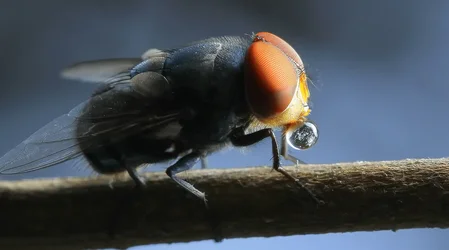
1. Do your bug hunting early in the morning, before the dew has dried. Bugs are at their most sluggish before their little wings/legs dry in the morning--plus sometimes you'll get cool shots of water drops on them!