I understand it pretty well, but I still don't use the manual mode on my camera, simply because my photo subjects usually don't hold still so I can't sit there and fiddle with the settings for too long.
F-numbers are how wide the aperture is - how large the hole is that lets in light. An extremely wide aperture (f/2.8 for example) lets in a lot of light so you can use a faster shutter speed and lower ISO, but it also tends to cause a shallow depth of field (which can be good or bad, depending on what effect you're after). A small aperture (like f/8) creates a deeper depth of field, meaning the background will be less blurry, but also by definition lets in less light. This means you will have to use a slower shutter speed and/or higher ISO.
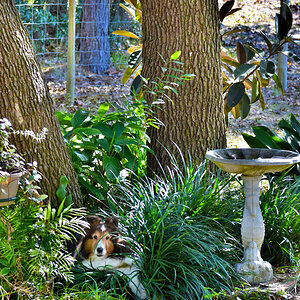
Here are some example photos... These were taken within seconds of each other, and are of the same animal with the same lens at the same distance. Here you can clearly see the difference a large or small aperture can make:
Aperture: f/2.8 (large)
Shutter speed: 1/250 second
ISO: 800
Aperture: f/8 (small)
Shutter speed: 1/30 second
ISO: 800
As you can see, the second photo has a much larger depth of field because of the smaller aperture. This has drawbacks, though... Just look how much I had to slow down the shutter speed! A larger aperture meant I could use a faster shutter speed, but the DOF was so shallow the photo didn't have much substance (IMO).
For things like landscape photography where you want the entire scene in focus, you often have to use a very small aperture, which in turn requires a slow shutter speed... This is where tripods will come in handy. For photographing mobile subjects, though, a tripod often isn't practical, so that generally means learning to hold your camera steadier, dealing with a shallow DOF, or getting a "faster" lens.
Hope this helps a bit and didn't make it even more confusing, hahaha...



 you will understand after reading that its a great book


![[No title]](/data/xfmg/thumbnail/31/31978-02cde49248ebdf1b82fba5c899e08378.jpg?1734160755)
![[No title]](/data/xfmg/thumbnail/42/42067-88a229e814afcfc8848b3e293d8113d9.jpg?1734176466)

![[No title]](/data/xfmg/thumbnail/41/41897-ea48d59eea1540d700b6e9051bce38da.jpg?1734176250)
![[No title]](/data/xfmg/thumbnail/41/41895-34e19a98c1811c8d543811c45d6ca604.jpg?1734176248)
![[No title]](/data/xfmg/thumbnail/32/32937-a884897f1671b4bfa4a955c9e4b7e574.jpg?1734162741)