THIS IS NOT FOR LISTINGS!!!!!!!!!!!!!! Goodness guys. Please stay on TOPIC.
Regardless of "why" you want the photos... I looked at the images and other than some lighting issues, the images are "focused". "Sharp" gets abused from time to time. There is nothing strictly called "sharpness" in photography. There is focus, there is contrast, the chromatic aberration, there is meridonal or saggital distortions, there is field flatness, there is acutance... there is even "noise" (and the list goes on). And you when you pile all of these factors together people will make a value judgement about the combination of factors and decide that they do like or do not like an image and say "it's not sharp."
So based on your sample images, what I'm noticing is parallax distortion. That's the #1 distraction that I see.
Parallax distortions classically show up in images of buildings because the camera was not "level" when the shot was taken (the lens was usually looking upward) and Parallax is exaggerated even more when you use a short focal length lens (wide-angle lens) which tends to be very common for architecture. This causes buildings to appear to "lean" away.
Here's a comparison:
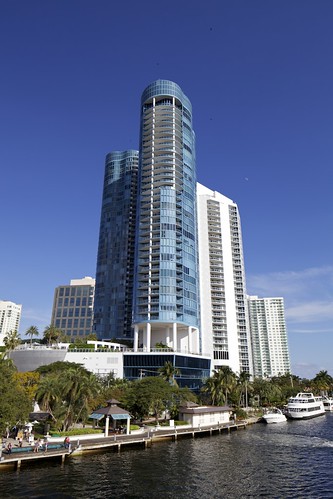
Riverhouse (uncorrected) by
Tim Campbell, on Flickr
vs.
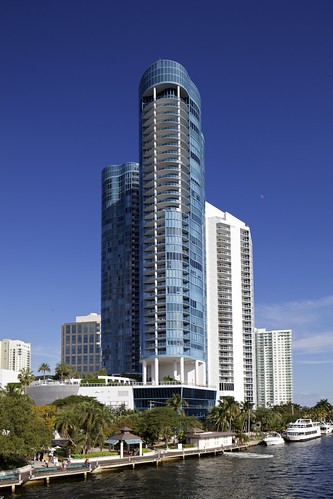
Riverhouse by
Tim Campbell, on Flickr
These were both shot with the same lens, same camera, both on a tripod, and in the same location... nothing moved. The "change" between the first and second image is that these were shot with a tilt-shift lens. The first image is shot with no adjustments in the lens (no shift, no tilt... as if it was a normal lens). The second image has a "shift" adjustment dialed in.
To take the second image, the camera is "leveled" so that the lens is no longer pointed upward. But this cuts off the top of the building. So I dial in some "shift" adjustment (the lens physically slides upward on the camera body even though it is still pointing straight ahead) and this causes the lens to capture the top of the building so I get the framing that I want (compositionally) but I eliminate the parallax distortion.
These lenses are typically considered very expensive (usually a couple thousand dollars). Also there is a bit of a learning curve (all adjustments are manually performed and it can be confusing to learn. Also, all tilt-shift lenses are manual-focus only... there (currently) no such thing as an auto-focusing tilt-shift lens and there are many reasons why it would generally just be a bad idea to have an auto-focusing tilt-shift lens.)
The cheaper way to get the images is to do the parallax distortion correction in image editing software such as Photoshop (I think even Lightroom supports it). The image can be "keystoned" (pinch in the bottom and stretch out the top) to make the vertical "lines" of the building parallel again. There is one tip... the human brain typically expects the buildings to get slightly narrower as they get tall. So you can adjust the image to "perfect" (lines are exactly parallel) and then back off the adjustment just fractionally. The image will seem parallel and correct to your eye even though if you used a grid overlay you'd see they are fractionally non-parallel. If they are perfectly parallel it can create the optical illusion that the building is really wider at the top (which looks very strange and unnatural) even though technically it's not wider... it's just how the brain perceives it because the image failed to pinch inward the way the brain expects.)
When you make the adjustments in software the resulting image will now be a trapezoid (keystone) so you need to crop it back to a rectangle. This means you'll lose data on the sides. For this reason if you plan to use software to correct for parallax distortion you need to leave a lot of extra space in your image for the crop (shoot wider than you think you'll need.)
There are other issues such as exposure, lighting, reflections, etc. Usually a polarizing filter will work well to improve the look but these can backfire on wide-angle lenses. Polarizers usually don't look as good if you use a very wide angle lens.







![[No title]](/data/xfmg/thumbnail/39/39439-d0a6beaaf39993860b74ccbd81fdd122.jpg?1734173529)