What's new

Porcupine

Newtricks

No longer a newbie, moving up!
Joined
Aug 15, 2013
Messages
607
Reaction score
104
Location
Cali4nia
Can others edit my Photos
Photos NOT OK to edit
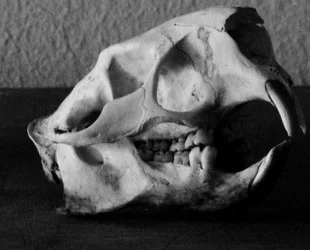
At least the skull.
 

Attachments

  • $skull_0001.webp
    $skull_0001.webp
    1.5 MB · Views: 140
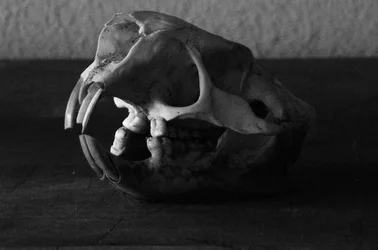
One more...

$skull_0002.webp
 
That second scull today in b&w gallery. You have to take more care with light and exposure (regarding #1, #2 is a bit better) and, when presenting such a subject, which for all practical purposes is a portrait, also watch the background. Yours has sharp horizontal division running on the scull level.
 
That second scull today in b&w gallery. You have to take more care with light and exposure (regarding #1, #2 is a bit better) and, when presenting such a subject, which for all practical purposes is a portrait, also watch the background. Yours has sharp horizontal division running on the scull level.

Thanks timor, I see what you are saying in regards to the horizontal break, I'll keep that in mind. Each images was chosen from a series of -2 EV bracketed exposures in .3 increments. The angle and exposure of the first (195mm - ISO 2000 - 25sec - f/22) is for mood, while the second (300mm - ISO 2000 - 25sec - f/40) is meant to show the subject in greater detail, the only light is from a 4" gap in the blinds of a north facing window between 14.33 - 14.39 this afternoon. The high ISO, limited light and long exposures where chosen to give texture to the images.

This is my first foray into still life photography and I'm open to the thoughts and opinions of my peers... without constructive input how can we improve.

Be well,

Anthony

ps I do rather like how the horizontal line between the butcher block and the wall behind it, infers a line from the bottom of the sinus cavity straight across to where the ridge of the orbital socket meets the slope of the skull in the first image.
 
Last edited:
I see you keep good records. The "great" secret of photography is to have always abundance of light. This is better than high ISO, especially with digital cameras, where sensor performs best at native ISO setting, without any amplifications.
Good luck to you and keep shooting.
 
I see you keep good records. The "great" secret of photography is to have always abundance of light. This is better than high ISO, especially with digital cameras, where sensor performs best at native ISO setting, without any amplifications.
Good luck to you and keep shooting.

timor, one month ago I was shooting a Minolta X-700 w/ 200mm - 4.5 lens. I'm finding the learning curve to be rather steep, the transition from film to digital has not been as smooth as I thought it would be. I'm use to pushing or pulling film to get the desired results, taking notes and compensating in processing, at times it seems what I know of film photography barely applies.

Anthony
 
The "great" secret of photography is to have always abundance of light...

This is one point where I would have to agree to disagree. Some of the best people photos I've ever taken where in places where I had to push 400 ASA film to 800 or 1600, yes the images had more than a little grain, but that's exactly what sets them apart from picture perfect, perfectly exposed images, is that gritty, noisy, dark and dirty feel they have, I love it!

 
The "great" secret of photography is to have always abundance of light...

This is one point where I would have to agree to disagree. Some of the best people photos I've ever taken where in places where I had to push 400 ASA film to 800 or 1600, yes the images had more than a little grain, but that's exactly what sets them apart from picture perfect, perfectly exposed images, is that gritty, noisy, dark and dirty feel they have, I love it!
:) It is always better to have plenty of light. Shooting in half dark and then push is counting on luck. In full light you can always expose for zone 7 and then extend development by +2 or you can use high contrast-low sodium sulfit developer for that gritty look you seek. And you will have it every time you want without taking chances.
 
The "great" secret of photography is to have always abundance of light...

This is one point where I would have to agree to disagree. Some of the best people photos I've ever taken where in places where I had to push 400 ASA film to 800 or 1600, yes the images had more than a little grain, but that's exactly what sets them apart from picture perfect, perfectly exposed images, is that gritty, noisy, dark and dirty feel they have, I love it!
:) It is always better to have plenty of light. Shooting in half dark and then push is counting on luck. In full light you can always expose for zone 7 and then extend development by +2 or you can use high contrast-low sodium sulfit developer for that gritty look you seek. And you will have it every time you want without taking chances.

Yes, yes, yes... but when you load your camera with 400 asa film before heading out, then find yourself in as dank and dirty bar, your only option if you want any photos at all is to push the film and compensate in development. When all I shot was landscape, I went through 100 feet of Kodak Tech-Pan a week, 25 ASA, rarely shot anything freehand (off tripod).
 
I guess I don't really understand the choice of settings. Why strangle the light with such tight apertures, and then turn around and crank the ISO? Being that it's a still scene, what's the point of the long exposure?

I'm totally with you on "grit" being a viable artistic touch, but digital noise =/= film grain.
 
Why strangle the light with such tight apertures, and then turn around and crank the ISO? Being that it's a still scene, what's the point of the long exposure?

The point a the small aperture and long exposure was to gain depth of field, it didn't work as I would have expected it to with film, perhaps I should reset the stage and try again with a lower ISO. Much of the film work I've done (past tense) was with Kodak Technical Pan (25 ASA film) exposed at 50 ASA, it would be really nice being able to dial the ISO down that low on the D7000. Shooting 135 format with film that slow allowed for 24" x 36" prints with negligible grain.

With DLSR's digital noise is close as we come to the gritty feel of super fast or pushed film.
 

Create an account or login to comment

You must be a member in order to leave a comment

Create account

Create an account on our community. It's easy!

Log in

Already have an account? Log in here.

New Topics

Back
Top Bottom