What's new

Portrait of your camera(s)

Jeremy Z

No longer a newbie, moving up!
Joined
Jan 4, 2007
Messages
1,179
Reaction score
32
Location
Chicago burbs
Can others edit my Photos
Photos OK to edit
We owe so much to them. We use the to take portraits of others.

I had a couple of very good ones of my old Nikon FM2n, but they're prints, and I don't have a scanner.

I know you guys all love your cameras too. Let's see those camera portraits?
 
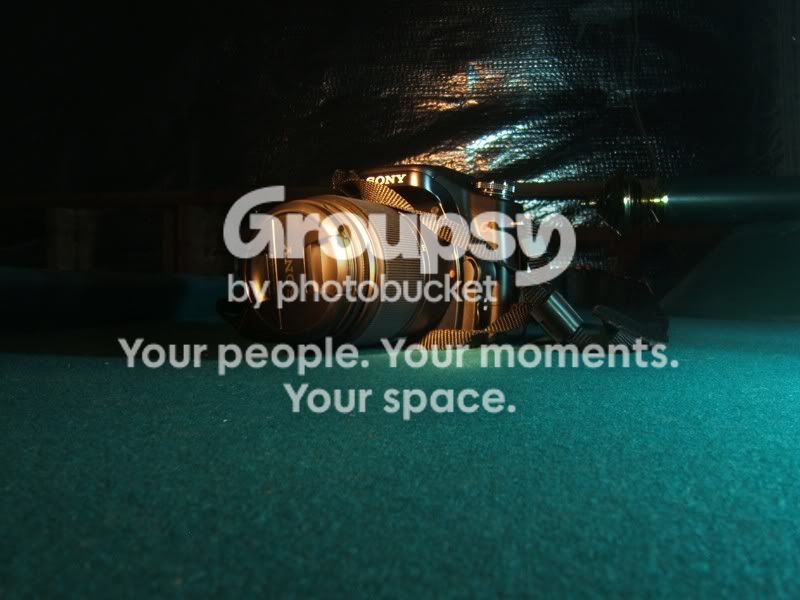
My Sony, taken with my Fuji p&s...not the best shot but its all i got :)

sonydslra100.jpg
 
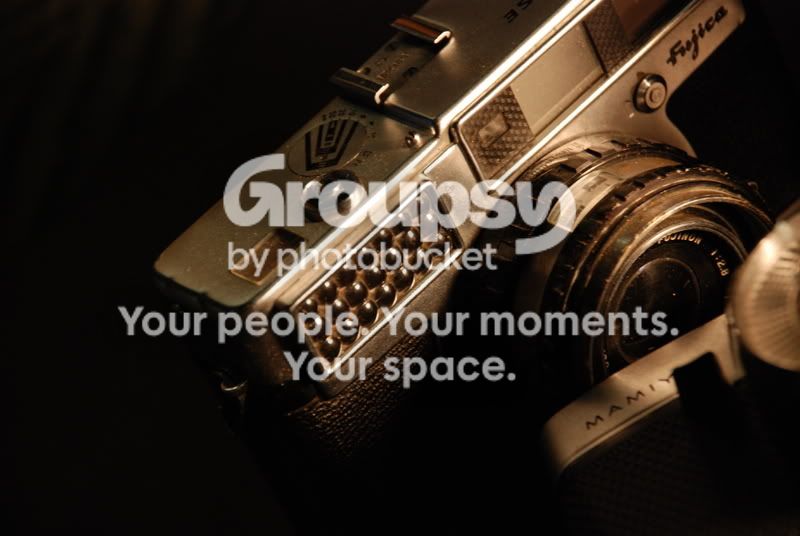
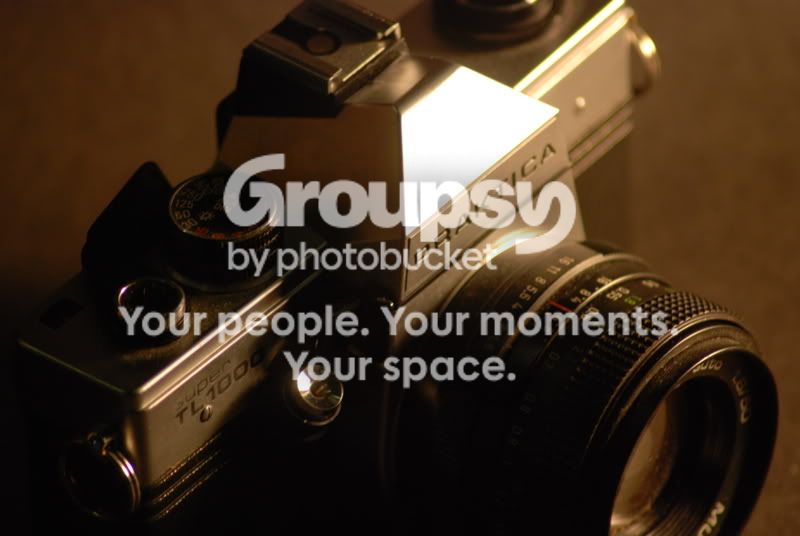
posted these already, but here are some of mine:

friend_5a.jpg
friend_1.jpg
voigt_2.jpg
 
hope i did not misuse this thread by posting images different from what was expected ;)
 
hope i did not misuse this thread by posting images different from what was expected ;)
Not at all Alex! In fact, vintage cameras are probably more photogenic in general.

This is an 'assignment' I'm giving myself, keeping it in the back of my head. I'll probably post to this thread over and over again, maybe once every 6 months or something?

I don't know if I want to bother to scan the nice ones I already have; I probably should, since I don't have the camera any more.
 
go for it.. scanning is not such a pain and often worth it :)
 
Ah. A Nikon F camera. Brilliant work horses. I've never actually had a chance to use one, but I have held one, and I wanted one strait away. Another camera for my wish list.
 
hehe i thought i'd post my shots here it seems appropriate and you did recomend it, :):):)

1.
DSC_0402.jpg


2.
DSC_0396.jpg


thanks :)
 
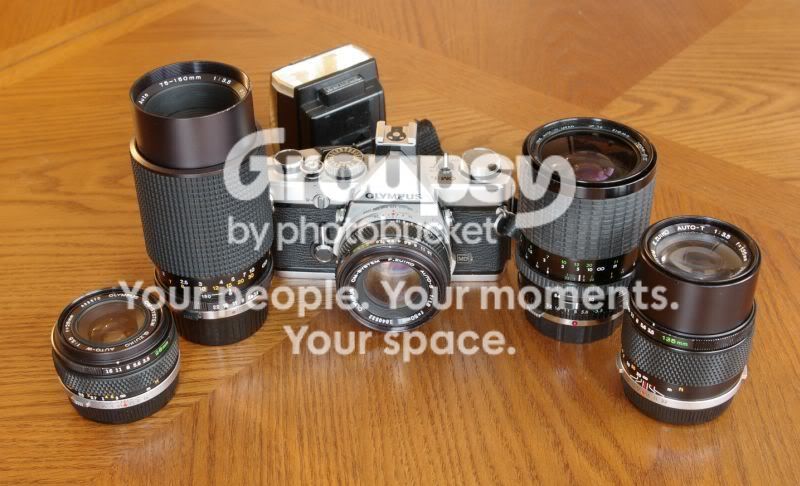
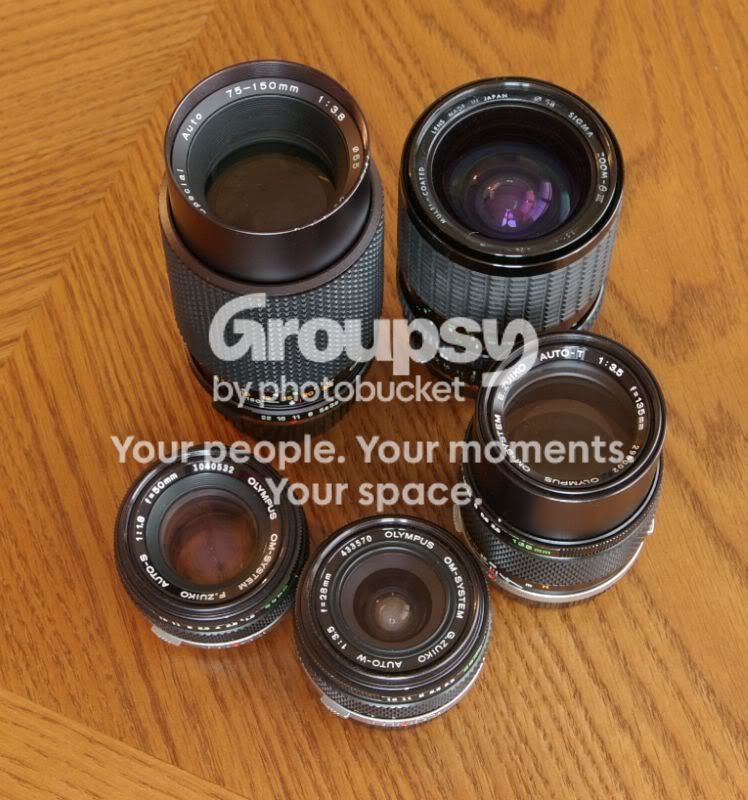
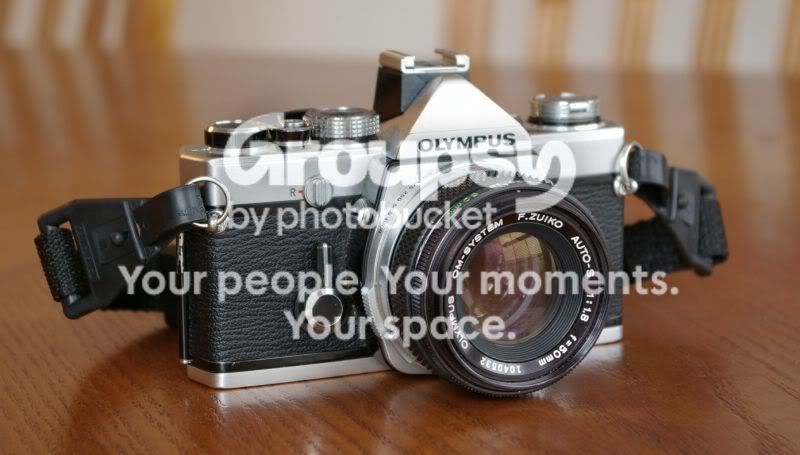
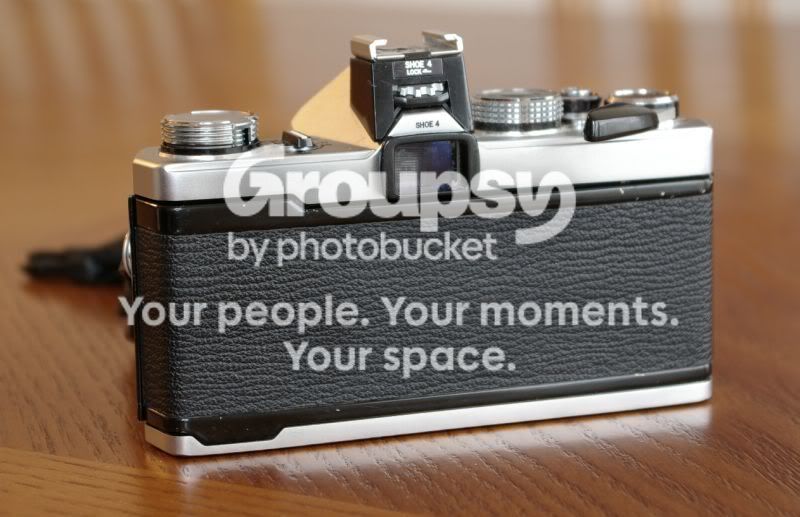
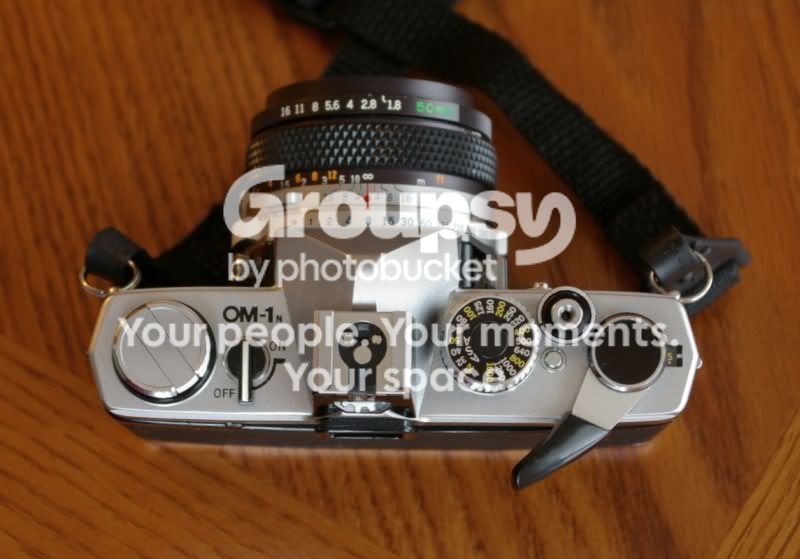
My Olympus OM1n. My grandpa gave it to me about 8 years ago, when he found that it was getting too difficult to focus, he gave it to me, and made me promise not to sell it. He sometimes "settles" when it comes to buying quality stuff, but not this time. He vowed to only buy Zuiko lenses for it. (Remember, this was in the 70s and 80s, when zooms were clearly inferior to primes) I've since added a couple of zooms. The Sigma 28-84, I got on ebay from a Greek guy a few years back for something like $20. The Tokina "Special" was from someone else on ebay, also reasonably priced. The only real problem with this camera is that it was designed for mercury batteries, so now the exposure is always slightly off, as alkalines are the only ones commonly available. It isn't a big deal, since I don't shoot slides.

#1
om15.jpg


#2
om17.jpg


#3
om11.jpg


#4
om12.jpg


#5
om13.jpg


#6
om18.jpg


A couple neat little details about this camera: Since the flash hot shoe is interchangeable, and since the eyepiece of the prism is narrow enough, I can take it off simply by unscrewing the little nut that's built into the shoe, and the eyepiece goes under my eyebrow and fits comfortably against my face.

The shutter speed dial is around the lens, where the aperture ring is on most mechanical SLRs of the era. The aperture ring is toward the end of the lens, and the focusing is in the middle.

The depth of field preview and lens release buttons are built into each lens. This keeps the body nice & compact, and the lenses don't seem any bigger either.

The power to the light meter is manually switched, so if I am taking a lot of flash or bulb shots, or if I am taking a lot of pix at the same exposure, I don't have to run the battery down. (the light meter is the only thing that uses battery power in this camera)

 
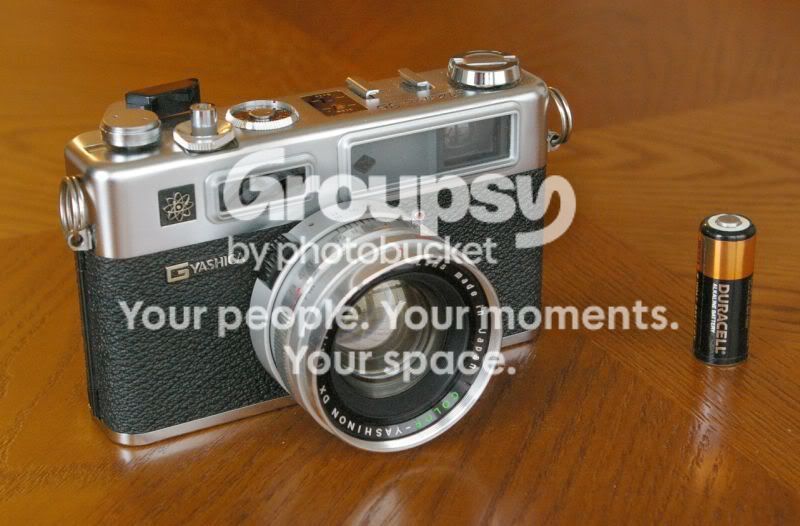
This is another hand-me-down from my grandpa. It is a Yashica Electro 35. I don't know if it is from the 1960s or 1970s. It is an aperture priority automatic exposure camera, with settings for bulb and flash sync. It has a very good "Yashinon" f/1.9 lens, and the camera is a beast. It has a much bigger body than the OM1n does.

Since it uses the battery for all shutter speeds, the battery is a monster. This one also uses a mercury battery which is out of production due to environmental concern. (and rightly so) So I don't dare shoot slides with it.

Interesting things about this one: The self-timer is a lever protruding from the side of the lens, which keeps the front of the body cleaner.

It has a cold shoe flash mount, with a sync cord that plugs into the side of the body.

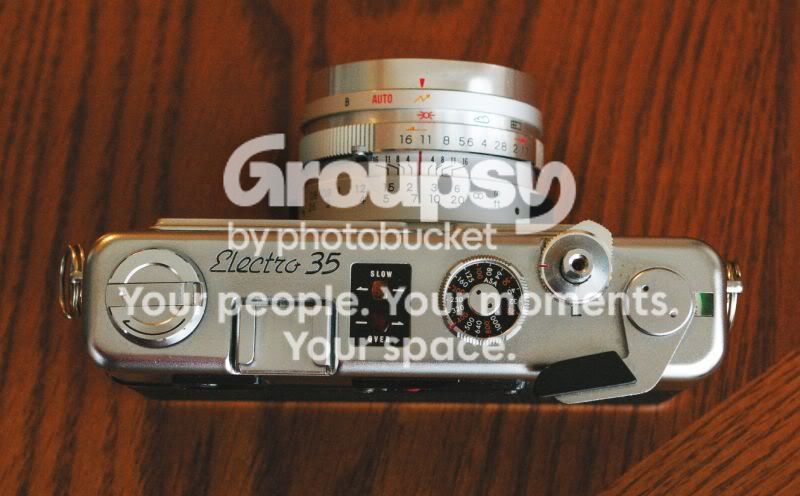
See the little green area next to the film advance lever & shot counter? There is a red button on the back of the camera (just visible in the second shot) that I can press that illuminates that light if the battery is good. It is nice to know whether the battery is good BEFORE I start shooting, hehehe.

On the top, there are LEDs to tell me if the shutter cannot go fast enough or slow enough to match the aperture I've set. Yashica put little pictures next to the aperture to let me know where I should set it if it is sunny, cloudy, or indoors. How nice of them! Photography was not point and shoot in those days, but the manufacturers did try!

The only flaw in this camera is a slightly dented filter ring, so I can't use filters. It is thin aluminum, so I don't dare try to bend it back.

#1
Yashica_Electro351.jpg


#2
Yashica_Electro352.jpg
 
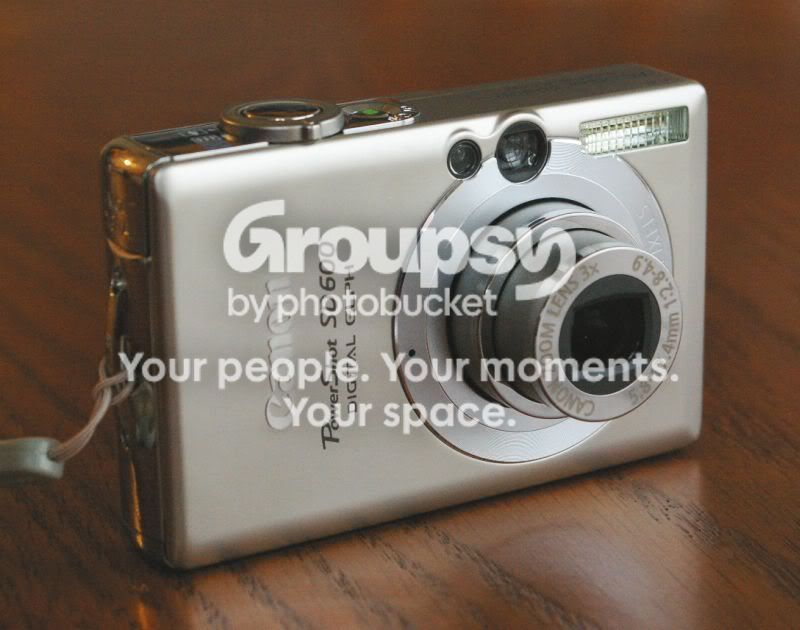
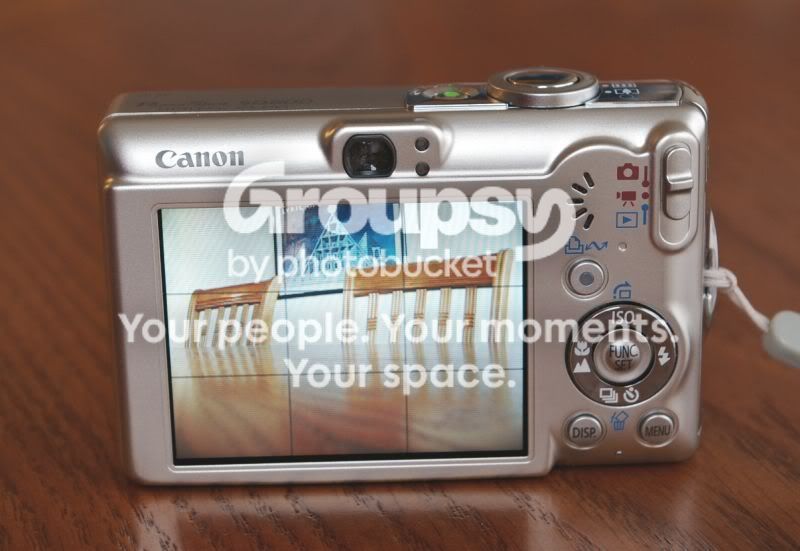
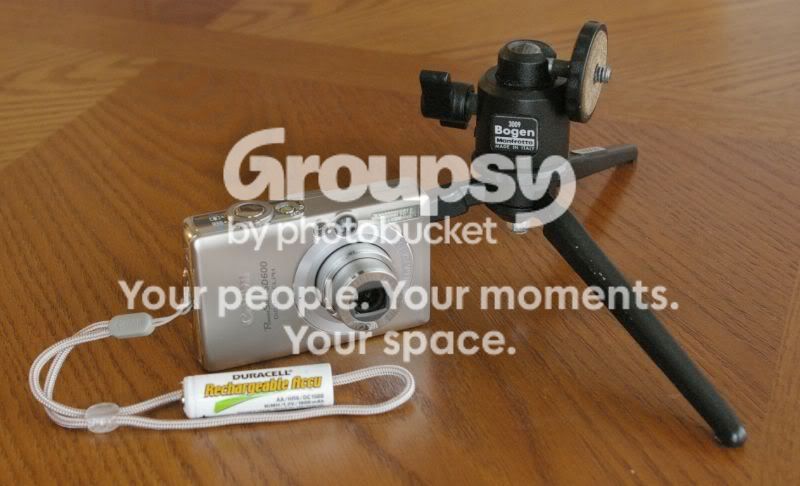
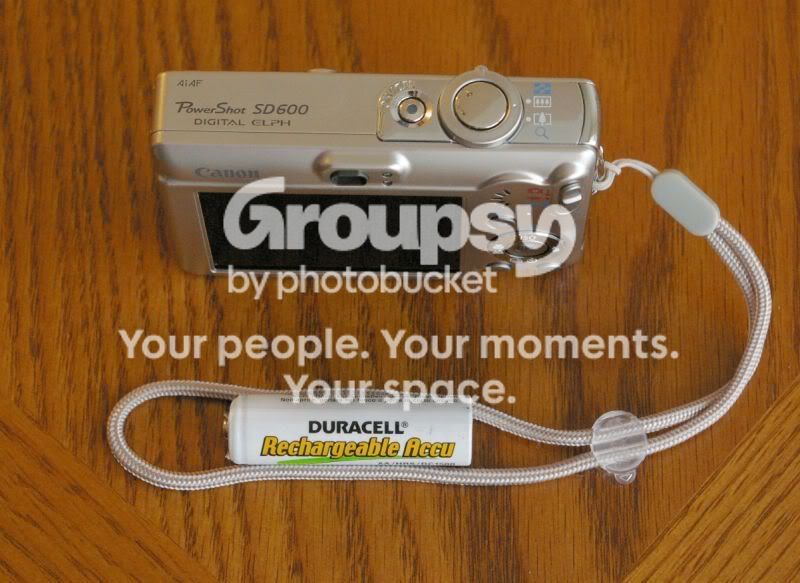
Here's my Canon SD600 Digital Elph. I shouldn't like this camera as much as I do, since it doesn't have any manual settings. But for a pocket-sized point and shoot, who cares? It has scene-specific programs for anything I can imagine. It has a "rule of thirds grid" that can be superimposed on the large 2.5" LCD.

The lens extension motor is VERY quiet. The camera feels solid & is very heavy & well-built. One gripe: there is nowhere to put my right thumb while shooting. It naturally falls right over the speaker. It can be moved over a bit to rest on the mode switch. But that is the sacrifice for an ultra-compact camera. Also, I'm nervous about the outer lens shutters. I would have preferred something less fragile, like a thin clamshell cover. These little guys tend to get sticky over time, and it can be very frustrating. I'm combatting this by carrying it in a small case most of the time, and in my hand the rest of the time. Never in a linty pocket.

The lens itself is very sharp for this class of camera. The photos of my Pentax K100D, below, were taken with this camera.

The reason I bought this camera was because I found myself missing photo opportunities because I didn't want to drag my ultrazoom around. With this one, there is no excuse. Just put it in its case and put it in a jacket pocket, in the backpack, or on my belt.

I like this camera just as much as my digital SLR. It is a perfect compliment, as it is everything the SLR isn't (and vice versa) Everyone should have an ultra-compact, IMO.

#1
Elph3.jpg


#2
Elph4.jpg


#3
Elph2.jpg


#4
Elph1.jpg


#5
Elph6.jpg


It is lost on that tripod shoe, huh? :D
 
This was my main camera for the last three years, before I bought the Pentax last week. I wanted the option of full manual control, a sharp lens, with a long zoom, and a hot shoe for a proper flash.

I couldn't have chosen better. Image stabilization wast just hitting the market at the time, which is about the only improvement I could ask for. Oh, and a proper wide angle. The Achilles heel of these ultrazoom cameras is that the zoom usually starts at 35-38mm equivalent. For any true wide angle appliation, that just doesn't work. When I was trying to photograph a 500 year old church and couldn't back up any further, I was kicking myself for not buying the 28mm adapter. If you buy one of these ultrazooms, or if you know someone who will, I strongly suggest buying the wide angle adapter that screws into the filter threads. Also, it doesn't focus worth a darn in low light at anything but wide angle. (f/2.8) It doesn't have a focus-assist beam, and it really should. The solution for this is to buy an Olympus dedicated flash with an IR focus-assist beam built in.
I thought about selling it on ebay to help pay for another lens for the Pentax, but I don't think it is worth it. I paid something like $400 for it a few years ago, and now, it is worth maybe $150. Forget that. It is worth more to me! I'll keep it as a backup for now. It has enough resolution to make sharp 8x10s.

The latest ultrazooms by Panasonic look like the class leaders these days. Long zoom, Leica lens, "Mega" Optical Image stabilization, and a hot shoe on the high end models. They still don't start at 28mm for the zoom though. Does anyone know whose flash dedication those Panasonic ultrazooms use?


The lens is sharper than any other point and shoot camera I've worked with. I think the zoom equivalent is 38-350 mm. 98% of the photos posted here to date are from this camera. This has been a great camera, and it whetted my appetite for something more in digital. Its shortcomings made me take the leap into SLRs and were also responsible for making me find this site.

#1
C-7503.jpg


#2
C-7504.jpg


#3
C-7502.jpg
 
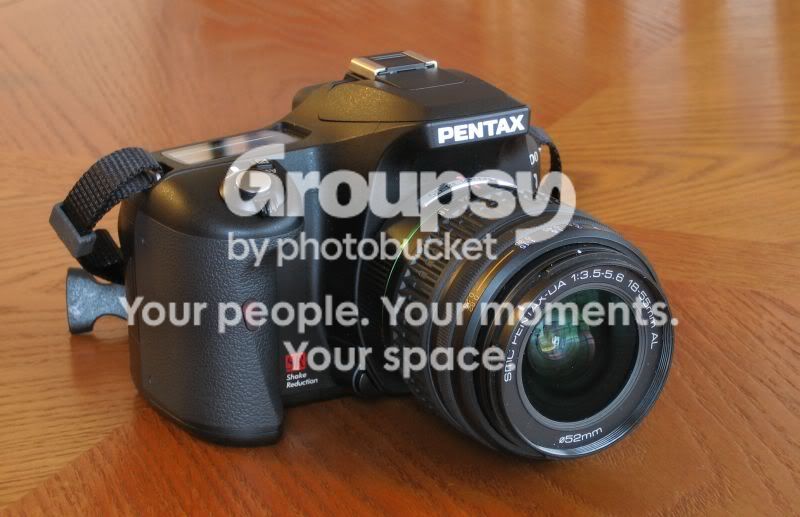
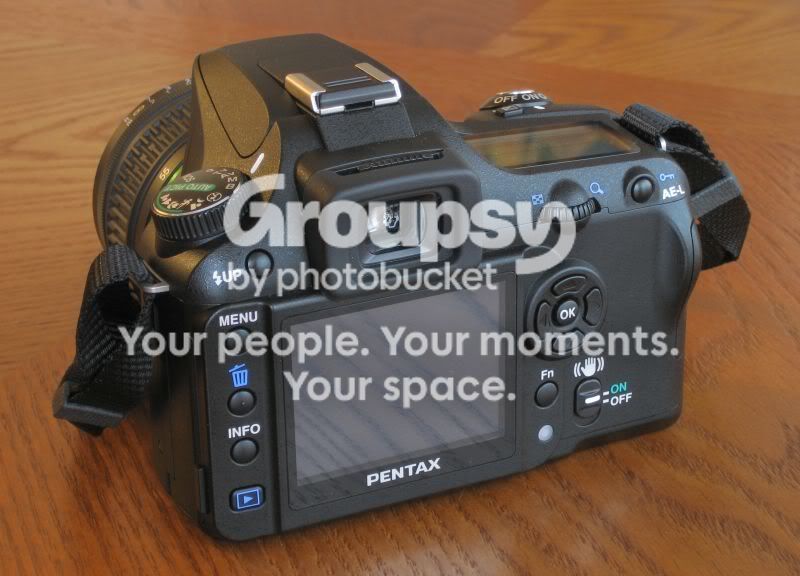
So finally, after about 4 years in digital photography and 10 years on 35mm, I took the plunge and bought a digital SLR.

I really like this beauty. I agonized for a week or two over all the different digital SLRs out there before deciding on this one. I had 3 EOS lenses and an EOS flash, but still went with this one. Why?
  • Anti shake mechanism is integral to the body, so I don't need to spend an extra $200 for it in each lens I want it in. I know the lens-based systems work better, but this will work on ANY lens. It is nice that Pentax included it in a camera in this price range. The anti shake mechanism in this body is coupled to the focal length, so if I mount a longer lens, it works harder.
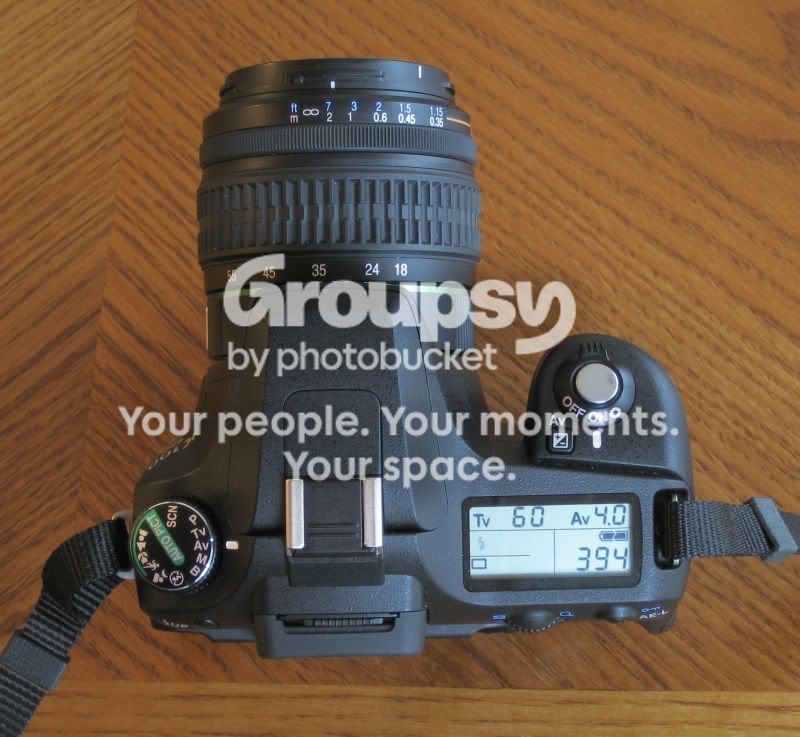
  • It has a top panel LCD, so I will not be draining the batteries so quickly with the backlit one on the rear. Canon & Nikon have done away with this nice feature on their latest entry-level cameras.
  • It takes AA batteries. This is a mixed blessing. On one hand, it saved Pentax some money, and helped them offset the cost of the anti shake mechanism. They didn't have to pay for the lithium ion battery & charger. On alkaline AAs, this will only go for about 50-70 shots. Pretty bad. But on NiMH AAs, it will go 5X longer. I already have a bunch of these on hand from the Olympus. The NiMH don't have the shelf life of LiIo batteries, so I will have to remember to recharge them from time to time, even if I don't use them. For backup, I can use either alkalines (yuk) or one of two types of lithiums. Lithium AAs or the expensive, but higher capacity CR-V3 lithiums. (which go about 700 shots)
  • The kit lens is the best in its class. Metal lens mount, smooth zoom, smooth and damped manual focusing, and very good optical performance. I tried this compared to the Canon & Nikon kit lenses, and it is miles better. It doesn't feel like a toy from Hasbro. I'm going to buy the 50-200 kit lens soon, along with a Pentax flash.
  • Integral to the on/off switch is a DoF preview, which can be programmed to either stop down the lens or to take a quick shot, which isn't stored to memory and display it on the LCD. The first mode is good for showing depth of field, the second is good for seeing if the white balance & composition look good.
Anyway, here she is. If you are looking to buy a digital SLR and are willing to think outside of the Canon/Nikon box, it is worth considering.

#1
K100D1.jpg


#2
K100D3.jpg


#3
K100D2.jpg
 
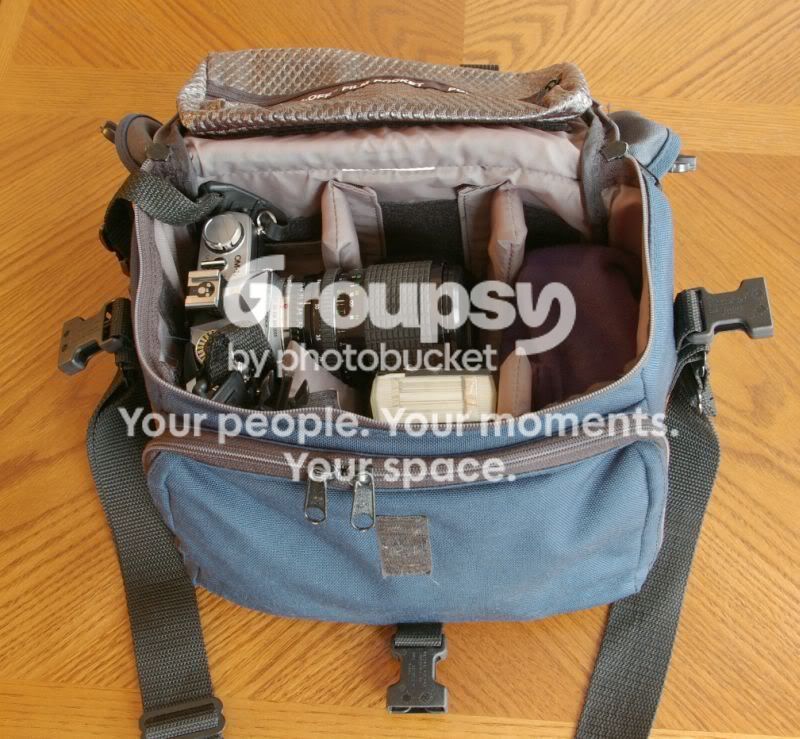
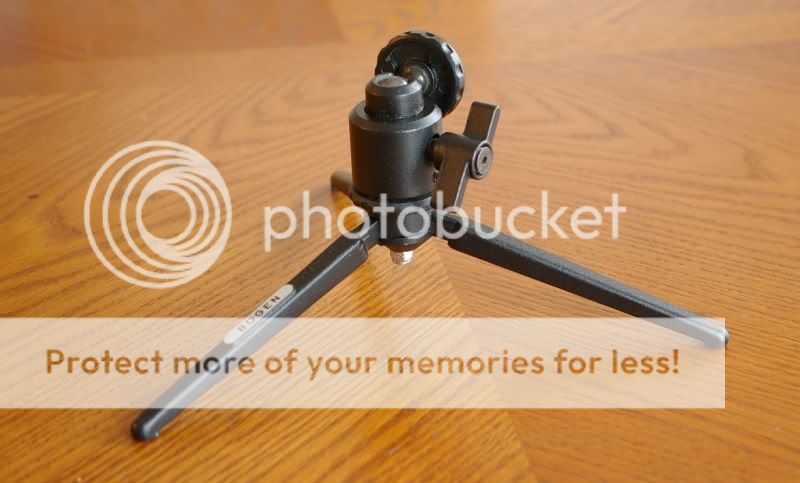
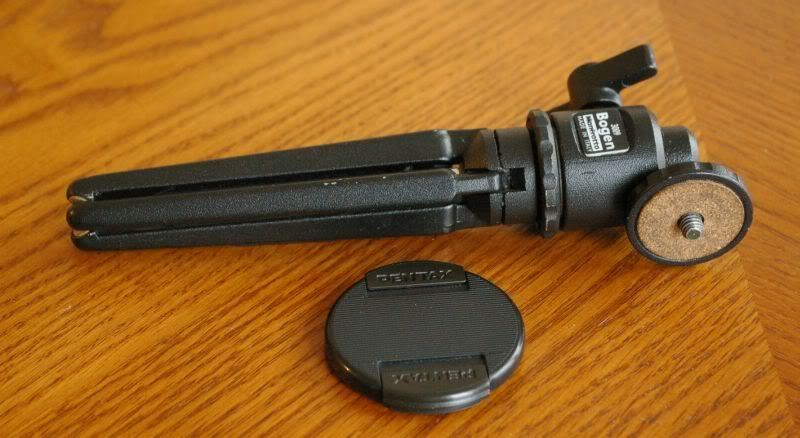
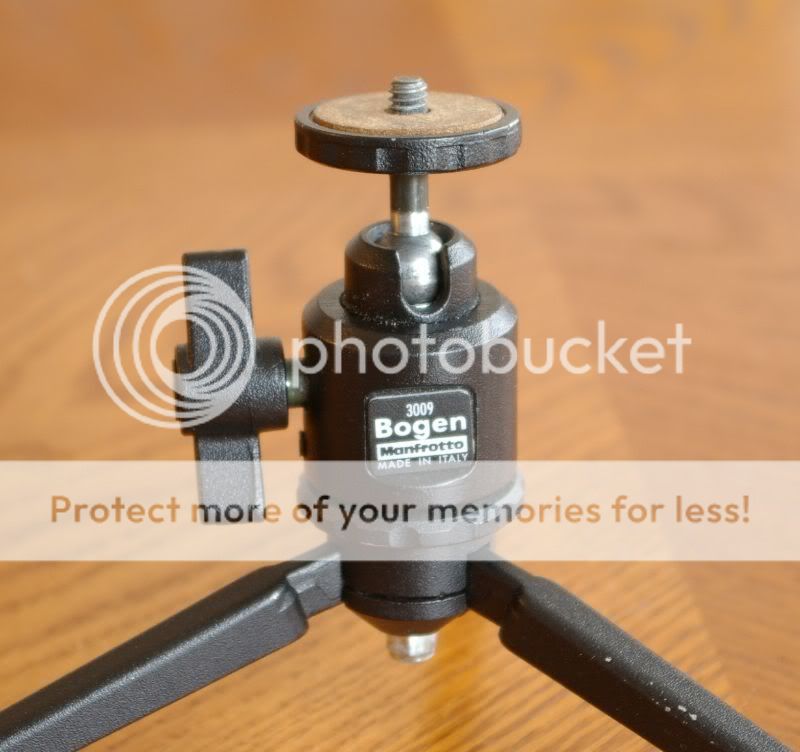
My favorite is this table top Bogen ballhead tripod. When I'm going out specifically to shoot photos, I always try to force myself to carry the tripod. But carrying a full size tripod is a pain, lets face it. This little beauty stays in my bag at all times. I may not always have the perfect tripod, but I always have a good one handy. This was about $40.

#1
Bogen_TableTop1.jpg


#2 (with a 52mm lens cap, for size reference)
Bogen_TableTop3.jpg


#3
Bogen_TableTop2.jpg


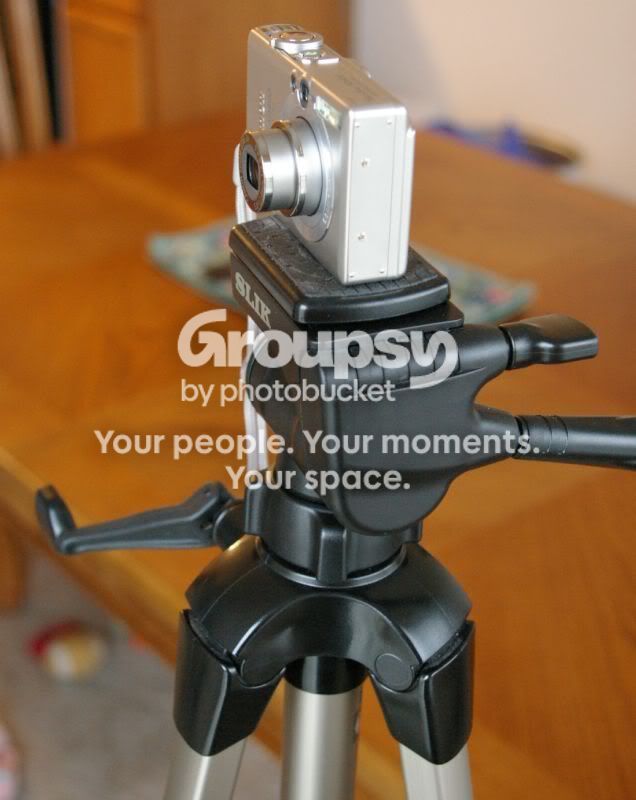
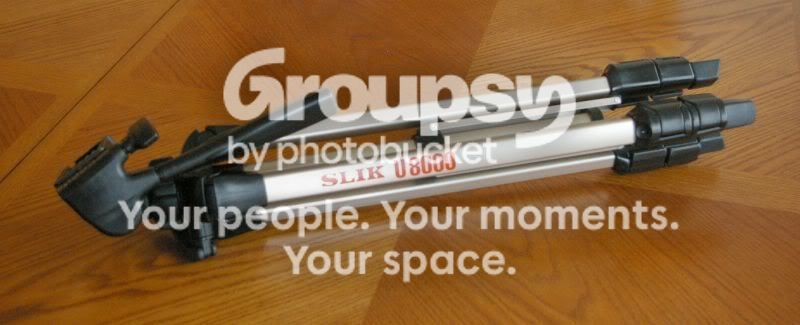
Next, the full size tripod. The Bogens and other "serious" tripods are too heavy for my taste. Since this one has bracing underneath the head, it is just as stable. I don't have the flexibility of having the legs at different angles, but I can still telescope them independently for the rough terrain. Also, it was only $60 (they're $40 now) and has a detachable shoe head. I really love this, I had no idea how handy it is.

Sorry the photos are blurry, but I didn't have the camera mounted on a tripod! :lol:

#4
U80001.jpg


#5
Elph6.jpg


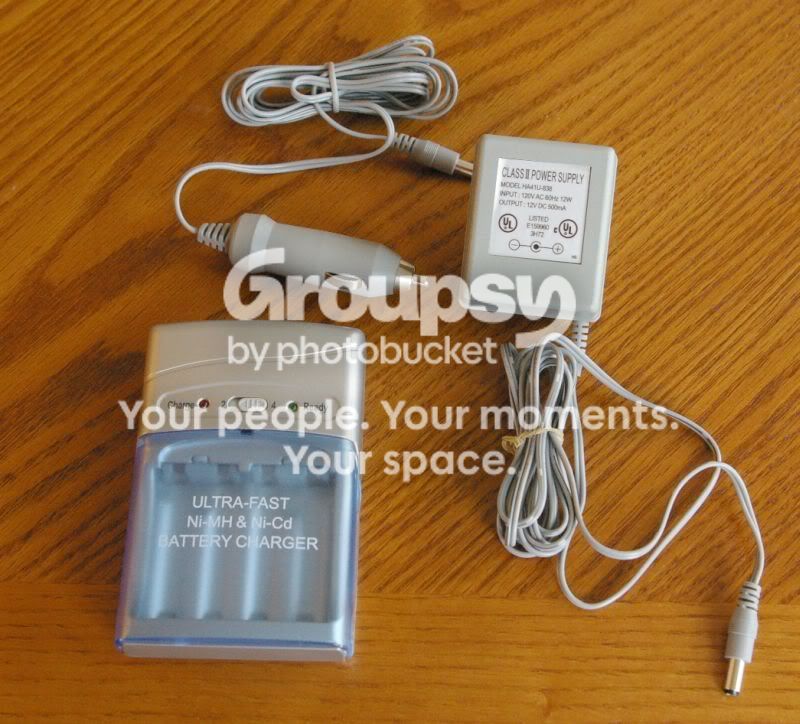
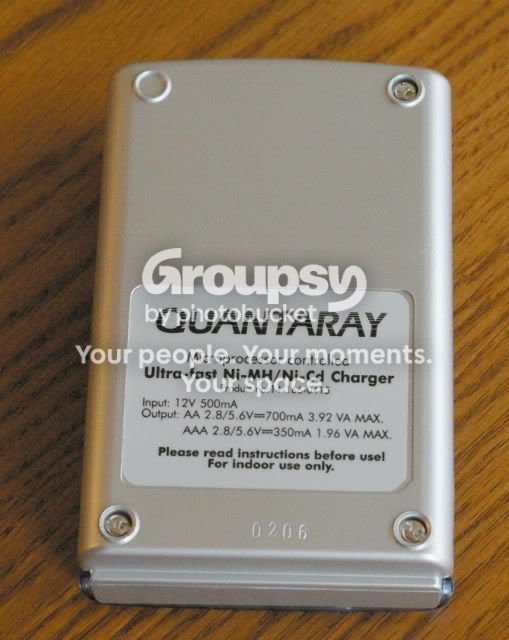
This last item is considered essential if your camera uses AAs. I have two cameras now that use AAs, so I finally bought a microprocessor-controlled battery charger. I got this at Wolf Camera for $25 including 4 2500 mAh NiMH AAs. Quite a deal. The cheaper chargers are timer-based. If you read the labels on the back, they charge NiMH for one length of time, and NiCds at another. The charge current is constant, and is sometimes not enough to fully charge a battery in 8 hours. This charger is microprocessor controlled, and will fully charge a 2400 mAh AA in 4 hours. It works with temperature sensors. Because of the nature of NiCd and NiMH AAs, they get warmer as they're nearing a complete charge. They don't mind being quite warm. So the batteries go into the compartment that traps the heat in. When they are warm enough, the charger knows they are fully charged and shuts down. Another neat thing is that the charger itself runs off of 12VDC, so it can be used wither with the included plug-in power supply, or with a cigarette lighter cord. I don't think I will use that much, but it is a nice touch.

As an added bonus, my wife says it is "so cute". :wink:

#6
charger1.jpg


#7
charger2.jpg
 

Create an account or login to comment

You must be a member in order to leave a comment

Create account

Create an account on our community. It's easy!

Log in

Already have an account? Log in here.

New Topics

Back
Top Bottom