What's new

Question about lenses

MCantrell

TPF Noob!
Joined
May 1, 2014
Messages
23
Reaction score
3
Location
United States
Can others edit my Photos
Photos OK to edit
I am new to photography and looking to buy my first dslr. I have borrowed one from a family member to play with and it has a 18-55 kit lens and a 75-300 lens. I have been doing a lot of research online for what type of affects I am wanting to be able to get and playing with that with the lenses I have to work with. I love the bokeh affect and with both lenses I can get decent bokeh doing head shots although I can see a bit of distortion with the kit lens. I would really love to be able to get good bokeh with a full body shot but neither of these lenses are able to get that. I know the aperture has a lot to do with it. I am going to add a link to an image that has the composition closer to how I am wanting, though maybe a little more zoomed in, but I want more bokeh then it shows. Is what I am wanting only possible with the benizier method or is there a good prime lens that will let me do this and also get good closer shots with the bokeh? I am on a tight budget so would like to be able to get one or two lenses that can do most of what I am wanting. I have looked at a 85mm prime but haven't been able to find enough information on it to know if it can do what I am wanting. I have also looked at 50mm primes but I am worried it would give the same distortions as the kit lens I am using now. Any help would be greatly appreciated. I can't afford to buy a lens and it not do what I want and end up just taking up space in my bag.

Thanks

here is the link to the image I mentioned
http://www.allaboutsymbian.com/features/images/bokeh/bokeh5-small.jpg
 
The image you posted was in very bright direct sunlight. In those conditions its hard to get great bokeh because there is so much light rushing into the camera. Now yu can set the shutter speed as fast as it will go and set the ISO as low as it can go but it still might not be enough to get your aperture open enough to create the effect you are looking for. Using a prime lens with a lower fstop will only make the situation worse.

The two things you can do are: add a Neutral Density filter to block some of the light that is coming in. Or shoot in lower light situations.
 
That isn't an image that I have taken, was using it more as an example of the composition I am looking for. I don't even know what focal length was used for that image lol. Besides the lighting issues with that image, guess what I am asking is what is a good focal length to get that composition with bokeh?
 
Looks to be around 35mm.

Anyways its ll about the relationship between the aperture and the distance to the subject. You shoot something at f1.8 that is 3 feet in front of you and the DOF is going to be super shallow. Use the same settings and move the subject back a ways and you'll get a much larger DOF.

Here is a calculator. Online Depth of Field Calculator

Focal Length is more about the look you want. The longer the focal length the more compression and less distortion you have. Shooting someone's face at 14mm close up will give them a giant nose, shoot them again at 85mm and you'll have a more true to life image with minimal distortion and nice compression.
 
 
Last edited by a moderator:
There are a number of areas where you're going to experience a little learning curve here, so I'd expect to have a little bit of iteration while you come up to speed on this stuff, just to set expectations.

The focal separation you're looking for is a result of the depth-of-field in your shot. Very generally speaking, the depth-of-field in your shot gets more narrow as your aperture opens, so lenses with a wide opening (aka, "fast" lenses) will help with this effect. This is an area where prime lenses typically shine compared to zooms -- a 50 or 85 prime lens will probably have an aperture that opens to at least f/1.8 (lower numbers == wider aperture == narrower DOF == a "faster" lens).

Using the lenses you've got, try working on shooting with a wide aperture (low f-stop) and try putting some separation between your subject and the background -- this will really help maximize the effect you're looking for. More expensive equipment works on the same principles, but is able to achieve more of this effect with a higher quality (bokeh really refers to the *quality* of the OOF areas), but you'd still have to learn the principles in order to get any benefit out of that equipment.
 
So if I can keep my aperture low, 1.8-2.8, and compose a full body shot with an 85mm prime, I would get a good bokeh?
 
What you need is diffused light. Just wait for any old cloud to cover the sun and snap that picture, that's how i do it in harsh light conditions. ;)
 
So if I can keep my aperture low, 1.8-2.8, and compose a full body shot with an 85mm prime, I would get a good bokeh?

Sure, but you need to set your camera at f3.5 or f4 with your 85mm to get your whole body within the dept of field. Also the lower the aperture number, the bigger the apêrture is. So f1.8 is bigger than f2.8.
 
Yes, I am definitely learning on all this. As I look up information I am finding more and more that I am needing to learn and figure out lol. I have been looking at the primes because I am figuring out with the lenses with a range of focal lengths, the larger the focal length, the narrower the minimum aperture setting I can use so I start loosing the affect since more of the background starts to sharpen. I am thankful that I was able to borrow a camera before I bought one because it has definitely opened my eyes to things I had no clue on before.
 
So if I can keep my aperture low, 1.8-2.8, and compose a full body shot with an 85mm prime, I would get a good bokeh?

Sure, but you need to set your camera at f3.5 or f4 with your 85mm to get your whole body within the dept of field. Also the lower the aperture number, the bigger the apêrture is. So f1.8 is bigger than f2.8.

Ok I will play around with the settings some more with what I do have using the calculator you linked and see if I can come closer to what I am looking for.
 
So if I can keep my aperture low, 1.8-2.8, and compose a full body shot with an 85mm prime, I would get a good bokeh?

Sure, but you need to set your camera at f3.5 or f4 with your 85mm to get your whole body within the dept of field. Also the lower the aperture number, the bigger the apêrture is. So f1.8 is bigger than f2.8.

Ok I will play around with the settings some more with what I do have using the calculator you linked and see if I can come closer to what I am looking for.

One thing to keep in mind, particularly on a crop sensor camera - with an 85 mm to get a full body shot you have to increase the distance between yourself and your subject. The more distance you put between you and your subject, the wider your DOF gets which limits the visual seperation from the background. So just keep in mind the distance between the camera and the subject will have an impact on your depth of field, as will the distance between your subject and the background.
 
Sure, but you need to set your camera at f3.5 or f4 with your 85mm to get your whole body within the dept of field. Also the lower the aperture number, the bigger the apêrture is. So f1.8 is bigger than f2.8.

Ok I will play around with the settings some more with what I do have using the calculator you linked and see if I can come closer to what I am looking for.

One thing to keep in mind, particularly on a crop sensor camera - with an 85 mm to get a full body shot you have to increase the distance between yourself and your subject. The more distance you put between you and your subject, the wider your DOF gets which limits the visual seperation from the background. So just keep in mind the distance between the camera and the subject will have an impact on your depth of field, as will the distance between your subject and the background.

Is there a focal range that allows to get the full body shot and keep the separation? That is what I am looking for.
 
Many use the term bokeh when they are actually taking about something different - depth-of-field (DoF).

Bokeh is not adjustable. DoF is adjustable.
DoF determines how far the range of distance from the camera acceptably sharp focus begins and ends.

We can control the DoF so it is shallow or so it is deep. Also point of focus (PoF) distance is as critical as lens aperture. (see below)
Using a shallow DoF is also known as 'selective focus' because we use a shallow DoF as a way to isolate/separate (selectively focus on) our subject from foreground/background image elements.

A property of lenses and DoF many also are not aware of is that as lens focal length increases and we move further from our main subject to maintain the subject at the same size in the image frame the DoF a longer lens delivers stays the same as long as the same lens aperture is used.

What changes is the field-of-view and how much the background is magnified. A longer focal length has a narrower FoV and magnifies the background more.
When adjusting for a shallow DoF the narrower FoV helps eliminate distracting image elements in the background and the magnification of blurred background elements make them seem blurrier than what a shorter focal length delivers.

So when we want a shallow DoF we will get our best results by using the longest focal length we have space to use.
When people are our subject, the longer focal length also keeps us away and out of the person's 'personal space'.

Back to bokeh.
We can only change bokeh by using a different make/model of lens.
Bokeh is an aesthetic property determined by lens construction.

One of the keys is how many and what shape the lens aperture blades are. The more aperture blades a lens has the more pleasant the bokeh a lens produces will be. Curved aperture blades improve bokeh by making the lens aperture more round. Rounding the edges of the lens aperture blades also improves bokeh.
Other internal lens features and the quality of the glass used to make the various ;ens elements inside the lens also affect the quality of the bokeh a lens can deliver
The number of lens aperture blades a lens has, internal construction details, and the quality of glass used for the lens glass elements is a factor of lens cost.

Inexpensive lenses have fewer aperture blades, less attention to internal construction, and low grade glass. usually with inexpensive lenses the aperture blades are straight and have sharp edges.
A classic example is Canon's inexpensive EF 50 mm f/1.8 II.
The EF 50 mm f/12.8 II has just 5 , straight, sharp edged lens aperture blades and the bokeh the lens delivers has a nervous, jittery, unpleasant quality.

A classic example at the other extreme is the much more expensive Nikon AF 85 mm f/1.4D.
Nikon's AF 85 mm f/1.4D has 9, curved, round edged aperture blades, careful attention to internal construction details, and uses high quality glass.
The bokeh the lens delivers is so smooth and pleasing the lens was nicknamed "The Cream Machine" which alludes the the smoothness of cream cheese

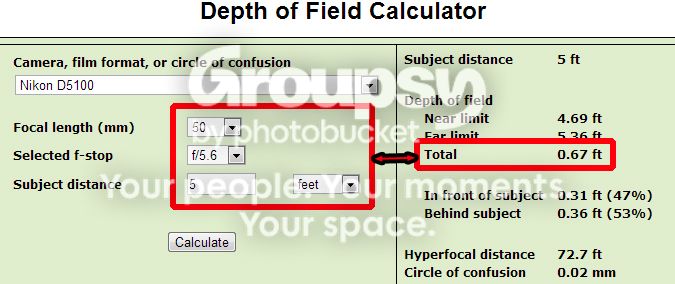
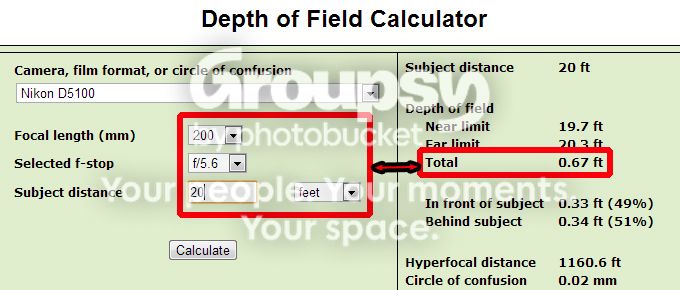
You can verify the above by plugging numbers into a DoF calculator like the one at DoFMaster.com

For example - comparing a 50 mm lens to a 200 mm lens, which is a 400% increase in focal length.
To keep subject scale in the image frame the same we increase our distance by the same 400% - from 5 feet to 20 feet.

50mm56Feet5.jpg


200mm56Feet20.jpg
 
Is there a focal range that allows to get the full body shot and keep the separation? That is what I am looking for.

The "separation" that you want is a function of the depth of field (DOF) which in turn is a function of the aperture and the distance to the subject.

As to what you can get in the frame; an 55mm lens on a crop sensor camera will allow for full-body portraits at around 15 feet. With an 85mm lens, you're going to need about 30 feet.

Assuming your DOF is around 2 or 3 feet (to get the subject in focus) your background is going to need to be farther back than the 30 feet. The farther back it is, the more blur will be in the background.

BTW: the term "bokeh" refers to the quality of the blur, not blur.
 

Create an account or login to comment

You must be a member in order to leave a comment

Create account

Create an account on our community. It's easy!

Log in

Already have an account? Log in here.

New Topics

Back
Top Bottom