The most common red filter is usually known by its 'Wratten number'* which is 25. It used to be a Wratten A back in the days when Wratten filters had alphabetical codes, so it is also known as a Wratten 25A, though that is not a correct Wratten number.
The 25 effectively cuts out all green and blue light. There is a deeper red filter, the Wratten 29 (old designation Wratten F), which cuts out some red light (if you think of the spectrum as being divided neatly into three).
The B+W (that's B+W the filter manufacturer, not B&W as in black and white) equivalents are the 90 for the 25 and the 91 for the 29.
Both filters have a fairly large filter factor and, as many films are not sensitive to the deep reds that we can see, the increase in exposure can be large when you use the 29. It's worth doing some experimentation. If you use a TTL meter, start off by simply using the TTL reading, and bracketing to see what exposure compensation gives you the effect you want. Metering of blue or green objects through a red filter can lead to severe overexposure of the reds.
Because much green foliage reflects and emits some deep red light (chlorophyll fluoresces in the deep red), films that are sensitive to deep red may show foliage as being lighter than you would expect. This effect is most obvious when using film that has extended red or near infrared sensitivity.
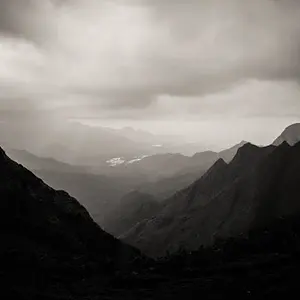
Cloudy skies will be particularly dramatic, and unlike a polarizing filter the effect will depend only on the sky colour, not the angle to the sun.
*Wratten and Wainwright was a filter manufacturer in Croydon, England that was bought by Kodak. Kodak kept the name 'Wratten' for their filters.
Best,
Helen




![[No title]](/data/xfmg/thumbnail/31/31019-2d026027bccbe16cea34daffbab9e4f0.jpg?1734159107)

![[No title]](/data/xfmg/thumbnail/33/33447-c3f5563c9b8b1f19498a3062f60f92b1.jpg?1734163486)