A smaller sensor requires a shorter lens for the same picture than a larger sensor.
At ten feet with a large sensor (full frame) you might use 75mm for a headshot.
At ten feet with a smaller sensor (crop sensor) you may only need 45mm for the same "zoom" amount.
If you were at ten feet with a small sensor and used 75mm, the picture would be way too zoomed in - you may only get half the face or just an eye.
Think this way - a big sensor needs a big lens. A small sensor doesn't need so big a lens, so the first lens from the large sensor is proportionally bigger. So it "zooms" in more.
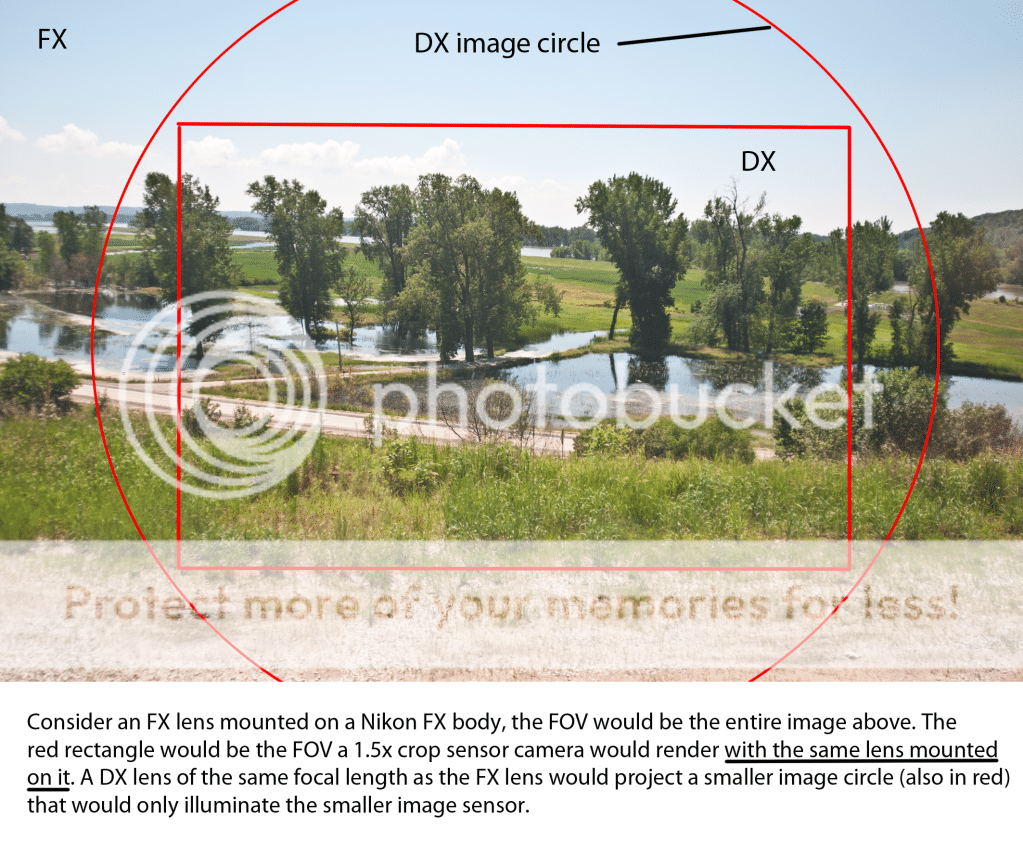
I take the lens on my FT3 (full frame) and adjust the zoom so that the moon fills the center third of the picture. If I then took the lens and put it on my GH2 (crop sensor), the moon would fill up most of the frame. This is because the sensor on my GH2 is only as big as the center third of the FT3's film. Nothing has changed in the lens, but the image appears zoomed in more for a given focal length (mm). For the moon to fill up all of the FT3's picture, I might need almost double the focal length. that's because I have to make the projected image bigger, because the film plane is bigger. Does that make sense?
35mm photography is a standard. Just about everyone (by that I mean the bigwigs that decide these sorts of things) that's been in the photography biz for a while owns a 35mm SLR. So most people have a feel for the "zoom" you get at different focal lengths on a 35mm SLR. When you change the sensor size (or film size), the apparent zoom is different for a given focal length. But the difference is linear, so 42mm on a m4/3 sensor will always be just as "zoomed in" as 74mm on a full-frame camera. Thus it is the "equivalent."
If you will, think of your lens as a projector. Focusing aside, image you have several different sized bedsheets with which to watch a movie, and one projector. If you have a very large sheet, it will have to be further away from the projector for the correct size image to be projected. A smaller sheet (crop sensor) can be closer to the projector. The image is smaller, but so is the sheet.