What's new

So I have 1200 dollars to spend....

What lenses do you have? The d7000 is the best $1200 you can spend on a body right now, period.

But if you only have cheap kit lenses, or none at all, having the best body doesn't mean anything. There is always the d90 (600 used) and then 600 for lenses. Or the d80 (300 used) leaving you with 900 for lenses. Glass really is WAY more important to good image quality.
 
I would suggest to spend money on a lesser used body and target the majority of the funds towards top shelf glass and a flash (off camera would be better).

But TBH, $1200 is a pittance if you become a serious hobbyist. The ancillaries can add up quickly. That's why I often suggest to have a separate interest bearing bank account for G.A.S. (gear acquisition syndrome) and have a small amount automatically drafted into it each pay period. Your hobby should not negatively impact other financial obligations already in place.
 
I would suggest to spend money on a lesser used body and target the majority of the funds towards top shelf glass and a flash (off camera would be better).

But TBH, $1200 is a pittance if you become a serious hobbyist. The ancillaries can add up quickly. That's why I often suggest to have a separate interest bearing bank account for G.A.S. (gear acquisition syndrome) and have a small amount automatically drafted into it each pay period. Your hobby should not negatively impact other financial obligations already in place.

I think this is great advice.

I'm planning on buying the 35 mm 1.8G. It's a couple hundred bucks and has gotten good reviews. I will start with that and then use your GAS bank account approach.
 
So I would like to formally apologize to Sw1tchFX. His post got me thinking and now I'm thinking that film isn't such a bad idea.

I'm not sure I want to jump right into medium format and was instead looking at the Nikon F5 and F100. The first lens I'd buy is the Nikon 50mm f/1.8 AF-S.

Let me know what you guys think.

I feel like the F5 is the better camera....but its huge and takes a lot of batteries. The one reason that it may be worth putting up with the size and batteries is the 3D color matrix metering.

The F100 does not have that. Other than that it seems like the F5 is built like a tank which is probably good for me as I'm not the gentlest of people on gear.
 
So I would like to formally apologize to Sw1tchFX. His post got me thinking and now I'm thinking that film isn't such a bad idea.

I'm not sure I want to jump right into medium format and was instead looking at the Nikon F5 and F100. The first lens I'd buy is the Nikon 50mm f/1.8 AF-S.

Let me know what you guys think.

I feel like the F5 is the better camera....but its huge and takes a lot of batteries. The one reason that it may be worth putting up with the size and batteries is the 3D color matrix metering.

The F100 does not have that. Other than that it seems like the F5 is built like a tank which is probably good for me as I'm not the gentlest of people on gear.
I appreciate that, but you don't have to apologize. Different strokes different folks. Alot of people say film is dead and I get a little defensive about it, because it's simply not true. It's like saying vinyl is dead, and we all know vinyl is far from dead.

The F100 is a GREAT camera. I've got 2 of them. The picture of the girl with the bubbles was shot with one of them and my 50mm f/1.4G. all I did was expose for the skin tones and put her back to the sun, the film does the rest for you, it's so much easier than digital.

Put the 1.8G on it, shoot at 1.8, and it would look almost identical.

I'd skip the F5. Sure it can burn through a 24 exposure roll in 3 seconds flat and has an enormous body and 3D matrix metering, but the F100 is half the size, half the price, same AF system, and at the end of the day, the same film in both cameras will yield the same results. And don't forget, since these are 35mm, they're inherently "Full Frame" ;)

You can resell the F100 for what you paid for it to (not like it'd be much anyway), so your total expense if analog doesn't work out will only be the film and developing. And $800ish goes a long way in Portra 400/Fuji 400H(awesome AWESOME films for shooting people) and Richard Photo Lab (the best lab on the planet).

You can get an F100, and 50mm f/1.8G for under $500. You'd probably get the 50 1.8 anyway, and you would have a ton of cash left over. If you want to do film, don't go to Rite Aid and get the cheap Fuji Superia junk and drop it off at Wal Mart. If you do that, you'll hate the results, every time. Trust me, I tried, and I quit shooting film for 4 years because I didn't know what a good lab could do. If you decide to shoot film, shoot the good stuff and send it to the right people.

RPL's blog:http://stilllovefilm.com/page/2/

F
ILM IS NOT DEAD:A Workshop by Jonathan Canlas - Film is Not Dead


I
'm tellin' ya, put their backs to the sun, expose for the shadows and let the film do the rest. This is what an F100 with a 50mm f/1.4(or 8) would look like wide open:
F100, 50mm f/1.4G@f/1.4, Portra 400
tumblr_lpy1lwg7Oo1qmxhuq
 
Last edited:
So I bought of of KEH and got the F100, 50mm 1.8D and a couple accessories for 318.00.

Bought some cheap film to start off with. I think eventually I'll shoot slide film as it seems to be the choice of professionals?

And its about the same price as 400H so why not?

What recommendations to you have as far as processing and storing? Do you put the shots on a CD? Or some other medium?

Thanks,
 
how much are you willing to invest in lens? the need for the right lens differs considering your phography needs and sensor size. it's going to be the main bulk of your investment, not the camera body.

on a side note, i usually take a different approach. i research what i really want first and find out the cost, then work towards allocating a fund for it.
 
I'm in the beginning stages. However, in the short time I've been at it I've come to really enjoy photography as a serious hobby.

That is where I am. I also said that most of my stuff is nature, portraits, and macro. I would also like to start on some landscapes.
I'm totally serious about my recommendation on the Mamiya. Just because it's film doesn't mean it's old, outdated, or obsolete. Quite the opposite:

Portraits: use an 80mm f/2.8, and either Portra 400 or Fuji 400H. Good example of a medium format film portrait photographer: http://josevillablog.com/

Landscapes/Nature/Macro: Galen Rowell, one of the greats, and guess what? 100% film: Galen Rowell - Google Search


And all of those are by and large straight out of camera, from both photographers..


The 6x4.5 is about 3x the size of 35mm or a Full Frame camera, about 6 times the size of the sensor in the D7000. When you scan them in, 25MP is EASY. If you're shooting landscapes on Velvia 50, you can pull out up to 80MP, with more dynamic range than any digital camera made by anyone, and better color to boot.
The proof is in the pudding, here's some that i've shot:

35mm, Portra 400:
6187264117_4d821472d8_z.jpg


Hasselblad 500cxi, Fuji Velvia 50:
5731942048_f3fbcba2e5_z.jpg


Guess how much post production I had to do on these? Almost none, because this is what they look like straight out of the camera. This is what film looks like..

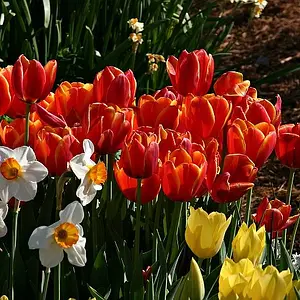
I have to say Switch, I have always argued that Digital can match Film in most aspects. But that tulip field photo is just incredible, must be one of the best images I have ever seen. The Sharpness and Dynamic range is simply incredible!
 
I'm going to stay with the 50mm for a good minute.

Then I'll probably look into a 24mm and 135mm prime. Or maybe a telephoto zoom.

I will be following Kundalini's method to save for the glass.
 
So I bought of of KEH and got the F100, 50mm 1.8D and a couple accessories for 318.00.

Bought some cheap film to start off with. I think eventually I'll shoot slide film as it seems to be the choice of professionals?

And its about the same price as 400H so why not?

What recommendations to you have as far as processing and storing? Do you put the shots on a CD? Or some other medium?

Thanks,

Congratulations! Great camera, and a great lens!

For processing, I really recommend Richard Photo Lab. They take forever and they're expensive, but they're the best lab i've ever seen. I wouldn't take your first rolls there, but if you ever buy more expensive film, don't take it anywhere else. They do my processing and I almost never have to adjust my pictures in Photoshop/lightroom.

Cheap film is cheap film, just remember that. It's totally fine to shoot some cheaper film just to get familiar with new gear, but bear in mind that cheap film usually doesn't look too super, especially when you use cheap processing.

Like I said earlier, if you buy cheap Fuji Superia or Kodak MAX and take it to a Rite Aid, Walgreens, CVS, or Wal Mart, you'll probably hate the results. They usually don't take care of their chemistry and are very lax on their scanning. of any of the cheap joints, Costco is the lesser of evils. At least they clean and maintain their chemistry and lab equipment. Scans aren't the best, but your film wont' be ruined. Take your first rolls there, because those are probably more just throw away shots just to make sure the camera works.

I'd just burn through the cheap stuff on tests until you get a little more familiar with how the camera and lens works, than when you're more comfortable, shoot something more professional like 400H or Portra 400.

Do tests like "what would happen if I really overexposed the film?" or "what would happen if I really UNDERexposed the film?" Shoot at f/1.8, f/22, see the difference..shoot into the sun, shoot things backlit, front lit, things like that. and if possible, take notes.

You can keep your notes in the binder you store the film in. I keep my negs in what are called "clearfiles" which are designed for film, and I keep them organized in 3 ring binders with index prints showing what's on them.

Slide film is great stuff, really high resolution (especially 100G and Velvia 50), and super fine grain, however it's tough to shoot really well. It has a narrower range than negative film, and requires the exposure to be dead nuts on. I wouldn't suggest transparency film for portraiture outside of a very controlled studio, and even then i'm not sure i'd still use it for portraiture. Transparency film is designed for 2 major things: super accurate color, and wildly vivid color. Neither of which are generally good for outdoor/location portraiture. Accurate color is rarely good color, and vivid color will make people look like tomatoes. Slide film today is for the landscape buffs. E100VS and Velvia 50 are my favorites, they make reds and yellows go nuclear, which is great for fall colors and sunsets :) If you want to shoot slide, I'd recommend investing in a graduated ND filter from someone like Cokin. Also really helpful for digital shooting as well where the sky just keeps blowing out.

Things to watch out for:

-For people, Portra 400 is easy to shoot, it's very forgiving, but 400H has a real unique color pallete, and both have finer grain than the cheaper stuff too.

-If you want those really creamy backgrounds and soft rendering, always shoot at f/1.8. When you want more clarity, stop the lens down closer to f/8ish

-35mm color negative is not as sharp as a 12, 16, or 21 MP digital SLR. There will be grain, and a sort of softness to the images. But that's what gives them that organic look. True black and white like TMAX 100 or PanF 50 will smoke digital for resolution, slide gets pretty close.

-Shoot your color negative at half box speed. If it's ISO 400 speed film, shoot it at ISO 200. If it's 100 speed film, shoot it at 64 or 50. With color negative film, you want good density, and most films are a little optimistic on their ISO rating. Fuji Superia 400 looks awful shot at 400, it's more of a 100 speed film. It takes ALOT to blow out color negative, so if you're unsure, just err on the side of overexposure. Once you've shot a couple dozen rolls or so, you'll get a pretty tight grip on how it works.

-Bracket your slide film. you've got to nail it because you can't really fix it very well if you miss.

And experiment, experiment, experiment. Especially with the cheap stuff. If it's something you know you want good pictures on, bring better film.

I have to say Switch, I have always argued that Digital can match Film in most aspects. But that tulip field photo is just incredible, must be one of the best images I have ever seen. The Sharpness and Dynamic range is simply incredible!
Thank you, but it's hardly remarkable :p That was the only frame that came out on the roll because it was the first time i'd ever shot medium format. Everything else was botched :p

 
Great all around advice.

I really appreciate your help.

How about speed ratings on B&W film. I picked up some Neopan 400 for a good price. Should I shoot that at half speed also?

Joe
 
Of the three bodies mentioned, I like the D7000 overall.

It's close.

The 5Dc makes really nice images but, I'm partial to the Nikon system. Tried it and loved some of the L glass but after a few months I traded back to Nikon.

The D300 is solid and the AF system is very capable. Having external buttons for everything is nice and I thought I'd miss it but the D7000 menu/buttons isn't that bad.

The D7000 does all the things I need that the D300 does except for the slightly better AF. I also like being able to take the grip off the D7000 for a smaller size.
 

Create an account or login to comment

You must be a member in order to leave a comment

Create account

Create an account on our community. It's easy!

Log in

Already have an account? Log in here.

Back
Top Bottom