I think it's not so much finding a scene but being sensitive to what is going on, seeing something interest odd or quirky, reading your own response and then framing the capture and the editing around that.
My preference is for strong hints about what to look at. The conclusion might be ambiguous but the viewer should know what you see.
For example:
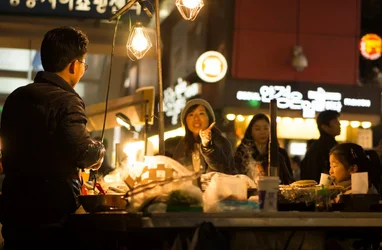
In picture 3, there is this lady, oblivious to the lights and the hubbub, peeling something with her back to the glitter and essentially oblivious. To make the point she needs to be in a strong position, other distractions cut off or out of the way so that your point is made.
Notice that she is right in the center, supposedly a no-no, but it works this way. (at least I think so.)
Now the point is made, its clear what you see and people can construct their own story from the hints without distractions from ambiguous stuff.
I took a similar picture years ago. The mechanics are the same but the impact and the story are different.
Lew Lorton Photography Random Street Shots DSC689802524
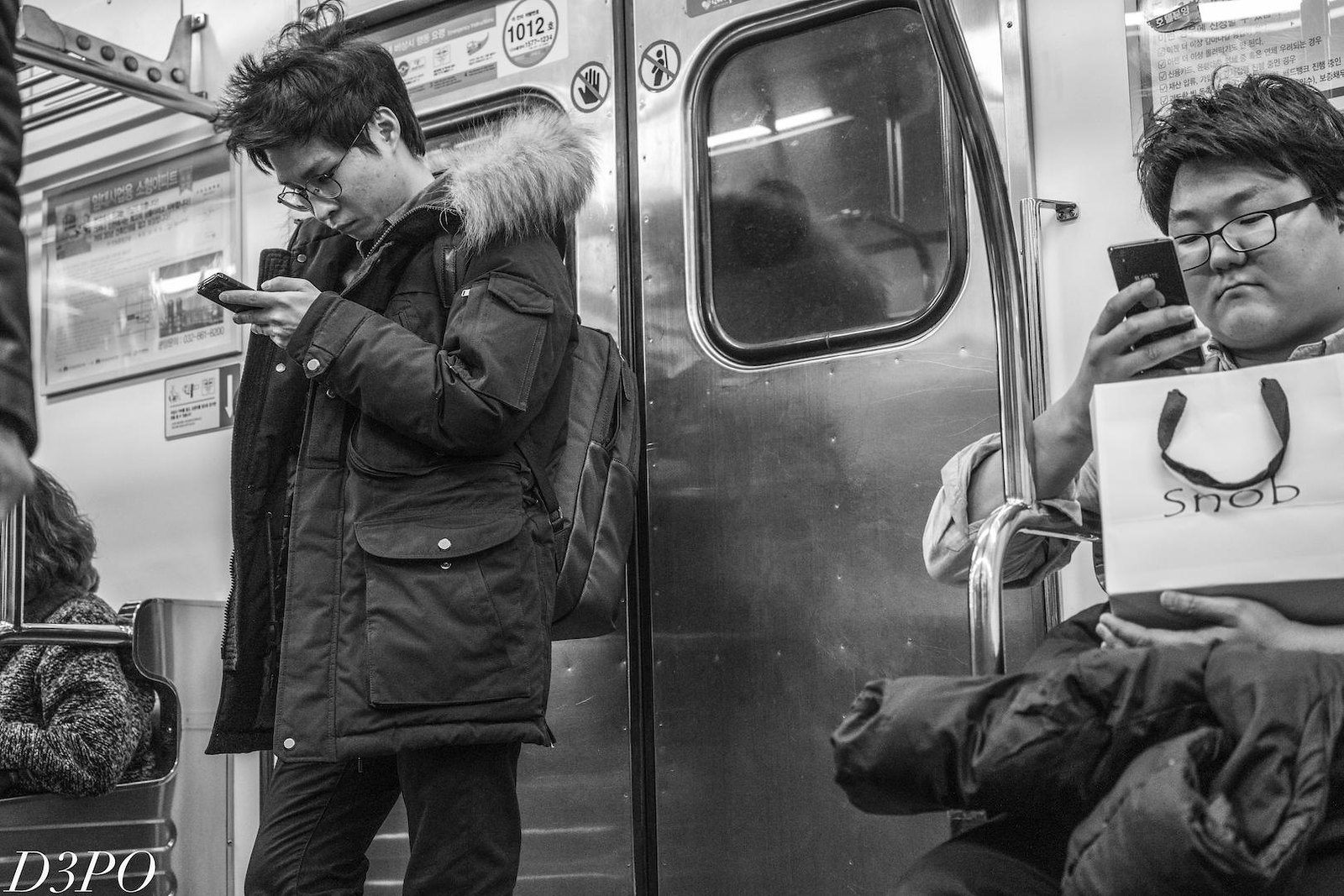
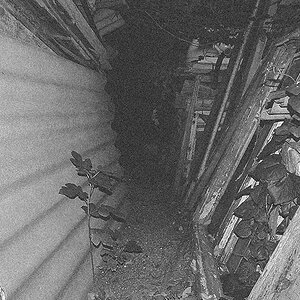
I think everything hinges on the photographer figuring out what is interesting - people, patterns, stories, puzzles - and capturing that in a way that poses the issue to the viewer.








![[No title]](/data/xfmg/thumbnail/42/42034-6262420ff3ea238f05395bbcc7ae1f28.jpg?1734176420)
![[No title]](/data/xfmg/thumbnail/35/35959-c7e267b1e7e08d889fe1a4fa28766c11.jpg?1734167798)