Thanks grafxman. I have heard of using tubes. but being a complete noob when it comes to photography and equipment. Could you explain how an extention can make my lens better at macro? Go ahead and explain it like I'm an idiot

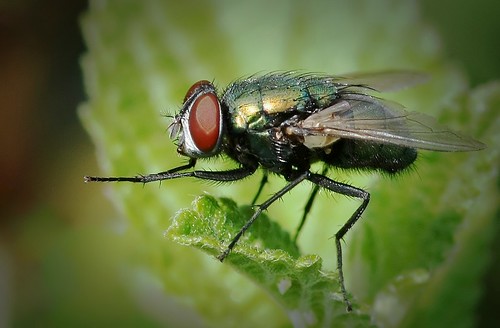
The problem I have with my lens is that the ultra fine detail is lost ie. the fine hairs on a bee, or pollen on a flower. I usually switch to my a650 as of now to take a macro shot.
Here's a copy of the info on the Kenko tubes:
Extension tubes are designed to enable a lens to focus closer than its normal set minimum focusing distance. Getting closer has the effect of magnifying your subject (making it appear larger in the viewfinder and in your pictures). They are exceptionally useful for macro photography, enabling you to convert almost any lens into a macro lens at a fraction of the cost while maintaining its original optical quality.
The DG extension tubes have no optics. They are mounted in between the camera body and lens to create more distance between the lens and film plane. By moving the lens father away from the film or CCD sensor in the camera, the lens is forced to focus much closer than normal. The greater the length of the extension tube, the closer the lens can focus.
The KENKO DG AUTO EXTENSION TUBE SET contains three tubes of different length, a 12 mm, 20 mm, and 36 mm, which can be used individually or in any combination to obtain the desired magnification. Kenko also makes a DG UNITUBE 12 mm or 25 mm which can be purchased individually.
Kenko's Auto Focus extension tubes are designed with all the circuitry and mechanical coupling to maintain auto focus and TTL auto exposure with most Canon, Nikon, and Minolta lenses given there is enough light to activate the cameras AF system properly.
Please Note
1. When using extension tubes the lens will not focus to infinity. The focus range will be greatly limited to a very close focusing distance.
2. There is light fall off when using any extension tube, sometimes the equivalent of 3 f-stops of light is lost when using multiple extension tubes together. This light lost can affect the camera's ability to auto focus. Manual focusing is recommended should the lens begin to "hunt" (not lock onto the subject).
When they say the tubes will allow your lens to focus closer that is absolutely true. I have an excellent but old Sigma 170-500mm zoom. It's a great lens but will not focus closer than 12 feet. When I add a 12mm tube, it will focus to about 4 feet.
When you are trying to macro photograph living moving things such as insects then that opens a whole different can of worms. Your best bet under those circumstances is to use a long lens that will focus close. I have used my previously mentioned Sigma Zoom Super Wide Angle AF 17-70mm f/2.8-4.5 DC Macro with a 1.4 Kenko teleconverter and, if necessary, Kenko tubes with some success. The 1.4 teleconverter makes the lens a 98mm lens and the tubes allow close focus. Thus I can keep some distance away from the insect and still focus up close on it.
When getting into extreme magnification expect to have a very shallow depth of field. Also expect to manually focus.


 . So what are some good macro lens options? (approximate price is appreciated). Are there any inexpensive options? as I am a hobbyist, not a professional.








![[No title]](/data/xfmg/thumbnail/37/37602-1ef8dbb1c2d0e4ff347ee65d328c3603.jpg?1734170730)

![[No title]](/data/xfmg/thumbnail/37/37603-739c5d9b541a083a12f2f30e45ca2b7b.jpg?1734170731)