What's new

suggested settings for inside a club

corralc

TPF Noob!
Joined
Jul 11, 2012
Messages
4
Reaction score
0
Location
charleston SC
Can others edit my Photos
Photos NOT OK to edit
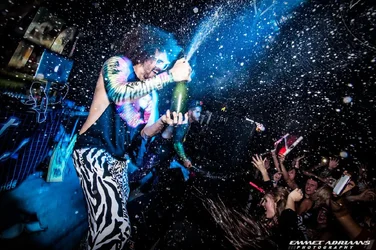
I have a friend doing a show inside a club this weekend and wanted to take photos but I am not sure what settings would be the best to put my camera on to get the best photos I can. any tips? I have a canon rebel T3i. thank you to anyone who can help me out
 
You'll need to tell us how much light there is inside the club, preferably in f/stops, and what (if any) type of supplemental lighting you have a available to use.

The settings needed are almost entirely depended on how much light there is, though there are other technical and artistic considerations, like depth-of-field, background separation, lighting ratios, motion stopping capability, etc that have to be taken into account when choosing which settings to use.
 
The settings required to make a good photo.

We have no idea what type of lighting conditions are in this "club."
 
sorry the stage is relatively lit multi colored lights along with regular. sorry hard to explain. this is nothing professional i just want to get some good ones of them playing on stage. they will be moving quickly also
 
What lens(es) are available to you to use. That plays a key role too. If you walk in with a kit lens, I suggest "Green Mode" as Keith suggested.

I have not shot at night much and I learned a ton about lighting and low lighting, and using what light you have available to you when I was shooting my fire the other night. Luckily I had a 50mm 1.4 on me, that baby wide open helped me out tons.

I have no idea what it would do in a club...no experience, so I just comment on what I have experienced personally. Sorry if unhelpful. lol.
 
You'll probably be dealing with hand-held shots of moving people in wonky lighting. You will likely have to use an aggressively high ISO (e.g. ISO 3200) but you might get lucky and only have to use ISO 1600. You _will_ want a "fast" lens (meaning low focal ratio). A kit lens (e.g. 18-55mm f/3.5-5.6) isn't going to be fast enough... it'll force you to use shutter speeds that will probably be too slow. A 50mm f/1.8 would be fast enough (you can probably use an f-stop as high as f/2.8) but you may find the 50mm to be a bit long and force you to back up too much to get your subjects framed the way you want. The problem with backing up in a busy club is that it's crowded to the point that you'll have other people getting in the way. You'll prefer a wider lens.

Metering will be hard -- the lighting is often changing rapidly and the subjects don't reflect light like an average scene -- this causes the light meter to often provide an inaccurate reading.

(Wow - I just realized that half of my post got cut off for some reason)

What I was going to say is that the meter will likely not give you accurate reading because of the "reflective" nature of built-in light meters. The reflectivity of the subject and their clothing will fool the meter. You can "spot" meter and select an area of the subject's face and that will tend to give fairly accurate metering, but if you use "evaluative" metering than you may need to use aperture compensation and reduce the exposure a bit from what the camera's meter recommends (which will also help you with your exposure.)

I'd like for a moderately wide prime, OR an f/2.8 zoom. E.g. the EF-S 17-55mm f/2.8 is great... just not cheap. Check out the 3rd party f/2.8 lenses in the similar range (e.g. 17-50, etc.) For a prime, look for something in the low 20mm range (e.g. 20-24mm) with a low focal ratio of f/2.8 or lower.

There's one other thing you should not ignore: rather than trying to figure out how to pull in more of the existing light, another option is to boost the light -- get a quality speedlite. A Canon 430EX II would be great. While "bouncing" a flash is normally preferred to soften the light, this only works with the ceiling is neutral -- preferably white. Club ceilings are almost always black and not suitable for bouncing. Diffusers on the flash work best when they greatly increase the area from which the light is emitted AND when the diffusers is relative close (which is another good reason to shoot wide angle at close range.) You can "lag the shutter" speed (set a shutter speed longer than necessary for the flash) and this will allow the camera to detect more of the ambient lighting around the subject so that they're not just illuminated by your flash alone.

The point of the flash is that by supplementing the light, it's not as critical that you have an expensive "fast" lens, but you'll need to develop skill at using the flash to avoid having your shots turning out with offensive unflattering lighting.
 
Last edited:
NOOOOOOOOOO Don't put it to Green (Auto) Mode!!!!! Stay in Av mode!
First of all, consider getting a flash. But anyways, here is some step-by-step advice:

- The T3i has a fair-ISO setting of ISO793, so set at ISO800 noise should be acceptable.
- Consider screwing on a nifty50 if you have one and if you don't need to zoom. Anyways stay at aroud f/4 or lower (but not too low like f/1.8) with the aperture.
- With ISO 800 and a fast lens, you should be able to get 1/15th or 1/30th of a sec for shutter speed in average-low light. Maybe even 1/60th with f/2. (Consider using a 35mm lens to get less camera-shake in the pictures.)

So Flash if possible, but if not:
MODE: AV!!!
Sensitivity: ISO 800
Focal length: 35mm or 50mm
Aperture: f/2 or f/2.8
Shutter RESULTS: 1/60th or 1/30th (or sometimes 1/15th).

Plus 1 thing: you may wish to try to add the built-in-flash to your exposures, WITH 2ND CURTAIN SYNC ... AND: Flash Exposure Compensation -2/3 or -1.5 stops. A little fill/freezing flash is better than no-flash in lowlight. :)

The best reason, not to go "green mode": you can't edit as well as in Raw mode. Shoot in Raw, and you'll be able to turn the lights up more easily than in JPG.

 
Thank you all for the suggestions and for being so nice. I will getting to the place a bit early so will try some of the stuff out to see which works best. As long as they dont come off blurry and I can adjust light in while editing ill be happy. As long as I get some good ones of them on stage. Thank you all again!
 
NOOOOOOOOOO Don't put it to Green (Auto) Mode!!!!! Stay in Av mode!

The best reason, not to go "green mode": you can't edit as well as in Raw mode. Shoot in Raw, and you'll be able to turn the lights up more easily than in JPG.

Can you explain why you cant "turn the lights up" in auto?
 
I do nightlife photography on the regular. You really need to take so many things into account. Club lighting both ambient and production. A Speedlight is going to be your best friend.

I start at 1/30sec, f/3.5 (increase with hard LED light), ISO 1250-1600 to avoid light burning on subject or background. Then I add a stop of light on the Speedlight or say a 1/32 +3 power equivalent. Its touch and go, you just have to focus on whats going on in the environment.

Everything else comes through Lightroom. $467871_10150708829650681_1575143700_o.webp
 

Create an account or login to comment

You must be a member in order to leave a comment

Create account

Create an account on our community. It's easy!

Log in

Already have an account? Log in here.

Back
Top Bottom