What's new

Super noob question about what lenses do...

What a focal length means depends upon the sensor size. The standard 35mm film for example has a "sensor size" of 36x24mm. This is typically called full frame. You need a rectangle of diameter 43.3mm to fit a 36x24mm rectangle into it. Thus your optics need an image circle of at least 43.3mm if you want to use them on a 36x24mm sensor area. A focal length close to 43.3mm would thus be a "normal lens" for the 35mm film. Thats why, for this sensor size, a focal length of 40-60mm (sources disagree what exactly) is considered a "normal lens", while lower focal lengths are considered "wide" and longer are considered "tele" (or rather small). Another popular sensor size is APS-C, or ca 24x16mm, and diameter ~28.9mm. Here a lens of 28.9mm would have about the same view as a 43.3mm focal length on full frame. Wrong. A 18-55mm will most likely be for an APS-C sensor, with an image circle too small for full frame. Which means the 18-55mm is actually a 27-82.5mm equivalent. And a 35mm on APS-C is about 53mm on full frame, thus the 35mm is a normal focal length.

Why is it that I can almost guarantee that when I come back to read some stuff on this forum, I will see some crazy and misinformed post by you?

18mm is 18mm on both a full frame AND APS-C sensor. Sensor crop has NOTHING to do with the distance of the rear lens element to the sensor. Therefore, on both a D800 and D7000 (I'm using these two because these are the cameras I own), an 18mm focal length means that the rear lens element is 18mm away from the sensor.


What you were trying to say, is that an APS-C sensor, otherwise known as a crop sensor, produces the same FRAMING equivelant as a 27mm focal length on a full frame or 35mm camera. The focal length doesn't actually change, just what is visible in the rendered result. However, that doesn't change the fact that the rear lens element was STILL 18mm away from the sensor at the time of the shot.
 
Thus your optics need an image circle of at least 43.3mm if you want to use them on a 36x24mm sensor area. A focal length close to 43.3mm would thus be a "normal lens" for the 35mm film.
Yes you need that size image circle if you want to not have vignetting.
The second part of this (that "normal" FL is based on image circle size) is a bit of a "citation needed" situation, though. As far as I can tell, there's no clear consensus at all on what makes a focal length considered "normal," hence the extreme disagreement on what the actual number is. I have seen it defined in a number of other ways. Two examples:

1) Some say it is close to what the human eye's equivalent focal length is. This is way wider angle than 40-50mm though. The eye has an image focal length of about 22mm, and the size of the retina is about a 22mm diameter circle. Making it have a "crop factor" of roughly 2, and a full frame camera equivalent of roughly 11mm.

2) Some say it is the focal length at which the scene through the viewfinder has the same magnification as if you were just looking at the world without a camera in that same slice, such that the angle compensates for the distance further away that the entrance pupil of the camera is in space from my eye. This depends on lens construction, though, and can vary wildly. When I do this with my full frame camera with a 24-105 lens, for example, I come up with a figure around 75mm.

Also even in your same post, you switched from "normal" being a 43mm equivalent to being a 53mm equivalent...

Bottom line: I think it pretty much just boils down to "it's cultural convention to say around 50mm average" and leave it at that.

a "normal lens", while lower focal lengths are considered "wide" and longer are considered "tele" (or rather small).
Again, the definition of telephoto has nothing to do with absolute focal length. You can have a 15mm telephoto lens or a 1000mm telephoto lens, on a full frame camera (not a SLR for the 15mm, but for example, on a mirrorless full frame you could have a 15mm telephoto lens).

Telephoto refers to a specific design of lens where a refractive lens is physically smaller (entrance pupil to image plane) than its focal length, whatever that focal length may be.

The correct term for a focal length longer than "normal" is simply a long lens, not "telephoto."
If you were to stick a single glass 500mm focal element into a 456mm long tube and stuck it on the from of your camera, that would NOT be a telephoto lens.
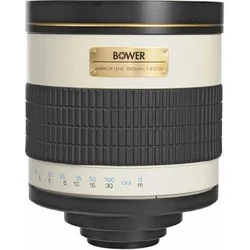
Or this, for example, is a 500mm lens that is also NOT a telephoto lens:

$614834.webp


an 18mm focal length means that the rear lens element is 18mm away from the sensor.
This is just not true at all. If it were true, then there wouldn't be any such thing as a full frame DSLR 24mm lens, because the rear element would crash into the mirror (which extends out to about 40-42ish millimeters usually in Nikons/Canons). Clearly there is such a thing, though. That's because there are designs that let you make the back focal distance whatever you want for a given FL. If I wanted to and had the appropriate materials, I could construct an 18mm lens where the rear element was 100mm away from the sensor. Or I could construct a 100mm lens where the rear element was 18mm away from the sensor.

Please see:
Angénieux retrofocus - Wikipedia, the free encyclopedia
Telephoto lens - Wikipedia, the free encyclopedia

Sensor crop has NOTHING to do with the distance of the rear lens element to the sensor.
This is indeed the case like you say, but neither Solarflare nor anybody else as far as I can see claimed that it was related.

The focal length doesn't actually change
This is also correct, but is also something that Solarflare didn't claim.
 
Last edited:
18 mm up to about 35 mm is called wide angle and makes things look as if they are farther away than they are.
55 mm is about the same as what out eyes see.
Over 55 mm or so and up is called telephoto and things look closer than they really are.

50mm is "normal" for a full-frame camera or 35mm film camera. On an APS-C DSLR 30mm is pretty close to "normal".

"Normal is established based on the angle of view that a human eye can see when looking straight ahead and not moving our eyes around to take in the view. It's arguably somewhere between a 40 and 50º angle of view.

On an APS-C DSLR, a 30mm lens provides about a 41º angle of view in the horizontal direction and when measured diagonally it's about a 48º field of view... so that's pretty close to what the human eye can see. In other words, if we can see it without having to "look around" then the camera can see it too.
 
This is indeed the case like you say, but neither Solarflare nor anybody else as far as I can see claimed that it was related. This is also correct, but is also something that Solarflare didn't claim.

It is exactly what he both said, and implied. He said that focal length is relational to sensor size. Where he got that information, is that on a 1.5x sensor crop, an 18mm DX focal length has a full frame equivalent of 27mm, which is true, but only in rendered product framing equivalent. The focal distance didn't change just because the 1.5x crop camera has a smaller sensor. It doesn't even change technically in the rendered product. The measurement of focal length in camera doesn't change regardless of whether you're using a full frame, DX, or even a micro 4/3 sensor.
 
Hi i also have a noob question. i have the kit lens of canon 100d 18-55mm. do i have full control of aperture (making aperture size really big (smallest F#) even when full zoomed)

or does the lens limit my aperture depending on wide or tele zoom?

thank you

Herbert
 
Again, a beginner asked a question to which a simple answer could be given for the purpose but the thread turned into a p_$$ing match that helped no one. Why do the same folks keep doing this?
 

Create an account or login to comment

You must be a member in order to leave a comment

Create account

Create an account on our community. It's easy!

Log in

Already have an account? Log in here.

New Topics

Back
Top Bottom