I wouldn't feel guilty about staging something in a case like this unless I was instructed not to.
Posed photos of a decisive moment usually look like they're posed (people who aren't professional actors are usually lousy actors and even some of the professional actors are lousy actors.) But there are photographers who will sometimes
provoke the reaction they want... take for example when Yousuf Karsh stole Winston Churchill's cigar and captured the immortalized image of the Winston Church "scowl". See:
The Day Winston Churchill Lost His Cigar | At the Smithsonian | Smithsonian
The point is... the shot wasn't posed... the photographer took advantage of a "reaction" that he got. Had he taken the same shot a few moments earlier or later he likely wouldn't have managed to get the same impact.
Use your human experience to recognize when something of significance is about to happen. If you're attending a wedding and the officiant proclaims to the groom "you may kiss the bride" you KNOW a kiss is about to happen. Timing that shot so that you capture the kiss... and not two seconds before the kiss nor two seconds after the kiss... that would be a "decisive moment".
Here's a glass artisan making a Christmas ornament. A moment earlier and the shears wouldn't be in the shot... a moment later and the ornament would be sitting there all by itself. I wanted this shot *just* as the artisan is nipping the thread of hot glass. The point is... I knew he was about to do this and I waited for it.
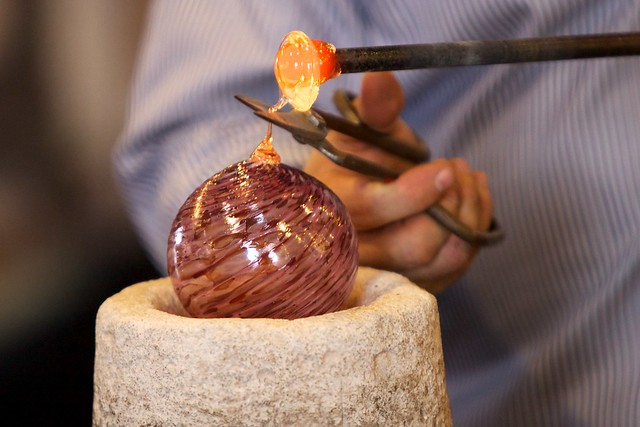
Ornament by
Tim Campbell1, on Flickr
Just
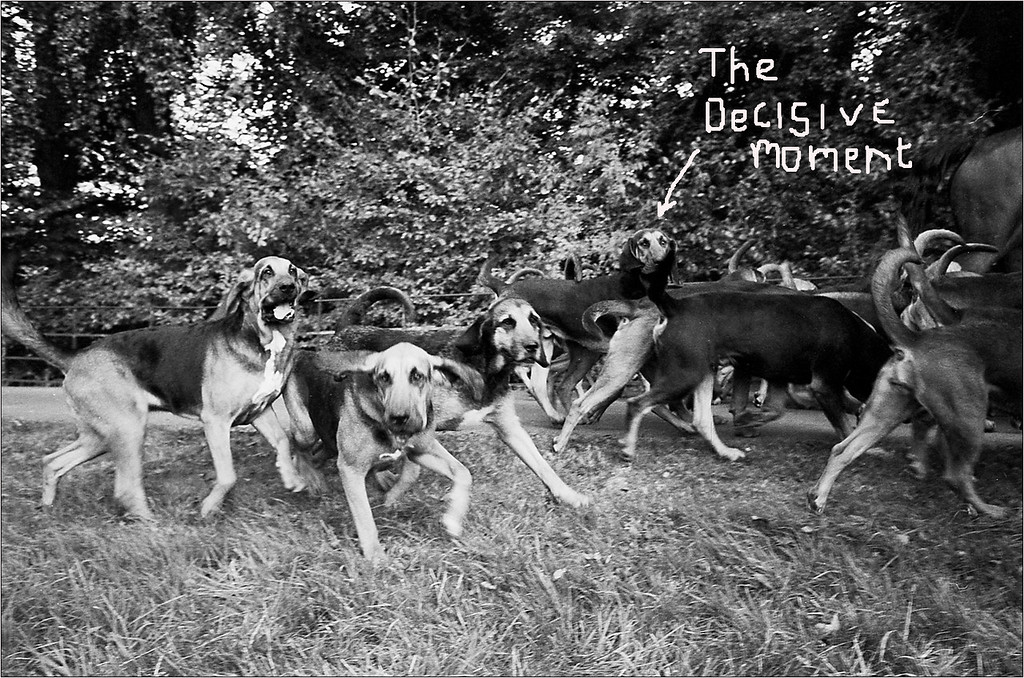
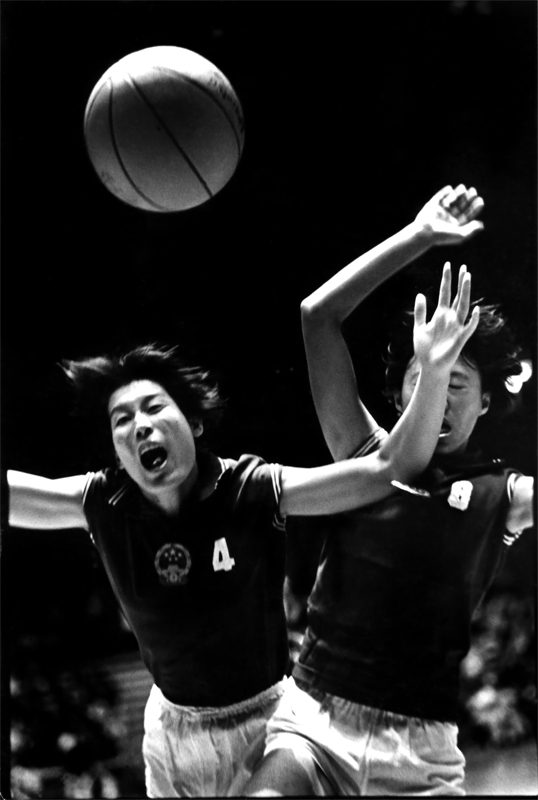
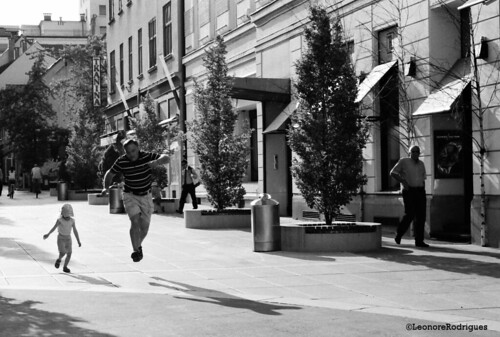
any moment won't do... in the timeline, there are some moments at which snapping the shot will be more impactful. Imagine you were filming a movie... but had to pull "one frame" out of the film to use as as still photo... which "frame" would you grab? That best-looking frame is typically the "decisive moment".
If you're shooting baseball, do you want the runner halfway between 3rd base and home plate... or the runner returning to the dugout? You
probably want the shot where the runner is sliding into home-plate while the ball is being thrown to the catcher and the umpire is making the call...
that's the shot where everything is happening and a story unfolds.








![[No title]](/data/xfmg/thumbnail/39/39480-e4e26ffe5c6148262ac81eff975a5c0e.jpg?1734173580)
![[No title]](/data/xfmg/thumbnail/34/34696-6e05b4fd94e150fc3d00ade3eb069dd6.jpg?1734165703)

![[No title]](/data/xfmg/thumbnail/31/31708-69f4ec98ec000d4fc9a9a1cc282e8e16.jpg?1734160384)

![[No title]](/data/xfmg/thumbnail/34/34697-f005f86bec84436c239ae8f8834b29f2.jpg?1734165704)