What's new

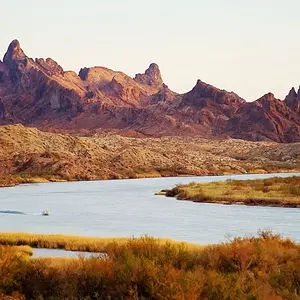
The Lake was angry .. and so am i.... i had my chance

I think they're pretty good and everything I thought of has been covered already but I will say to try it on a tripod (weight it down so it doesn't move in the wind) and if there doesn't seem to be enough light with a smaller aperature then keep it on that good aper. and slow down your shutter but keep your ISO set at low, 100 or close to it. Everything stationary will still be sharp but it will allow for more light and will help to make the waves look mistier. Play around with the shutter speeds and you'll get a good idea of what looks best. One other thing, you can play around with your exposure compensation also if you think you need a little more or less light but watch your ISO if you're using AUTO ISO, it could go too high and create a bunch of noise.
That's what I wanted Kirk more mistier waves and more detail in those rough waters... >.I appreciate all your tips..thank you..

It helps if you start your day with a bowl of Frosted Flakes to get that "tiger attitude" but you seem to have it already, lol! Go get'em kitty and GL! :wav:

 
I agree with Smoke665. What is your final objective? You may have a problem trying to get crisp photos of birds flying in the sky and at the same time trying to take a landscape photograph. You should decide what you want to photograph first, then adjust your camera accordingly. My wife is in South Africa right now and she takes a lot of photographs. I have posted some of her photos on this forum from last years trip to East Africa. She is not considered to be a technical photographer meaning she does not quite understand the shutter speed, aperture, and ISO. I made her a little cheat sheet to follow. She shoots in aperture mode and shutter mode with her Canon 5d. I did not want to get to technical with her so I told her if in AV mode: one animal low aperture number. The more animals the higher the number. That would go in normal light. Then I told her if she is shooting in the hot of the day with the sun over head, then she should shoot in shutter mode: Shutter speed should be between 1,000 to 2,000. Her ISO is to be set at Auto. She took more than 23,000 photos last year in East Africa and very few were bad. Here is an example of her work:
1.webp
 
Hiya
If you can’t get to use a tripod an idea for you
Stand with feet slightly apart one foot in front of the other , the foot has the knee bent slightly from knee bent slightly so that you can brace against the wind, back to the wind if you can or as much as you can
Both hands on camera LH bracing lens RH to do controls both elbows braced against your body
Pick your spot focus, breath in, breath half out hold breath and press shutter. Breath normal one more, don’t want you passing out because I did not say you could breath again lol
 
Nice shooting.......
Thank you...but I think it should or could be better...


That's his response to every photo posted here.

I probably would have tried a smaller aperture to get a greater depth of focus and focused on the lighthouse itself.

But....being "unsatisfied" with your shots will ensure continuous improvement. I suspect that you, like many of us, keep raising the personal bar we strive for. What was a good shot 5 years ago won't be shown to the public today.
yes I feel so much better now.. thank you
 
The thread title keeps making me laugh. Only because I often feel the same :)
thanks .. always good to know you have company in your thoughts.. I have to admit the enjoyment outweighs the negative..
 
Hiya
If you can’t get to use a tripod an idea for you
Stand with feet slightly apart one foot in front of the other , the foot has the knee bent slightly from knee bent slightly so that you can brace against the wind, back to the wind if you can or as much as you can
Both hands on camera LH bracing lens RH to do controls both elbows braced against your body
Pick your spot focus, breath in, breath half out hold breath and press shutter. Breath normal one more, don’t want you passing out because I did not say you could breath again lol
thank you.. I must remember this
 
Nice shooting.......
Thank you...but I think it should or could be better...


That's his response to every photo posted here.

I probably would have tried a smaller aperture to get a greater depth of focus and focused on the lighthouse itself.

But....being "unsatisfied" with your shots will ensure continuous improvement. I suspect that you, like many of us, keep raising the personal bar we strive for. What was a good shot 5 years ago won't be shown to the public today.
so true...
 
Hiya
If you can’t get to use a tripod an idea for you
Stand with feet slightly apart one foot in front of the other , the foot has the knee bent slightly from knee bent slightly so that you can brace against the wind, back to the wind if you can or as much as you can
Both hands on camera LH bracing lens RH to do controls both elbows braced against your body
Pick your spot focus, breath in, breath half out hold breath and press shutter. Breath normal one more, don’t want you passing out because I did not say you could breath again lol
so beautiful.......... thank you
 
You seem to be getting some nice compositions, it seems to be a matter of practice and using the camera more effectively.

The shutter speed being rather fast wasn't a bad idea with waves and spray etc. so you could avoid movement blur. You don't want such a large aperture so you have more depth of field with a large subject/scene some distance from you.

Maybe try getting into a routine of how you set your camera when you're finished, so mext time you know where the camera's set. I got into a habit of that years ago, sort of following the ol' press photographers' adage of 'f8 and be there'. Then I know when I pick up a camera it will be set at f8 and 1/125 as a starting point; then I can turn the lens a stop or two more open to a larger aperture or the other direction to a smaller aperture. I wondered if the last time you used it you were shooting something more close up so had a large aperture setting. Maybe double check settings before you start taking pictures every time and it will eventually become routine/habit.

I agree with the comment about developing a stance to support yourself for more challenging conditions. I stand with heels slightly out and toes slightly inward, knees bent, shifting my weight forward over my hips with shoulders back - that's the best I can explain it, and it makes the camera somewhat more supported with my arms in closer to the trunk of my body. Might take some experimenting to figure out how you can stand in windy conditions to prevent blur.
I should have stopped ... looked and listened........ I am going to go through all these fine replies and test them out.. reread them.. and ask questions.. and stop and read them again.. thank you for your help.. all of you have been awesome.. now it is up to me....
sodus point 182-001.webp
 
@Photo Lady According to your metadata on this you are using "Auto exposure, Program AE, 1/2,000 sec, f/5.6, ISO 640, Compensation: +1/3" and I'd be willing to bet your Auto Focus is set to multi point. Try this next time, set your camera to Aperture Priority (AV), set your aperture to f 8.0 and let your camera pick the shutter and ISO. Set your Auto Focus to "Spot". Now when you shoot, pick the spot you want to be the sharpest focus point in the scene and put your spot on it.
 
@Photo Lady According to your metadata on this you are using "Auto exposure, Program AE, 1/2,000 sec, f/5.6, ISO 640, Compensation: +1/3" and I'd be willing to bet your Auto Focus is set to multi point. Try this next time, set your camera to Aperture Priority (AV), set your aperture to f 8.0 and let your camera pick the shutter and ISO. Set your Auto Focus to "Spot". Now when you shoot, pick the spot you want to be the sharpest focus point in the scene and put your spot on it.
thank you...copy and pasted and in tomorrows light I will do this!!!!
 

Create an account or login to comment

You must be a member in order to leave a comment

Create account

Create an account on our community. It's easy!

Log in

Already have an account? Log in here.

New Topics

Back
Top Bottom