What's new

To people who shoot in full manual most of the time...

prodigy2k7

No longer a newbie, moving up!
Joined
Apr 22, 2008
Messages
1,668
Reaction score
22
Location
California, USA
Can others edit my Photos
Photos OK to edit
What type of photography do you shoot in manual? And why do you shoot in manual anyway? Does Exposure comp kind of like manual when you use a priority mode? Anyways my main question is, how fast do you do manual settings and snap the shot? Lots of people say they use manual most of the time, i find that hard to do when most of my shots are moving subjects (sports for example)...

Even moving the camera by a little can throw the exposure off by 1/3 of a stop. I find manual to be ineffecient for me unless I am using a tripod and dont have to worry about a moving subject (Such as landscape)...

I use Aperture Priority and Shutter Priority most of the time.
 
I do, To learn for one, that is probably the biggest. I know so little:(
 
I tend to shoot in aperature priority but when I do shoot full manual its in a setting where I have the time to set up a shot although but under/overexposing in a pirority mode you are essentially using full manual. If lighting conditis are very tircky full manual is useful as well.
 
I do, To learn for one, that is probably the biggest. I know so little:(

That's why I use manual too. When I do weddings, my boss likes for me to use aperture priority, but I prefer manual. Maybe because it's what I'm used to...
 
Someone like JUST revitalized THIS evil thread. Just read that. :)
 
What type of photography do you shoot in manual? And why do you shoot in manual anyway? Does Exposure comp kind of like manual when you use a priority mode? Anyways my main question is, how fast do you do manual settings and snap the shot? Lots of people say they use manual most of the time, i find that hard to do when most of my shots are moving subjects (sports for example)...

Even moving the camera by a little can throw the exposure off by 1/3 of a stop. I find manual to be ineffecient for me unless I am using a tripod and dont have to worry about a moving subject (Such as landscape)...

I use Aperture Priority and Shutter Priority most of the time.

I began photography when manual was the only option for shooting. Manual teaches you to think of every aspect of the shot not just some of the aspect by relying on the camera to automatically make adjustments for you.

If you develop a good working understanding of all of the elements it is much easier to not find yourself scratching your head wondering how to get a shot and when you run into that tough situation where to begin to adjust to get the shot you want. In 30+ years of shooting I have a pretty good understanding of all the components and can put them together.

That in no way implies that I have nothing to learn. There is a vast amount of learning that I can and strive to do. But for me, manual has given me a good base to work from. And if ain't broke, don't fix it.

Sports is my preferred type of photography. Part of shooting manual is also understanding your equipment. That means the dreaded R.T.F.M. Read The Freaking Manual. From cover to cover. Once you are completely comfortable with the operation of you camera, making needed adjustments will become second nature. You don't have to think what button to push, wheel to turn or which way to push the joystick to make adjustments. You react naturally. The only concession that I use now it AF. It does make tracking faster, but part of that is also because view finders and focus screens are not what they used to be.
 
Full manual for anything that doesn't move much, and some things that do, depending on distance to subject. I shoot manual because I can.
 
  • What type of photography do you shoot in manual?
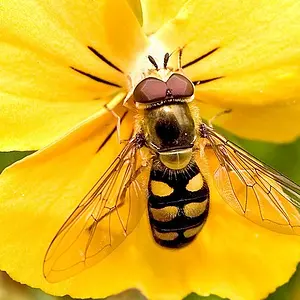
    All types. These were all or almost all shot manual mode with AF Tracking turned on.

    Allot but not 100% of my macro and wild-life (if you can call park life wild?) is all manual too. The ones's that arn't manual are shot in Program mode.


  • Why do you shoot in manual anyway?
    It's not really a distrust of the camera's suggestions as much as it is that I know better what I want than the camera does. A person with a furry black sweater... Do I care allot about the furry texture of the sweater? Sometimes the camera will clip that out and expose for the face - even sometimes considering the BG which I may not care at all about and would be fine with it completely blown out.

    Spot meter you say? Yes, they're great! I've loved in camera spot meters since the OM4 first introduced them. I like OM style best too where you can take up to 8 (in it's first incarnation) point samples and the camera would average them for you. But after I have a basic reading of a scene I don't need spot of area meters. If you understand the metering your camera has and can conclude the light conditions therefrom then the extrapolated manual setting from there just make sense. Program mode with a spot meter would be fine too but it's kinda troublesome. In matrix and weighted area metering modes too often the camera is fooled by dark or light surfaces. I'm not. :D

  • Is Exposure comp kind of like manual when you use a priority mode?
    No. Comp is just raising or lowering the elevation scale a little. See: http://thephotoforum.com/forum/showpost.php?p=1307145&postcount=4

  • How fast do you do manual settings and snap the shot?
    Click, snap. Snap, snap, snap. Click, snap, snap.
    About the same speed as a person reading that out loud. :D The "click" is the aperture or shutter adjustment.

  • I find it hard to do when most of my shots are moving subjects (sports for example)
    You shouldn't. The light isn't usually changing. If it is then I guess you need to meter for that. A football field at night is a great example. There are three bright spots (center and goal posts) with two 1/4 stop darker areas between - depending on the stadium of course! If I meter for an exposure between the two everything except the very darkest shadows will be perfect enough for magazines and etc. with just a slight touch to the slider in CameraRAW when bringing them in. Now let's say I have a really long lens and I want to get the guys facial expression when he's getting sacked by a HUGE linebacker. Well his Helmet and jersey are white and his face is in the sharp shadows from the face-guard and the helmet visor. Your camera isn't going to expose it right in any of the auto or semi-auto modes and there's enough difference there that maybe tying to do it in CameraRAW is going to add allot of noise and remove detail (like the texture of the black cream they wear under their eyes). If you're in manual with your grey-card exposure already set just open up the aperture a stop or two with the thumb-wheel, and take the sequence -> pacheet-pacheet-pacheet-pacheet-pacheet-pacheet (pacheet=sound of expensive autowinder :D) and thumb back to the grey-card setting again before you forget. It's one fluid motion.

  • Even moving the camera by a little can throw the exposure off by 1/3 of a stop.
    It all depends on the environment. A motocross track for example and you would be right. But the lights, shadows, dirt, and billboards around the track are going to cause a cameras auto exposure system to go kinda nuts. Track photography is kinda like fashion photography in that you get all set up for one position and then wait for the bike to fly into frame before squeezing off the sequence - and I'll spare you the text representations of the sound effects this time. :D Then it's off to the next position, etc.
 
Last edited:
...i find that hard to do when most of my shots are moving subjects (sports for example)...

Even moving the camera by a little can throw the exposure off by 1/3 of a stop.

Exposure only changes if the light changes. Moving the camera slightly usually doesn't change the amount of light, but the meter may change as the tones of the scene move around the various metering segments. As long as the subject is staying in the same light exposure remains the same. That's why I shoot in M. I don't want the camera changing the exposure because the tones of the subject have moved around the composition. I only want to change exposure when the light has changed, or my vision of the finished photograph has changed.

The meter isn't telling you correct exposure. It's telling you how to create a photograph where all the tones in the scene are averaged to middle gray. Depending on the metering mode the camera will give priority to various parts of the scene, and just changing the metering mode can cause the meter to give different settings even though the scene composition and lighting hasn't changed.

If I take a white dog and a black dog and have them sit on a green lawn under sunny skies, and compose the scene so that each dog is to the side, and there's green grass in the center my meter will probably recommend an exposure of approximately f/16 @ 1/100 @ ISO 100, and that will probably be about right. If I move the white dog to the center of the image the meter will recommend less exposure. If I move the black dog to the center of the image the meter will recommend more exposure. But the light never changes, so the exposure doesn't need to either.
 
I shoot manual out of habit. I've tried Av and Tv at times and will probaly use them sometimes in the future. I dunno. I just like manual.
 
There are many exposures you just can't get right with auto settings. I trust my exposure meter for certain shots, but it's good to understand when it can be wrong. I set my display to show the histogram after each shot. If you get in the habit of looking at this for each shot, you can see when you need to adjust the exposure.

The more you shoot manual, the more it will become natural for you to make quick adjustments and it will improve your photography skills. Yes, I use aperture and shutter priority, but only when they are appropriate for the situation.
 
But the light is always changing... Unless the subject isnt moving and ur holding still.. Like football, I dont have time to look at the meter to see if its exposed right...

And please stop comparing auto vs full manual, im mostly talking about a priority mode, not auto or program...

Unless you are used to using full time manual all the time I dont see why I would ever want to except in abnormal lighting situations such as night shots...

99% of the time I use Tv or Av, with exposure comp up to 2 full stops, that is enough most of the time, i havent had any problems.

Do I need to learn full manual? Or can I just use it for when I need a night shot or something different like that?
 
I set my display to show the histogram after each shot. If you get in the habit of looking at this for each shot, you can see when you need to adjust the exposure.

This is great advice.... but it is completely irrelevant of the shooting mode... assuming a desired aperture of f2.8.... if your histogram shows that your meter is off by a stop you can manually correct the shutter by a stop or use aperture priority exp comp +1 and achieve the same result.
 

Create an account or login to comment

You must be a member in order to leave a comment

Create account

Create an account on our community. It's easy!

Log in

Already have an account? Log in here.

Back
Top Bottom