What's new

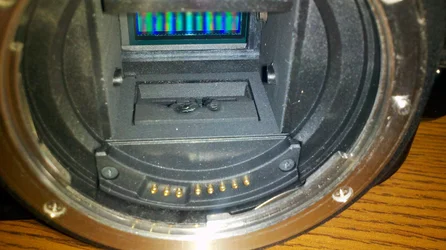
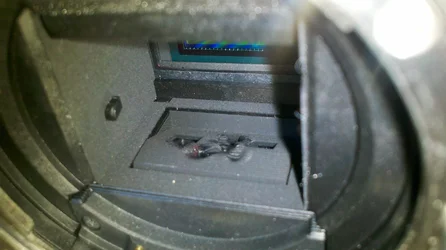
What Melted? Is this part of my AF sensor

vinny27911

TPF Noob!
Joined
Oct 5, 2012
Messages
3
Reaction score
0
Location
Western MI
I have an older rebel xt. I was recently taking a close look at it and noticed something melted below the mirror. Any suggestions as to what this part is called or how it happened?
Thanks!
 

Attachments

  • $2012-10-05_11-47-02_940.webp
    $2012-10-05_11-47-02_940.webp
    860.7 KB · Views: 257
  • $2012-10-05_12-51-44_524.webp
    $2012-10-05_12-51-44_524.webp
    643.6 KB · Views: 213
Last edited:
Yeah, the bottom of the mirror box...yup...that's where the nifty parts of the AF system are located.

Have you noticed any strange orbs in the night skies? Have you had dreams of being taken aboard an alien craft--of any kind? Has all of the food in your refrigerator suddenly acquired the taste of,say, weird chemicals,like those that aliens might have left behind after a midnight munchies raid on your food supply? Do you ever think, "Am I really on Earth, or is this maybe another planet where aliens have taken me after they melted my Canon's AF sensors?"

Does the persistent question, "Has my camera been.........probed?" nag at your mind?

 
Did you leave your camera sitting somewhere that the sun was shining on it? A trememndous amount of heat can be produced by the sun coming in through the lens just like a magnifying glass frying ants, it looks like maybe that is what could have caused "meltage" in that location.
 
My guess...and I am a noob.. is that trying to take pics of a recent solar eclipse may have done it. I tried the paper on the backside of the viewfinder to find the sun and used a cheap 650 to 1300 zoom lens but let the camera shoot in auto so the light coming in could only have been extremely minimal.?.? I've noticed focus issues with my 50mm prime and have attributed that to narrow field of focus and low f stops...
 
Yikes... I think you just answered where the heat came from. It does not take very long to melt that plastic and the sun light is so concentrated through the lens elements (think multiple magnifying glasses).
 
Even with the sensor only exposed for a fraction of a second the mirror in the DSLR reflects part of the light through the viewfinder and the other to the AF sensors. So they would have been exposed for much longer. The method itself probably worked with film in the pre-AF sensor era when inside you did just have the mirror reflecting light into the viewfinder. Provided you used the paper to see what the viewfinder showed (and didn't look through it yourself!) it wouldn't cause any damage.

Sadly I think this has just been an expensive lesson in astrophotography.
 

Create an account or login to comment

You must be a member in order to leave a comment

Create account

Create an account on our community. It's easy!

Log in

Already have an account? Log in here.

Back
Top Bottom