Noted.
I'll admit - I fear I'm going to make an ass of myself.
Really? Suddenly you lack confidence in your very strong opinions and near-guaranteed fake-spotting abilities on this subject? How could that possibly be? After all, "
Fake blur does suck, PS fake blur especially". That's why a fake is so obvious and easy to spot, especially for a pro art director such as yourself (obviously), and why it should "never" be used - amirite?
I mean, this shouldn't even require a close look, let alone spur feelings of insecurity, given that "
Fake blur does suck, PS fake blur especially", stated to let folks know that it quite obviously jumps out and screams "FAAAAAAAKE!!!", which is why they should "never" do it. I'm sure that whole jumping out and screaming thing is true for everyone who sees it since it "sucks" so bad, but it must be especially true whenever some expert PS "fauxkeh" fake-spotter like you or Charlie sees it, which is no doubt where your very strong opinions on it, concluding with the written-in-stone admonishment that it's "NEVER a suitable option", come from.
And golly, that should be double-especially true when it was thrown together by a mere hobbyist such as myself, rather than it being the work of an expert professional who does it for a living.
Well, maybe Charlie will show more confidence in his expert choice...
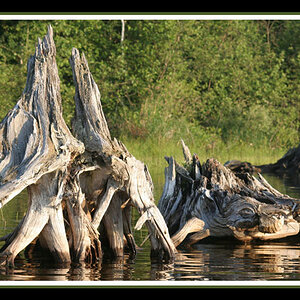
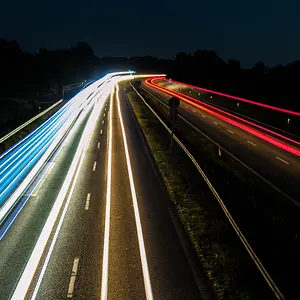
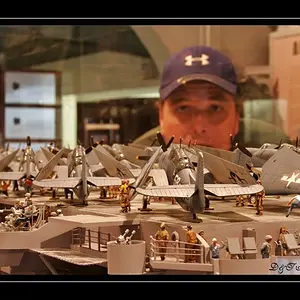
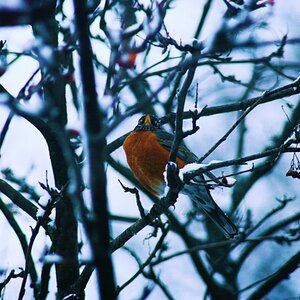
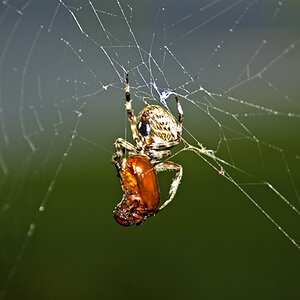
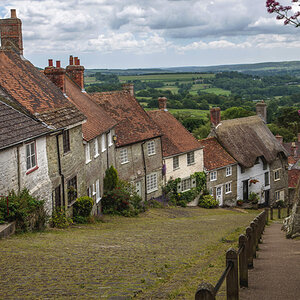
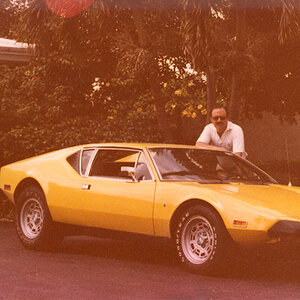
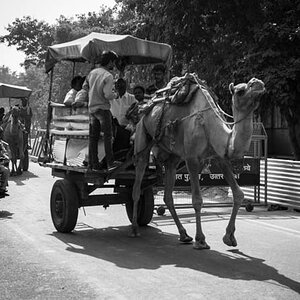
Here is the reasoning: the first has a swirl imperfection which isn't typically rendered. #2 looks too clean, the OOF region in the translucent plastic also may not be rendering properly, and the depth map appears inaccurate in the leaves in the upper right. There is also something off about the leaves in the foreground. My next guess would be #3, but this more looks like a lens with mushy bokeh at about f/4ish.
Reasoning noted. Looking forward to what others see and say about them, especially those with very strong opinions on the subject; Those who use words like "never" and "sucks" in association with the technique.
Either way, these are all examples of pretty ideal circumstances - objects far from their background with little middle ground.
You mean like the OP's photo? Not that it matters in any case, when we're going to use words like "never" and "sucks" to tell folks when it's acceptable to use it and why it's not ever acceptable to use it, of course.
If it's #1, I'll be impressed - even if the bokeh is less than pleasing.
Noted.
Btw, "find a better background (before shooting it)" as a suggestion to answer the question of how to improve an impromptu snapshot like this that's already made after the fact always seems a bit ridiculous to me - no offense intended. It amounts to, "go back in time and do it again, but better".
Or maybe you're trying to advise that this should just be thrown out because there obviously is no possible fix to be made, since "fixes" using PS suck and it has to come out of the camera right or it's just junk, so
next time you see some nice unplanned interaction like this while visiting a cousin (or other friend/relative/acquaintance), go ahead and stop the interaction between the little kid and dog, position them somewhere else with a better background (probably not even in that yard, since the OP told us that the fence SURROUNDS the yard, so it's basically always a background there in the yard, other than the house itself - which would likely be less than a delightful background either) then, when you get to the park or wherever your better background sans-fence is, tell them to stay on the X you've made on the ground so that you have your better background perfectly positioned behind them, and tell them to strike that nice, playful, natural, interactive pose you liked that just needed a better background, now that you have that better background in place behind them. Be sure to tell them to make their playful interaction look natural again, as though it was unplanned and the change in venue didn't interrupt that natural flow at all.
Is that how you'd do it? Is that really the best advice someone who shoots photos of dirt and sticks on the ground can give to someone looking for ideas to improve a snapshot
already taken of a kid and dog playing in their back yard - "go back in time and transport the kid and dog to someplace with a better background before shooting"?
There are ideal circumstances that require little or no post processing, and it's great when that happens naturally or when we can pre-plan it to happen. But for when that can't or simply doesn't happen to be the case, it's good to have post processing techniques to fall back on in a pinch.
I don't personally know anybody who routinely shoots with the attitude, "I'll just fix it in Photoshop". Unless they really realize at the time of shooting that there simply is no other way to pull it off, or are planning a composite or something from the outset, "fixing" a shot in Photoshop is usually an afterthought that comes to mind when viewing the shots long after the shoot's over and something jumps out as out of place that didn't jump out at the time the shot was made.
I think (and it's just my personal opinion, mind you) that the idea that there are droves of pro, semi-pro or serious-hobbyist level photographers out there who shoot willy-nilly and without a care at all to backgrounds or details or DOF or light or shadow or anything else of photographic consequence all day long
while muttering to themselves, "I'll just fix it in Photoshop" is just a made-up persona created by "purists" who often have little to no ability with Photoshop (as an all-encompassing term for digital post-processing), and use that "purist" anti-Photoshop attitude as a justification for their own ignorance and lack of ability with modern digital post processing techniques.
People don't just pick up Photoshop one fine day and successfully start "fixing" problems with their photos, especially not big problems, any more than they bought all the stuff for a darkroom one day and successfully started "fixing" problems in that medium right off the bat. As has always been the case, there's a learning curve involved in processing and printing, just like there's a learning curve involved with using the camera itself. There's nothing new about that. Ansel wrote books titled, "The Camera", "The Negative" and "The Print" about a million years ago because it's NOT JUST all about getting it right in the camera and then you're done - and it never has been.
As a photographer hones their post-processing skills and acquires knowledge and experience with how to "fix" things in photos, they come to realize that it is indeed usually much easier to get it in the camera in the first place, rather than have to put in the work required in post to "fix" it, so they do. Without the PS skills yet to "fix it" Photoshop, they don't have the mindset, "I'll just fix this in Photoshop" while they're shooting because they don't have the skill to do so yet. That's why they come on here and ask us how to do it - to learn the techniques and acquire the skills. And in a pinch those skills and abilities will be able to help them.
But that doesn't mean they'll use those acquired PS skills and techniques as a matter of conscious choice at the time of shooting, rather than just take a step to the left for a better background or dial their aperture to get a more appropriate DOF while shooting, while saying to themselves, "I'll just fix it in Photoshop".
The whole idea smacks of baloney piled high on a purist's inferior-PS-skills sandwich to me.



![[No title]](/data/xfmg/thumbnail/32/32702-7344d6e6132276dd7bfc046084fea432.jpg?1734162266)