Once you got your display technology selected the differences come in a lot of processing features as well as standard size / resolution.
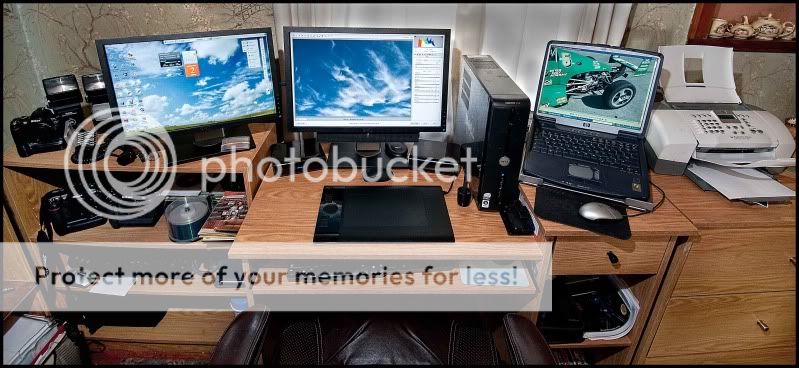
For instance the thing that sets an IPS display like the NEC Multisync 2690WUXi (which is what I use and recommend should you have loads of cash

) apart from a bottom of the line Dell IPS display is, wider gamut, backlight correction which ensures that the display background is evenly lit, and a 12bit Colour LookUp Table (LUT). These are important for seeking the perfect picture. Colour lookup tables are especially important if you have that extra dollar and a calibrator as they allow you to calibrate a display without negatively affecting the quality of the output (as opposed to video card correction curves). Display gamut is also a great thing for photography as cameras can capture a more pure set of colours than the standard displays can display, and printers can often print these colours too.
The two problems are a) the law of diminishing returns meaning video card correction looks pretty damn good already, and there's really little value in working with wide gamuts unless you make really high quality prints of your work, and b) these displays are designed for the purpose of editing. They are thick and heavy and don't look anywhere near as cool in a designer home, IPS displays in general have a slow refresh rate compared to other technologies making them potentially uncomfortable for gaming or movies if you're really sensitive, and wide gamuts .... well lets just say I don't recommend them to anyone who likes a normal looking computer as you start needing special software to see colours correctly. For instance Internet Explorer, Windows Picture Viewer, Office, even Adobe Dreamweaver aren't monitor gamut aware meaning that they display colours overly saturated. Actually to go one step further if you have a web design company DON'T get a wide gamut monitor.
So there's a lot to consider but ultimately it comes down to how much money you want to spend, and how specific your application of photography can be. You run a photo studio I highly suggest the Eizo above, or the NEC. If you have a home computer where you do all sorts of things maybe start looking at the cheaper ones. Afterall that leaves more money for camera gear







![[No title]](/data/xfmg/thumbnail/35/35868-15d995e4052bf05e2038e8b2a545a08f.jpg?1734167589)




![[No title]](/data/xfmg/thumbnail/32/32717-74f4cee577117aa4476c9eb68fec51c7.jpg?1734162352)


![[No title]](/data/xfmg/thumbnail/35/35957-c79b37130dc06cbdee3b56de92a35fe6.jpg?1734167784)