What's new

Where and how to focus?

Rob4bama

TPF Noob!
Joined
Jul 22, 2012
Messages
79
Reaction score
4
My wife took me to a minor league baseball game. We had pretty good seat behind the 1st base dugout. When photographing the pictures, I had some questions on on focus points and metering. I have a Canon 60d and Sigma 70-200, non-OS lens.

1. I know we should focus on the face. I used the center AF point. Well that put me around the waist. Should I have left it on the center AF point or used the higher AF point for his head?

2. I don't know the difference between evaluative metering, partial metering, and spot metering. I used spot metering most of the evening. I've read the differences in them, but when using spot metering around the waist, I my pictures came out different because I would focus on the dark shirt once then the white pants next. What would you have done?

3. My father-in-law wants me to take a picture of a house. I also have a sigma 17-50, f2.8 lens. Should I use spot metering on the center of the house with a center AF point? I guess it just depends on the lighting and color situations.

Thanks for any help. This board has been great my short time here!
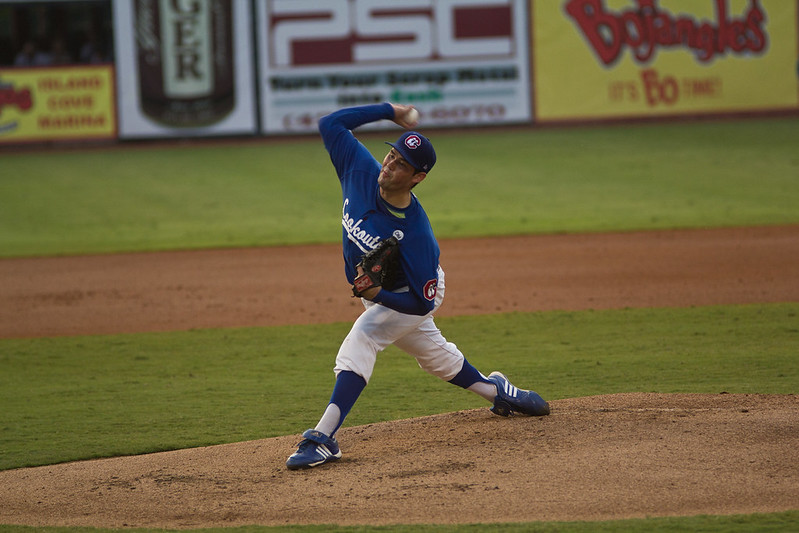

IMG_75132907 by rob4bama, on Flickr
 
Use the higher focus point

Meter according to what is easiest for you. If you were metering their jerseys in this instance I'd have metered to +1.
I actually find it easier to shoot in full manual for a situation like this one. The LIGHT isn't changing, but depending on what your meter hits it will change quite a bit.
I would have spot metered the grass to be about 0 and set my settings from there. If the LIGHT changed I'd meter the grass and adjust accordingly.
When you use a priority mode and your meter is going to hit multiple colors that vary a lot in bright to dark your settings will change.

You could have gone to an evaluative mode for metering on this one easily. You are not going to get any shots with the uber bright sky in there to throw you off. Your meter would have evaluated all of the pixels and tried to make 0 based on the light to dark in the whole image. I'd have probably exposed to about +1 or +1/2 if that were the case. You have some darks in this scene and I'd want it to be a bit on the brighter side than that image would be if you turn it to grayscale.

What color is the house?
I am going to find you the metering tutorial I posted for someone else the other day. Hopefully it'll help you.
 
First, I never took any sports photos like that. However, if I am going to spot meter, I will try spot meter and exposure lock on the grass.
 
I am HOPING that the links in this still work:


In camera meters don't measure the light in your scene. It's not like a scale or a tape measure that measures the ACTUAL LIGHT in any quantitative measurement. It measures what the reflected light from your subject looks like. A light meter actually measures the LIGHT of your scene and tells you what proper exposure settings should be. It's a ruler for light.


Now you are saying... um... ok.... what is the difference? Let's use snow as an example: A foot of light fluffy snow could weigh 1 ounce. A foot of heavy wet snow would weigh more like 1 pound. They both APPEAR the same-it's a foot of snow!!! But in reality one is heavier. It's the same with light. Things can look the same, but they aren't.


Your camera's meter takes that reflection off of whatever you are metering-could be snow, could be a black backdrop. No matter what it is, your camera tries to make that reading equal middle of the road or middle gray on the light to dark scale. (This is changing in newer cameras, but the basics always will hold pretty true) The camera doesn't know if you are metering a black scene or a white scene. It only knows that average exposure should be middle gray.

Take a look at a black and white photo.

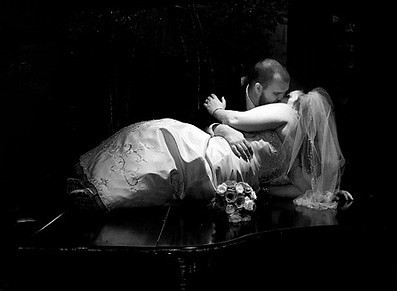
5222347712_e624674922.jpg

If I had metered off her dress it would have made her dress middle gray... This color:
5669701760_6673f951d4.jpg

Her dress would be really underexposed at that color. If I metered the background the camera would have tried to make that middle gray. Her dress would have been blown out. On this particular image I probably would have metered skin if I wanted something to be middle gray.


Now that you know that much, you also have to consider what the metering modes are using your scene and trying to average to middle gray.
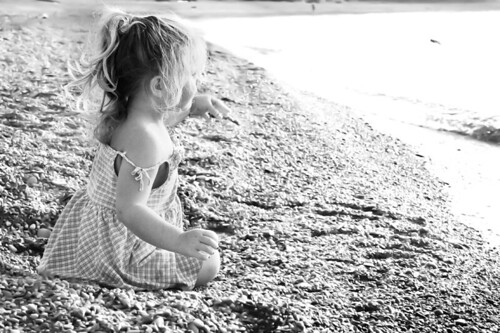
Evaluative metering is measuring the whole scene. Sky, water, child playing in the sand... EVERYTHING and it's trying to make it average middle gray. Just like a grade in school it adds all of those pixels up and tries to equal middle gray when it divides them out. On the beach with the sky and water? Probably not going to be extremely accurate. For example this photo of Haley on the beach.
5629395008_bed501f63b.jpg

Convert it to grayscale and look at the bright and dark of it:
5557193130_1aed6a6f8a.jpg


If I average the pixels out this is the gray they come out.


5556608597_a74cebc8f7.jpg


Compare that to middle gray and it's a lot brighter tone-and there was a lot of dark stone in that one.
If you're on a white sandy beach on a bright day your gorgeous child playing in the sand is probably going to be drastically underexposed. You have lots of bright sky pixels, lots of bright sand pixels and a few dark ocean and child pixels... The bright ones win and hold the average up. In high contrast situations like my beach example evaluative doesn't really work well.
Consider an average setting like maybe your living room (assuming your walls are fairly light) with your kids playing? It might work really well!


Center Weighted average metering takes all of the pixels into consideration, but like a mid term and final test is worth more points than any other test, so are the pixels in the center of your scene. It averages all of them together and counts the center ones multiple times to make them more important than the outer pixels. It would sure help with that beach scene to make the pixels that were of your child more important. Closer at least!!!


Then there is Spot Metering. Your meter only evaluates the pixels you put your SPOT on. This works well if you can train yourself to look at the scene in terms of light and dark and decide what you want to be the middle tone. White, non-african/asian/indian etc skin is not usually middle gray It's much lighter. Think of when you convert to black and white. Is skin ever that color ^ up there? Nope. I find that your average grass is a good middle gray outside. My light oak hardwood floors indoors are a good middle of the road. For the image of Haley I would have metered Haley's skin on the back of her arm and then set my exposure to about +1 or JUST before the skin would blow out.


So, now that you understand metering a little better and have a better friendship with your meter it'll be easier to make it do what you want it to do.
 
Thanks for the replies guys! Unfortunately, I think you think you're dealing with someone smart. When you say "meter for grass", what does that actually mean? Do I point the camera to grass, depress the button and look at that +3 to -3 scale, see what the camera picks, and manually adjust it to that? I'm a beginner and probably haven't gotten that far yet. Thank you for the help so far.

I read the post on metering and it was great. I guess my question is when you say "meter for.....", how do I do it? I reread my post and said I spot metered at his waist. I don't think I know what I'm talking about. I focused at his waist. I don't even know what spot metering is...:)
 
You need to start HERE to understand exposure and how it is created. Start with the first tutorial and just keep going from there...
 

Create an account or login to comment

You must be a member in order to leave a comment

Create account

Create an account on our community. It's easy!

Log in

Already have an account? Log in here.

New Topics

Back
Top Bottom