I definitely wouldn't say mirrorless is too advanced for a beginner. In fact, it can be really helpful in learning how to expose properly because you can see the effect you have on the picture in real time on the viewfinder.
Here's my favorite site for gear reviews:
2016 Roundup: Interchangeable Lens Cameras $500-900 They're comparing all ILCs in that price range, but you can just read the reviews on mirrorless. They're very thorough and fair.
Wow, now I feel like I didn't do my homework well. Thank you so much for a great info.
You will have a lot of fun with a nice MILC. The deep depth of field shots thart the iPhone can captue will be much harder, but low-light shots will be better due to the larger sensor and better higher-ISO performance of the MILC versus the iPhone. You've got this.
Do you need a specific set of equipments for the iphone-like deep depth of field shots or is it all about the knowledge and experience? That confidence boost though

Fuji makes a very high quality camera. I own a number of them. Both cameras use the same 16mp sensor. The X-T10 comes with a viewfinder and a better kit lens. The XF 18-55 kit lens is a wonderful sharp kit lens and is an f/2.8 which means you can capture images in less light than with the XC 16-50 kit lens that comes with the X-M1 and is a F/3.5.
Honestly, they are very eye-catching. I love the way they look and feel in the hands.
Have you done much of video recording on those? I know I probably will not be doing much of video, but is it SO bad that every article that I read about the Fuji mirrorless system have to mention that?
Haha, I'm sure you've done your homework, it's just a matter of knowing which websites you can trust and which ones are being paid to advertise products. There are always biases, of course, but a few websites tend to be more reliable than others.
As for depth of field, in most cases, yes, nearly any set-up can stop down to the same depth of field as a phone. The only time you might need specialized equipment is for macro shots. It's easy for a phone camera to get really close to an object. Not all lenses will focus when they're too close, unless they're a designated macro lens. But that's probably not something you'll need to worry about for awhile.
As for video...well, honestly, yes. Fuji video on those older cameras is pretty bad. Moire, noise in the shadows, autofocus hunting, inability to change ISO or aperture, the list goes on and on. It has improved in their newer cameras, though, so if it's only a stepping stone until later, then it's no big deal.
My biggest problem with Fuji is the incompatibility of their RAW files with Lightroom. I do a lot of post processing, and I usually start in LR, switch to Photoshop for any composites or layer work, then swing back into LR to finish up and keep my folders organized. With any other camera, this is no big deal. But with Fuji, you have to either work with a DNG file or use something other than Lightroom. Not using Lightroom means that to switch into Photoshop you have to save, export, open, etc. It would ruin my workflow.
That being said, Fuji probably has the best jpeg files of anybody, so most people that use it probably do so because they don't like processing pictures themselves and want the camera to do it for them.
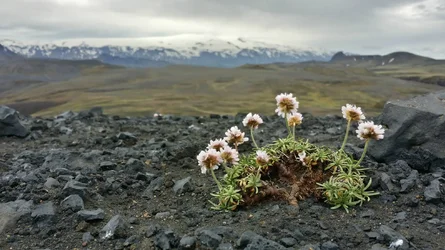
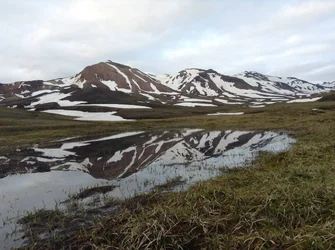
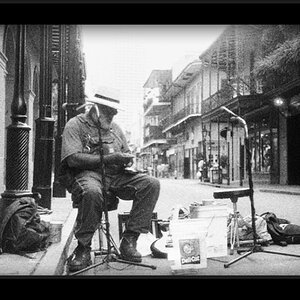
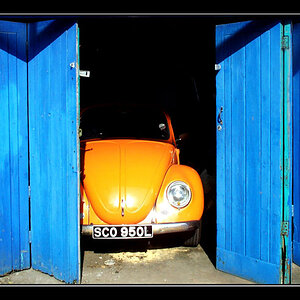
Looking at your photos, you definitely have an eye for composition and seem to understand the importance of good light. I wish there were raw files of those photos, though, because some post processing could take them from "nice" to "wow."
Here's my take: If you don't want to spend any of your time in front of the computer, Fuji is your best bet. They have amazing lenses, they're just more expensive and heavier than other mirrorless choices. If a small form factor is your highest priority, look at micro four thirds camera from Panasonic and Olympus (Olympus has the edge in stills, Panasonic has the edge in video.) If you want maximum post processing power (both in dynamic range and high ISOs) then look at Sony.