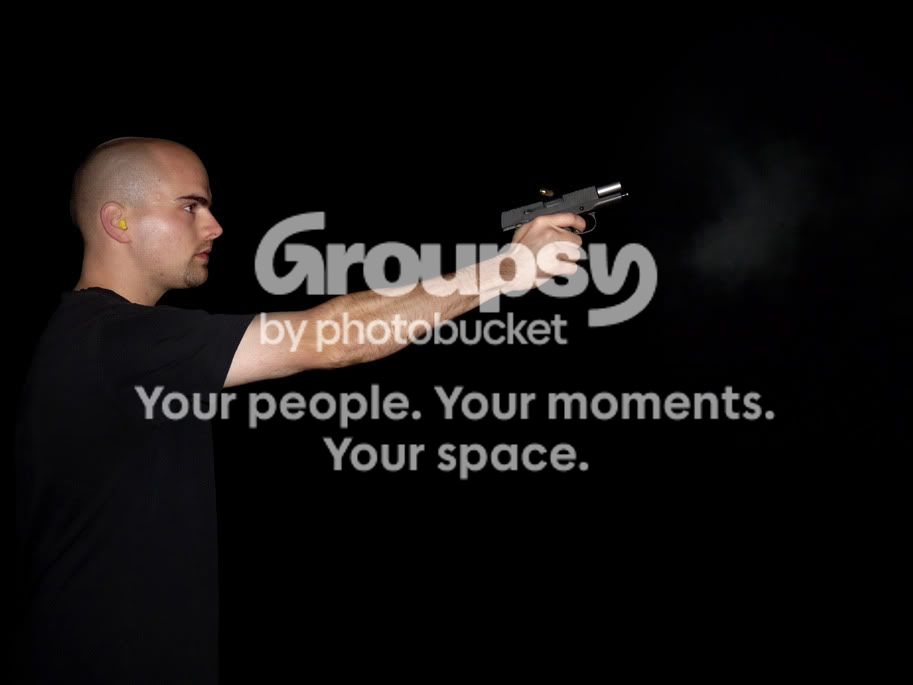
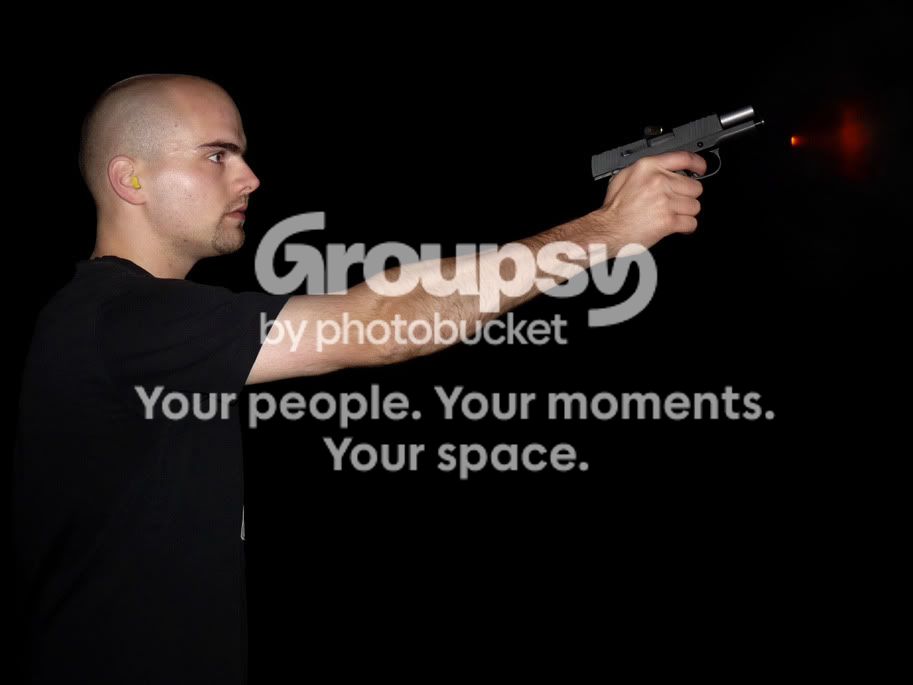
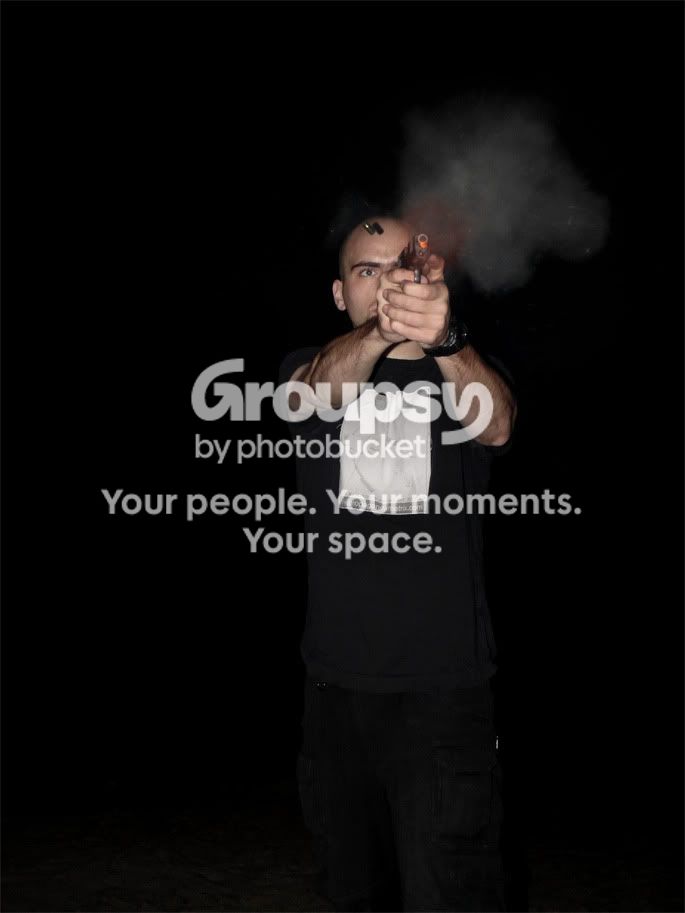
Of course there is no motion in the still image I would assume you would understand what I was talking about. The shooter looks completely stiff and I guess posed his finger looks like it is poised over the trigger not squeezing it. Most gun pics of weapons firing (and I have looked at alot) have more of a yellow flame than a bright red. Lastly, the timing on this one was ABOLUTELY PERFECT. It was an amazing stroke of luck to capture a muzzle flash before the slide has retracted. Again I am not trying to impugn the OP's motives in any way and if this image is real I have to say it was AWESOME!! just a perfect moment. All in all it is a decent image but to me again, it just looked a little fake. Criticism of an image should not be taken as some kind of attack on the image I mean otherwise why would you ask for it. Honestly, I hope this is real as if it is the OP should play the lottery with this stroke of luck catching an image with this kind of impeccable timing.
Appreciate the additional explanation. Here's my take on the timing issue and the red flash, etc.:
Having dealt with some long exposure photography, including the techniques for employing it for use in high speed photography with flashes, it occurs to me that the muzzle flash would register no matter when it happened during the exposure.
So, for extreme example, imagine that in pitch black darkness we set the exposure to 10 seconds long and use no flash at all. We pull the trigger of the gun somewhere half way through that 10 seconds. What do we get? We get the muzzle flash exposed on the photo, and little or nothing else.
Now let's say we do the same thing, but this time we flash a strobe at the very beginning of the exposure, and fire the gun five seconds later, again half way through the exposure. What do we get? We get a photo of the guy holding the gun before pulling the trigger, combined with the muzzle flash that happened 5 seconds after the strobe fired.
Now let's say we fire the strobe at the end of the exposure, at 9.5 seconds, and still fire the gun half way through at the 5 second mark. Now what do we get? We get an exposure that shows the man holding the gun and any smoke from firing it as it appeared 4.5 seconds after the trigger was pulled AND the muzzle fire that was captured half way through the exposure.
Do you see what I'm saying about how the timing to get the muzzle fire doesn't have to be dead nuts perfect, just has to happen anytime during the exposure? Can you also see why the man and gun will be frozen in place, even before or after the trigger was pulled, and still have the muzzle flash?





![[No title]](/data/xfmg/thumbnail/40/40288-4d5d7a8aa74ddfceb5fb82062d9b21be.jpg?1734174702)
![[No title]](/data/xfmg/thumbnail/32/32709-80f0f0432fd5ec548a3efdb60ef77d46.jpg?1734162305)
![[No title]](/data/xfmg/thumbnail/32/32713-7df5aadb952fa8e00260cc48bbf6ab0b.jpg?1734162330)
![[No title]](/data/xfmg/thumbnail/31/31749-6cf0f99d6bdedf47f7387c5b943fb717.jpg?1734160468)