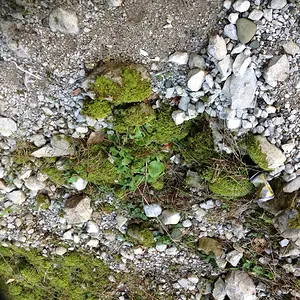
Hmm on the flash side of things I can't seem to find much info ( but I shoot canon so don't have as much grip on the nikon range) but does teh ringflash let you adjust each of the two elements independantly of each other? So you can have one a little more powerfull or weaker than the other? That would help to give you some shadowing effect in the shot. Failing that white tiolet paper or any similar material would act like a diffuser and iff attached to one side would lower that sides power output (and thus again help to create shadows.
You could use your SB600 though I would fit it with something like a lumiquest softbox so that you get softer light. Idealy you want some sort of flash bracket (most macro shooters wind up with something slightly custom for this if they go this rout) so that you can position the flash above the end of the lens and angled toward the subject - gives a goo overhead lighting source that is similar to natural sunlight - and the angle allows it to light the lower areas of the shot rather than direct above he subject light which would give harsh shadows.
I would keep going with the ringflash first though - as with some custom diffusion and such you can get some good light out of it.
Settings wise myself I tend to use the following settings when shooting handheld:
ISO 100/200 mostly as ISO 200 is my basic ISO I use but either works very well and idealy 100 should be used for the least noise. Higher ISOs will give you more noise in the shot but also have the advantage that the flash has to put out less power and so can help to bring the background areas out a little more - whereas with flash being dominent they tend to be lost to darker exposures than the main subject. Of course distances is very key here - close up backgrounds catch enough flashlight to be lit whilst far off ones do not.
Aperture - f13 is my most normal and the lowest I go is f16. Around f16 (on most setups* ) diffraction starts to kick in and that will lead to softer overall shots no matter what you try. By f22 it should be quite noticable on most setups. Going wider (smaller f number) is possible, but the depth of field of course lowers
Shutter speed - 1/200sec - fastest speed I can shoot with my flash and camera body without going into highspeed flash (whichstrips the flash of needed power to achive). for handheld I would go for the fastest you can whilst for tripod you can go slower, but bare in mind subject movement and wind might be factors to consider.
Focusing wise full manual - more accurate and far quicker than auto focus in my experience.
* the actual point depends on lens and camera used and often its not so much a hard line as a general drifting into softer settings.



![[No title]](/data/xfmg/thumbnail/34/34593-f9e16dc135ec1fcde87624f30e703802.jpg?1734165595)
![[No title]](/data/xfmg/thumbnail/31/31011-439c1242fe08cf6b54f32bf06523a567.jpg?1734159083)