What's new

cameras limitations or image editing

jacsul

TPF Noob!
Joined
Jan 1, 2009
Messages
136
Reaction score
7
Location
Earth
Can others edit my Photos
Photos OK to edit
Hi all,
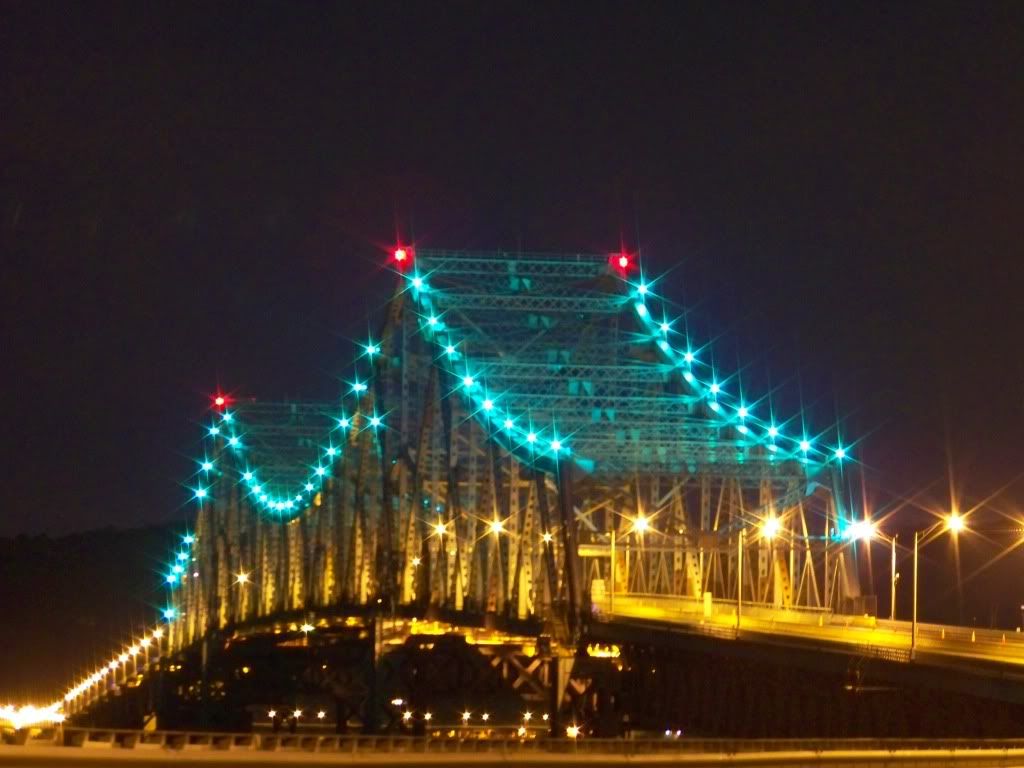
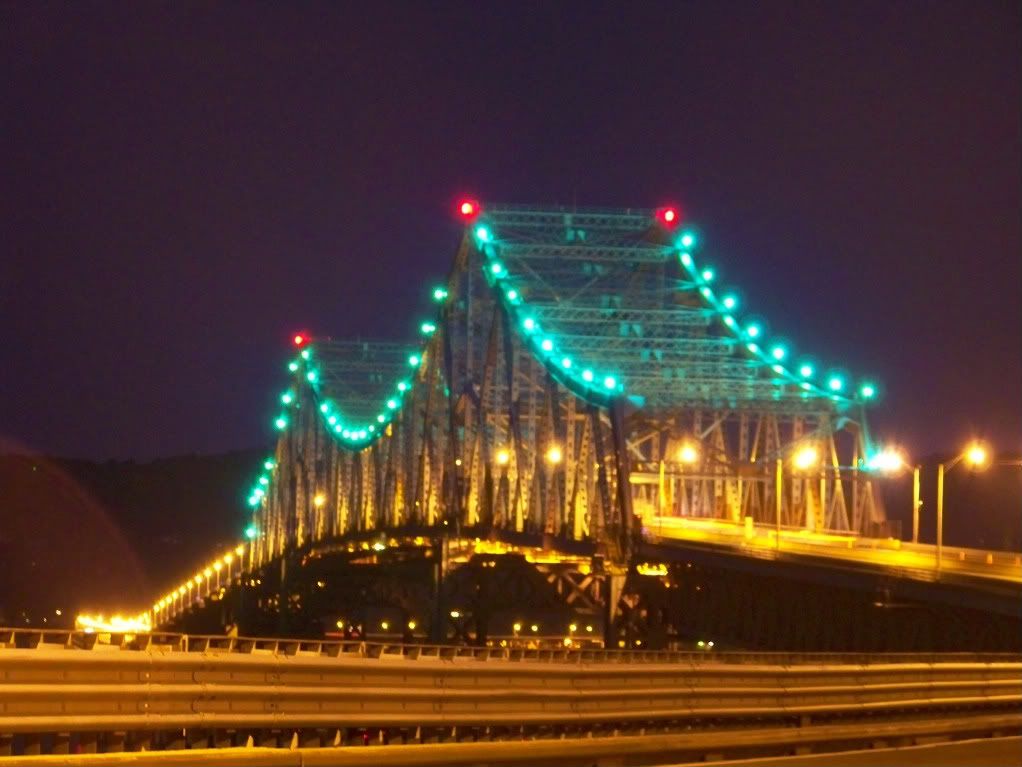
I've seen some night photos that are crystal clear. I can't seem to get the same image quality. Any suggestions please.

Thanks
Jack

Picture047.jpg


Picture049.jpg
 
For starters, what kind of gear are you using? Camera? Lens? Was it taken on a tripod? What setting was the camera on? (A,P,M, etc). We need more info than just a picture to tell you what went wrong.
 
Hi all,
I've seen some night photos that are crystal clear. I can't seem to get the same image quality. Any suggestions please.

The dirty secret: they weren't shot at night!

There is about 10-15 minutes of 'Twilight' and similar at 'Early Dawn' where the sun is below the horizon, but the sky is still lit. Most 'night' photographs of a similar style to the ones you posted are from these time periods. The sky is a very nice, deep blue and the street/bridge lighting is on and visible. There are some pretty extensive writings on this subject that you can find.

Edit:
I think that there are some good tips in this link, and his bridge shots have the look that I think would go well with your shots. Don't get me wrong, shooting at dead-black night is certainly possible, but from looking at your images I guessed that you were interested in this technique.

http://digital-photography-school.com/twilight-photography-tips
 
Last edited:
Both images have substantial noise. Your EXIF data has all been stripped so we can't see any of your camera settings.

The first images was made with a small aperture and thats why you got diffraction spikes on most of the lights. Diffraction can also soften the focus. You don't want to be at the small extremes of aperture. This one has better focus than #2.

The second was obviously made with a larger aperture. It almost looks like there was a thin film of moisture on your lens. If the temperature of the lens was substantially different then the air temperature it's certainly a possibility. At night I usually wait a good hour to give my glass time to equalize with the air temperature.
 
Last edited:
Both images have substantial noise. Your EXIF data has all been stripped to so we can't see any of your camera settings.

The first images was made with a small aperture and thats why you got diffraction spikes on most of the lights. Diffraction can also soften the focus. You don't want to be at the small extremes of aperture. It has better focus than #2.

The second was obviously made with a larger aperture. It almost looks like there was a thin film of moisture on your lens. If the temperature of the lens was substantially different then the air temperature it's certainly a possibility. At night I usually wait a good hour to give my glass time to equalize with the air temperature.


i learned a few things i didnt know from you post.
1. wait for the lens to equalize with the air temperature
2. how to get those spikes on lights... cool

thanks
 
I've also heard that turning off your camera/lens' vibration reduction while on a tripod will result in a sharper shot. The idea is that the VR function is always looking to stabilize the image, even if it doesn't need it.
 
I've also heard that turning off your camera/lens' vibration reduction while on a tripod will result in a sharper shot. The idea is that the VR function is always looking to stabilize the image, even if it doesn't need it.

heard that too, plus using mirror lock-up helps, if it is available. i found out that turning off VR lets me take better pannings but that is another thing.
 
I could be wrong here but it looks to me like the ISO was pretty high, judging from the noise in the sky. Try it again with the ISO at 100 or 200 and a longer exposure (tripod, of course)
 
So you shot the first one with a KODAK EASYSHARE Z1012 IS Digital Camera at f/4 shutter at 2.5 seconds and ISO 400. I'm thinking if you put the ISO as low as possible on ur camera (i'm not sure what ur lowest is, my P&S goes down to 80) and cloes up the aperture and slow down the shutter speed. Usually when I take my night shots I do it at f/16-f/22 and 30 sec exposure at 100 ISO
 
Thanks for the insght, the stary effect of the lights (spikes) is what I'm most concerned with, I believe it's the lens shortcomings. Low ISO, High ISO - Closed aperture, wide aperture, same effect. At first I thought I may have a dirty film on the lens or some humidity so I re-took shots under similar conditions and got the same effect. It's nearly impossible to shoot a bridge without some movement, take notice there's no traffic.
Is there some type of filter to use to give the lights more clarity?

 
Last edited:

Create an account or login to comment

You must be a member in order to leave a comment

Create account

Create an account on our community. It's easy!

Log in

Already have an account? Log in here.

Back
Top Bottom