The MP-E 65mm isn't just a typical macro... it's an extreme macro photography lens.
A typical macro allows focusing from fairly close distances (close enough to image a subject at 1:1 scale -- meaning the size of the subject on the sensor itself are as large as the object is in real life) but macro lenses also can be used a typical lenses and you can focus all the way to infinity (a subject doesn't have to be close.)
The MP-E 65mm is different... the subject has to be close. The "farthest" you can be from the subject is 1:1 scale. But you can be as close as 5:1 scale (subject is 5x large on the sensor then it is in real life). So that's a specialty lens.
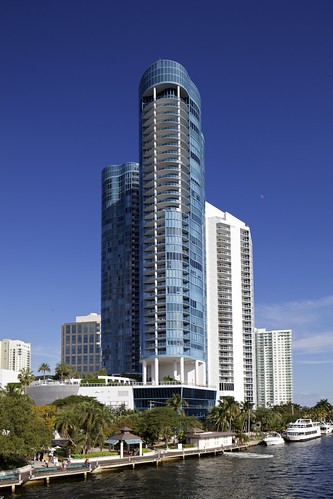
The other specialty lens you have is the TS-E 24mm tilt-shift lens. If you've ever taken a shot of a tall building from a close distance you might have noticed that the building appears to be "leaning" back. That's a perspective problem. The tilt-shift allows you to "shift" the lens elements laterally (up/down or it can be rotated to shift left/right) and this corrects for that distortion lean.
Here's an example:
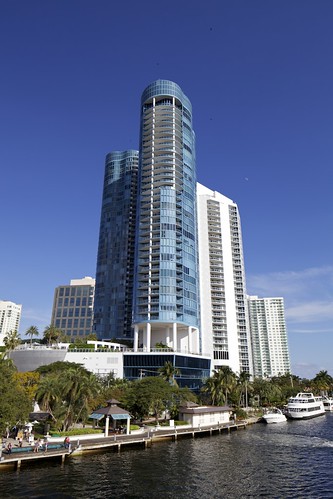
These are shots I took with my TS-E 24mm with the camera located in the same spot (I didn't move). The one on the left is what you'd get from a normal lens. The one on the right is "shift" corrected.
But the lens can also "tilt" and that alters the plane of focus using something called the Scheimpflug principal. It's handy in landscape photography because you can "lay" the plane of focus down on the ground so that everything is in tack-sharp focus from close to far... and it doesn't require using a high f-stop (which results in diffraction issues that soften the image.)
That's a very expensive lens (over $2k). By the way... it's fairly easy to get the hang of how the "shift" works, but learning how to control the "tilt" is a bit tricky and takes some practice. It's one of those lenses that will tend to baffle beginner's until they finally figure out how it works.
I couldn't tell what lens was located behind your 1.4x teleconverter (focal length multiplier). Anytime you see a red stripe around the front of any Canon brand lens then it's a Canon "L" series lens -- those are Canon's highest quality lenses and typically very expensive. You'll also notice the upper case (and red) letter "
L" following the focal ratio. E.g. instead of EF 16-35mm f/2.8 USM it'll say EF 16-35mm f/2.8
L USM.
I see you also have the EF 16-35mm f/2.8L - a very nice wide-angle zoom.
The other lenses are inexpensive consumer grade lenses.
What I don't see is a lens that covers the "normal" range for these cameras -- usually a zoom lens that covers the 50mm range. The common lens for someone who owns Canon's high-end flag-ship bodies (which these were back in the day) would be the Canon EF 24-70mm f/2.8L USM or the EF 24-105mm f/4L IS USM. Another lens that someone with a flagship body would have commonly owned would be the EF 70-200mm f/2.8L IS USM (it would have a white barrel instead of a black barrel.)
If you plan to use them, then I might look for either the EF 24-105mm f/4L IS USM (you can often find that lens for about $600 because it was included as a "kit" lens with some full frame bodies and the buyers would often want to 'upgrade' to the EF 24-70mm f/2.8L USM and not use the 24-105mm f/4... so the lens is officially somewhere around $1000 new but can often be found for about $600 as a "white box" lens (generic packaging because it was included as a "kit" lens but the camera buyer doesn't want it.) Canon also now makes the 24-70mm in an f/4 version with image stabilization and that's less expensive than the 24-70mm f/2.8.