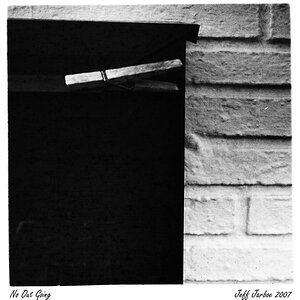
View attachment 104192 View attachment 104193 View attachment 104194 View attachment 104195 Hello,
I am new to this forum and found it simply because I was looking for a place to share my photos. I've been experimenting with photography for about 5 years and recently discovered that portraits are what I love shooting most. I would really appreciate some feedback on these, thank you!
Pretty much in agreement with what's been said. IMO, your cropping is poor. You cut off parts we'd prefer left intact and you show us parts that aren't what we need to see.
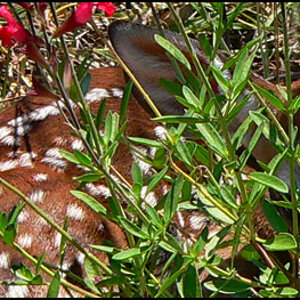
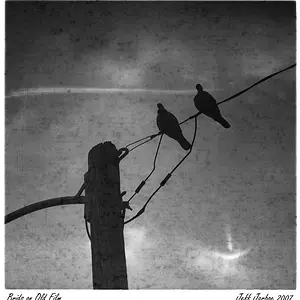
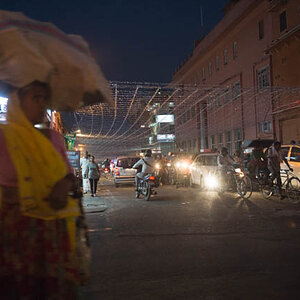
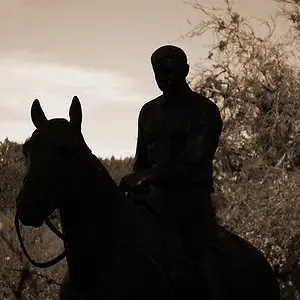
What are you trying to do with lighting? Every shot has essentially the same look. IMO the "look" isn't flattering. It's flat and lacks dimension. Nothing to make a subject stand out from the very plain backgrounds. Nothing to sculpt a face. Once you've shown us the same style in several photos, unless you begin to break up the pattern, we aren't expecting anything new so we stop looking for anything new. Then we eventually stop looking period. And while your models aren't unattractive, the neutral poses you've used are just blah. If you're not working with a model who can insert some personality into the shot, it's up to you as the director of the scene to give the model a thought, an action, an intent to go for. Something other than, "I'm posing now". Your second shot misses the mark in that regard.
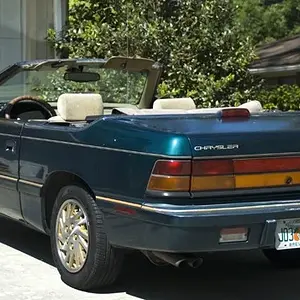
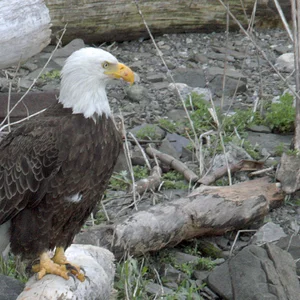
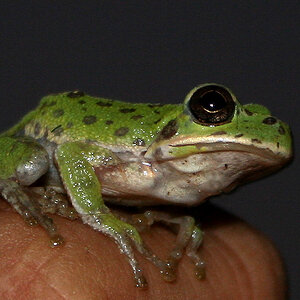
The fence and the semi-dead leaves in your third shot have more dimension than your subject's face. Black clothing is generally a bad idea for portraiture, as is white. Look at what's in your viewfinder before you release the shutter. Are you using the histogram your camera likely provides?
Available light photography is fine, you simply need to learn how to make the available light work for you and not against you. If you are using additional light, make it too work for you. Artificial light is meant to add some "POP!" to the image. Or, at the very least, to reduce the overall flatness and sameness of just having light.
First, work on posing your models in an interesting manner. I would argue the "recommended" posing styles for women should be put in the trash bin/shredder. They are mostly too cheese-cakey, meant for men to see types of poses. Forget them. Most females will find nothing of interest in a shot of some woman looking provocative.
Sort of like most women likely cringe when those gals selling ED remedies come on TV. Geezobeezo! Makes me want to gag! Flowing skirts and wind blown hair. Soft lighting, soft focus, whispery voices and airy background music. Who directs that crap! Get them off the bed, standing up straight in a suit and talking about how this stuff can give you a ... "problem" that lasts for four hours before you finally wise up and head to the ER to 'splain what happened. About how your frickin' heart can explode! Now! You still want this stuff?!
Pick poses that show a woman in a flattering manner but not a provocative display. Concentrate on what women see and you'll be fine. When Jenner made the cover of Vanity Fair, one talking head's daughter said, "She's been a woman for three hours and already she's covering up her arms." My reaction to Jenner was, "Great! why the cheesy boudoir shot?" She is 65 after all. Time for a nice print house coat and some slippers. And a box of Thin Mints on the table.
There are "girl" poses and there are "guy" poses. Each meant to show off the best of the human figure without making one set just a bunch of girls posing for guys shots. Put a woman on an equal footing with a man and you'll win most women's approval.
Forget "flirty", it's sooooooo Mitt Romney for President.
Your shots are all so "posed". Loosen up your subject's look. Try some more un-posed shots and some candid work. Let your models move.
Your first shot is the only one of the group with any catch lights in the subject's eyes. Adding such small details - not just catch lights but the whole gamut of details which go into an attractive image - will make your photos more appealing and more memorable. Little things such as tilting the model's forehead forward just a bit add to the power of the image. All in all, it appears you may enjoy portraiture but it doesn't really appear you've bothered to study the artistic or the technical side of the style.
Portrait Photography s Power Posing Part I The Components - Digital Photography School
Where is Your Subject Looking and Why Does it Matter - Digital Photography School
The Human Side of Photography - 4 Tips for Natural Looking Portraits - Digital Photography School
Understanding Light for Better Portrait Photography
Butterfly
Constructive Photography Critique How to Give and Receive with Grace






![[No title]](/data/xfmg/thumbnail/30/30875-d76f1fa085aee4334cb6b0cd62bb5e2d.jpg?1734158867)