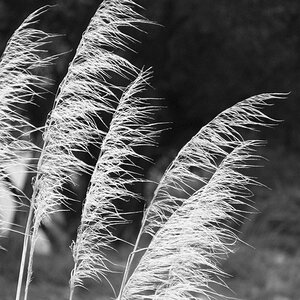
This is a tough call for me. It's good, but I don't love it. I think because there isn't enough shadow and/or detail. What strikes me about the older shots of this style is the level of sheer grittiness in the rocks, which of course lends to a deeply earthy feel (obvious, I know, but critical nonetheless). Usually, this was achieved by some either/or combination of highest resolution film possible (notably, this was sometimes ortho), and really adept printing. You also have to remember that the actual era photos were printed on pretty specialized papers, which would have been a) Bromide based, b) Chloro, but selected for particularly rich blacks, such as the famous Dupont Velour that was known to be a favorite of Weston and Adams', or c) Azo.
As such, I think a couple things could be better:
1) It could be a bit sharper.
2) I'd like to see more emphasis on shadows and shadow detail.
3) Printing in general is really important here. You might be able to come close on a computer screen, but it won't ever quite approach the surface of the paper that this shot would have or ought to be printed on. Bromide papers are going to be tough...most of the ones floating around now are a bit foggy. The chloro papers I'd recommend, in order, are Ektalure (I can hook you up if you'd like some), Oriental, or Foma VC. Alternately, AZO is still available and astonishingly, not too expensive. It would require, of course, that you learn how to process in Amidol. Remember, as well, that paper selection doesn't have to lose significance because you're working with a digital workflow. Generally speaking, matte inkjet papers tend to absorb too much black. As such, while you can get very black blacks, it's hard to maintain good shadow detail at the same time. All of the papers I mentioned could be printed on with a Lightjet at a pro lab, with the exception of Azo.
If that was all a nostalgic, nonsensical rant, then I apologize. But I hope that made some sense.