What's new

deleted

Great job on skin and texture. I really struggle to light dark skin properly.
 
Great job on skin and texture. I really struggle to light dark skin properly.
Thank you. I'm getting to a point where I spend very little time doing any skin editing, and would rather let the light do it for me.
In regards to lighting dark skin, honestly I don't approach it any differently than light skin. Perhaps you're overthinking it?
 
In regards to lighting dark skin, honestly I don't approach it any differently than light skin. Perhaps you're overthinking it?
May be partially due to our difference in lighting. I do very little ambient (natural) light, preferring in studio lighting. Having the advantage of continuous lighting could be beneficial.
 
May be partially due to our difference in lighting. I do very little ambient (natural) light, preferring in studio lighting. Having the advantage of continuous lighting could be beneficial.
I often photograph models in-studio as well. In fact the first time I photographed this model was in-studio. I'm just trying to say, in my experience there isn't a different approach or technique.

If you feel that you might have better control with ambient lighting, you could make your studio light less direct and have some surface to bound off of. It will even out the exposure on the skin a bit and also fill the room with some light. Position your key light as usual, but adjust it so it's not aimed directly at your model, that way they are being lit indirectly from it. Opposite the flash, add a white V-flat or reflector to even the light out a bit. This technique give me softer light with a bit more of an even exposure and ambient look, and could make it easier for you to expose darker skin tones.
Screen Shot 2026-01-21 at 10.37.08 AM.webp


Another of my favorite ways to get ambient/natural looking light in studio is to just have a backlight in a softbox type modifier positioned behind your backdrop but still higher than the backdrop, and bounce it off of a white V-flat or reflector positioned opposite the flash in front of your model, making the bounced light be the main light. It gives you a backlit look with really soft light being bounced onto your model, and it also fills the room nicely with some lighting. Just make sure your back light doesn't hang over the backdrop, otherwise it will cause even the slightest wrinkles in the backdrop to cast shadows.
Screen Shot 2026-01-21 at 10.39.49 AM.webp

This is how the back light setup ends up looking. Unfortunately I have not had a chance to use this setup with any dark skinned model yes, but the principle of creating a more controllable, even exposure on skin remains:
364A3522 forum.webp364A3517 forum 2.webp364A3488 forum.webp
 
Last edited:
@DanOstergren Interesting, to see your lighting set. I have (3) 4x8 reversible panels (white/black), that I occasionally bring in as either reflectors, flags, or background. However floor space is a limited for me, so using them brings their own challenges. I also tend to get lazy sometimes. When I say I struggle, it might be an exaggeration, as I can light dark skin, it's just different, and requires some adjustment especially when their are slight variations in pigmentation.

My standard go to for most females & kid shots is a 60" brolly with diffusion as the key, a 2x4 fill diffused/gridded soft box, and a 7"reflector with a 10% grid for the kicker. In most cases I'm using an 18% gray background that I use the spill to light. For younger males I'll use the same set, but for older men, or when I need more texture I'll switch out the Key to a 42" diffused/gridded octabox. As in here:
Fall Shoot-601.jpg by William Raber, on Flickr
on Flickr For women with more skin issues, I'll switch out the key and fill for a 22" diffused beauty dish, with a Clamshell setup dish high down, and reflector low up.

Currently have 10 lights and a variety of modifers and gels, so I can light the background or set if need be. One modifier that I use occasional is a DIY Shovel reflector that casts a large semi circle on the background

20190126_120841-2-webp.168500
 
Last edited:
I can light dark skin, it's just different, and requires some adjustment especially when their are slight variations in pigmentation.
Respectfully, I guess this just hasn't been my experience. I use the same lighting approach for all skin colors and seem to get the same results.
 
Last edited:
Respectfully, I guess this just hasn't been my experience. I use the same lighting approach for all skin colors and seem to get the same results.
Odd, maybe you've been lucky, it's a fairly well documented issue. The pigmentation in African American skin varies widely, you can get anything from a beautiful rich caramel, to a flat black ebony, the reflectivity of each changes. Add to that, there is a naturally occurring condition that causes dry skin. Four of our grandkids require daily moisturizing lotion, or the skin drys out and take's on a dull appearance. Then there are wide variations of differences in texture and pigmentation. That's why skin photograph better when the light is warmer.

One thing that might be helping you out (I need to try it) is your use of the large V flats, this from the NY Institute of photography "use the light coming from the side and around the subject. What we need to do when we're photographing a black person is to bring an extra light in from a 90-degree angle". By wrapping the light around the planes of the face, to make sure that heavy shadows do not obscure detail in the portrait subject. Dark shadows and creases can easily obliterate details in the area. Another issue I've found is that the color of the skin changes when stretched over underlying bond (cheekbones, elbows, knees)

 
Last edited:
Odd, you, maybe you've been lucky, it's a fairly well documented issue. The pigmentation in African American skin varies widely, you can get anything from a beautiful rich caramel, to a flat black ebony, the reflectivity of each changes. Add to that, there is a naturally occurring condition that causes dry skin. Four of our grandkids require daily moisturizing lotion, or the skin drys out and take's on a dull appearance. Then there are wide variations of differences in texture and pigmentation. That's why skin photograph better when the light is warmer.

One thing that might be helping you out (I need to try it) is your use of the large V flats, this from the NY Institute of photography "use the light coming from the side and around the subject. What we need to do when we're photographing a black person is to bring an extra light in from a 90-degree angle". By wrapping the light around the planes of the face, to make sure that heavy shadows do not obscure detail in the portrait subject. Dark shadows and creases can easily obliterate details in the area. Another issue I've found is that the color of the skin changes when stretched over underlying bond (cheekbones, elbows, knees)
I guess maybe it could be luck, but with respect for my work I'm going to have to say that I don't think it's me getting lucky.

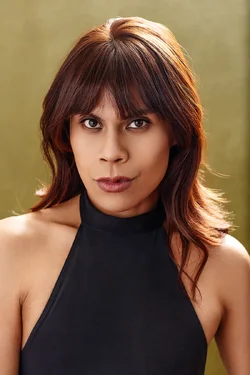
My approach for lighting black models isn't any different from when I photograph anyone else. I've never experienced having to do things differently between one or the other. These two photos were taken during the same session, using a single flash in a 24 inch octabox, with no V-flat. The settings between the shots are the same, and so is the lighting position and output. One model has light skin and one has dark skin, but the exposures came out the same and look good for both of them. There wasn't a different approach used for lighting these models.
temple_by_danostergren_dfmvldz (2).webp

x_by_danostergren_dfncrir (2).webp
 
Last edited:
A personal favorite of mine from a session I did a couple months ago with an actor/dancer. Lit using natural light and a reflector.
View attachment 293888
You really nailed the focus and skin tones. I'm considering buying a used D5 mk iii, your photo may have convinced me to pull the trigger. I'm a purely amature photographer and once in a while I am called upon to do a portrait. When I was substitute teaching there were several students who missed the picture day and so I volunteered to take their picture so they would be in the yearbook. All I had was a dSLR with a camera mounted flash. I placed them in front of a white board and bounced the flash. This is the best one.
Girl from Monongah Middle d850.webp
 
Last edited:

Create an account or login to comment

You must be a member in order to leave a comment

Create account

Create an account on our community. It's easy!

Log in

Already have an account? Log in here.

New Topics

Back
Top Bottom