What's new

Do you manual all the time?

Take pictures responsibly. Always make sure of the shot before pressing the shutter. Never shoot drunk. Never shoot while tired. Wait one hour after meals before shooting! Always shoot with a buddy! Always wear your neckstrap. Always adjust the diopter before backing out of the driveway or parking space. Always check the CF storage pressure and have the CF card contacts aligned, balanced, and rotated every six months. Always change the oil in the camera at least once each season! Never overfill the oil!. Never exceed the frames per second limit, nor exceed the buffer. Shoot responsibly. Always be sure of your target. Never shoot at a sound in the brush--it might be another shooter and not your quarry! Always keep the lens pointed in a safe direction! Never point the lens at anything you do not intend to shoot! When you go out to shoot, leave a plan and a return ETA with a responsible party. In the event of an accident, have a plan!
 
Always release the shutter button with the right hand. Releasing the shutter with the left hand is unclean.
 
And my bet is that you push those hilights with an S-curve in post.
Why would I push highlights to brightness levels that they were never at to begin with?

Let's say you have a photograph involving a concrete sidewalk and an asphalt road. The sidewalk is the brightest object in the scene, yet only meters at +1.5 above middle grey. My perception about the scene though is that the sidewalk is bright, and the road is dark, but the photograph will not represent this perception unless the contrast is increased.

You could handle that situation by metering the sidewalk and increase to the zone where you want to place it, and that's fine and has merit. I prefer to have maximum shadow detail to work with; you prefer things being SOOC.

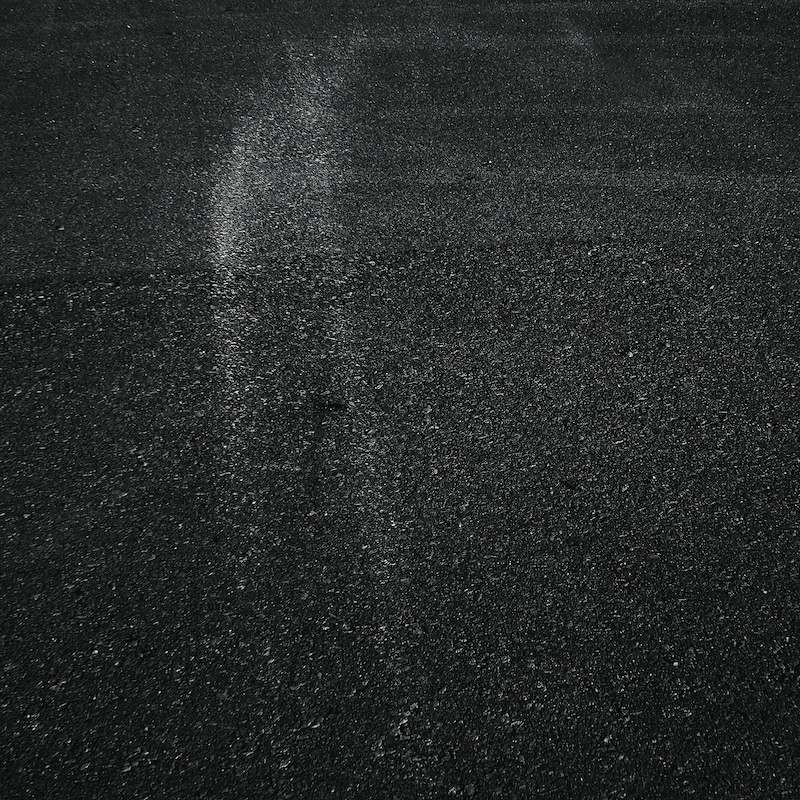
However, this image would not be possible SOOC, and without significantly darkening the asphalt, the perception of the luminance in the reflections just isn't possible. My mind say the reflection as much brighter than it actually was:

5264303175_3d19a949e7_b.jpg


RE: 3 stops headroom - I don't know, this doesn't seem right to me. I've seen latitude tests that indicate more, but maybe I am misunderstanding the data. In practice, this seems accurate.

As for WB - I'm not interested in objective accuracy, I'm not a journalist or forensics photographer. WB is the one thing you truly can correct in raw, since w.b doesn't actually change any in-camera parameter, AFAIK. Shooting jpeg, otoh...

I'll read the rest in a bit.

----

Though still, NONE of this has to do with AE. I can reference the hilights in with EC, no problem.
 
Last edited:
Take pictures responsibly. Always make sure of the shot before pressing the shutter. Never shoot drunk. Never shoot while tired. Wait one hour after meals before shooting! Always shoot with a buddy! Always wear your neckstrap. Always adjust the diopter before backing out of the driveway or parking space. Always check the CF storage pressure and have the CF card contacts aligned, balanced, and rotated every six months. Always change the oil in the camera at least once each season! Never overfill the oil!. Never exceed the frames per second limit, nor exceed the buffer. Shoot responsibly. Always be sure of your target. Never shoot at a sound in the brush--it might be another shooter and not your quarry! Always keep the lens pointed in a safe direction! Never point the lens at anything you do not intend to shoot! When you go out to shoot, leave a plan and a return ETA with a responsible party. In the event of an accident, have a plan!


and if your using film, always assume your camera is loaded!
 
^^ if the grey card ensures accurate exposure, then that had to have been a moderate contrast situation to start with. This isn't about what is actually there, but how the eye and mind interprets, perceives and is impressed upon the scene.

At any rate, you don't have adequate detail for my taste, SOOC, in the upper left. Looking at your histogram, there is PLENTY of room for greater exposure. I wouldn't venture to guess how much. And your processor does apply significant processing. If you have it, try setting your input Gamma correction to 1.0 as just one relevant example.

Well...I did use A mode, EC, and AE Lock. ;)

Yeah. I figured you would :) I can also do all my ETTR/hilight referencing in auto mode. But you know that. At this point we've hijacked yet another auto/manual thread - with all the same arguments going nowhere :D
 
I love reading these threads because well lets just say people are real "passionate" about their shooting style. I like to shoot manual when ever I can but switch to AE when I don't feel comfortable or just want a quick snap. I have a couple questions which I hope both you manual and non manual guys/gals can answer.

I recently went to a wedding and I couldn't imagine the photographer shooting manual all the time due to the fast pace of like her walking down the isle, throwing bouquet, etc. Maybe its just my inexperience but I imagine this could be hard in manual mode.

let me throw you another scenario, I was watching a football game the other day and after a touchdown I noticed the photographers with the nice long lenses and it made me think. In such a fast action shot where you don't really know whats going to happen can you really shot in manual? Im not saying you cant Im sure you pros might be able to but I guess is it really worth shooting in manual in these situations? meaning is the hassle worth the results?.

go nuts!! :lol:
 
Err, no.

Professional sport photographers take the best AF systems there are (like Canon 1D X, Nikon D4) and super expensive long primes (300mm f/2.8 and such) in order to "get the shot".

Manual Focus in Sports is possible, but the "pros" who need to get the shot dont do it.

Weddings, on the other hand, I heard of people who successfully shoot these with a Leica. Why ? Because people dont run during weddings.

Leicas ARE good at street photography, after all. Theres a nice YouTube video from Eric Kim (a street photographer) where he explains how you do it.
 
Because people dont run during weddings.

Though. We did have a pinata where my goofy, 275lb brother in law almost mowed down the children.

So, maybe fast AF at a wedding is actually a bad thing.
 
robbyrob said:
I love reading these threads because well lets just say people are real "passionate" about their shooting style. I like to shoot manual when ever I can but switch to AE when I don't feel comfortable or just want a quick snap. I have a couple questions which I hope both you manual and non manual guys/gals can answer.

I recently went to a wedding and I couldn't imagine the photographer shooting manual all the time due to the fast pace of like her walking down the isle, throwing bouquet, etc. Maybe its just my inexperience but I imagine this could be hard in manual mode.

let me throw you another scenario, I was watching a football game the other day and after a touchdown I noticed the photographers with the nice long lenses and it made me think. In such a fast action shot where you don't really know whats going to happen can you really shot in manual? Im not saying you cant Im sure you pros might be able to but I guess is it really worth shooting in manual in these situations? meaning is the hassle worth the results?.

go nuts!! :lol:

I shoot 100% manual mode when I shoot weddings I don't even have to think about it. It's second nature to me now but when I first started it wasn't so easy that was 6 years ago. The more u prattled the better u get at it.

www.sandraadamson.com www.sandraadamson.blogspot.com
 
^hmm. I think you've got more practice ahead of you.
 
All this talk about needing to have state of the art auto focus and auto exposure in order to get a shot makes me wonder how anyone was able to take a decent shot before the technology was available.
 
Solarflare said:
Err, no.

Professional sport photographers take the best AF systems there are (like Canon 1D X, Nikon D4) and super expensive long primes (300mm f/2.8 and such) in order to "get the shot".

Manual Focus in Sports is possible, but the "pros" who need to get the shot dont do it.

Weddings, on the other hand, I heard of people who successfully shoot these with a Leica. Why ? Because people dont run during weddings.

Leicas ARE good at street photography, after all. Theres a nice YouTube video from Eric Kim (a street photographer) where he explains how you do it.

Yeah but you most likely can't hand a Leica to the average wedding photographer and they'll just know how to use it to get the same quality photograph,while I'll bet if you give an AF camera to a Leica user they can make it work just a well in a shorter amount of time.

I used to know a photographer who could follow focus a 400mm lens on a running deer...after 10 years of practice.

If you practice enough you can't get really good at almost anything. People may not run at weddings, but if I have a slightly OOF shot because you missed manual focus I would feel horrible.

I guess it's kind of a game of "who do I trust more?" lol
 
Technology advances. Some technology provides a better solution to some problems than what came before.

Autofocus makes a lot of photographic tasks easier, it does not make all photographic tasks easier, and most photographic tasks do not require autofocus.
Autoexposure makes a lot of photographic tasks easier, it does not make all photographic tasks easier, and most photographic tasks do not require autoexposure.
Digital sensors make a lot of photographic tasks easier, they do not make all photographic tasks easier, and most photographic tasks do not require digital sensors.
Roll film makes a lot of photographic tasks easier, it does not make all photographic tasks easier, and most photographic tasks do not require roll film.
Dry emulsions as opposed to wet make a lot of photographic tasks easier, they do not make all photographic tasks easier (damn near, though!) and most photographic tasks can be done wet-plate (if you're a maniac).

and so on.
 
Aperture priority about 75% of the time for general photography and manual for everything else when I need a certain shutter speed. I want to control my depth of field 100% of the time, so I never use shutter priority. I mainly use manual with flash and in low light where I can set a very specific minimum shutter speed and use auto ISO to make fine adjustments. I've found myself using auto ISO a ton with the 5D3 because it's fantastic even up to ISO 6400, and it allows me to worry about more important things like shutter speed.
 

Create an account or login to comment

You must be a member in order to leave a comment

Create account

Create an account on our community. It's easy!

Log in

Already have an account? Log in here.

New Topics

Back
Top Bottom