What's new

Exposure

Status
Not open for further replies.
What are some scenarios that would warrant a decision to under expose or over expose in camera using digital or film? Hopefully this is not too generic of a question.

Sent from my XT1254 using Tapatalk

When the sensor can fully record all the tones of the image, there can be a number of exposure levels which are nominally all correct....

Isn't "nominally correct" one of those oxymoron figures of speech like military intelligence, compassionate conservatisim, jumbo shrimp, etc.?

Joe
I don't think so; in the circumstance mentioned, there is not just one exposure that can be said to be 'THE correct one". I am suggesting that, from the 'correct' range, one can be selected which gives advantages over the rest for the stated reasons. Please come back if I am not making myself clear enough.
GHK
 
The only "correct" exposure is middle grey. That's it. That's the only objective place where the camera and the sensor or film can agree on.

Every image has regions of "proper" exposure - and this is the important part.

A photograph isn't "properly exposed". There will be regions that are under exposed (areasless than middle grey) and regions that are over exposed (areas greater than middle grey). I suppose an "under-exposed" image is one where the entire data set is less than middle grey.

Perhaps under exposure is when middle grey is rendered at a lower value. But there are MANY times, if not more times than not, that this might be the case, such as getting detail in clouds or to obtain a silhouette.

This kind of goes back to "what is under exposure". I wasn't being smart when I suggested that people think about it. Because when you try to objectively say "under exposed is when..." you simply can't, at least not in a way that is particularly helpful - such as saying "when all the image data is less than middle grey".

---

This would be assuming, of course that you're shooting SOOC - where the final exposure is a close representation to the image.
 
Last edited:
I appreciate all the feedback and apologize for the using the wrong terminology in the beginning. I will run with studying the zone system and see if I can improve my exposures in camera. I believe that is where I need to go.
 
I appreciate all the feedback and apologize for the using the wrong terminology in the beginning. I will run with studying the zone system and see if I can improve my exposures in camera. I believe that is where I need to go.
Understanding how your tools work and how best to use them in a given situation, is an important step to being able to previsualize photographs and then successfully capture your previsualization.
 
My 2 1/2 cents -
There is correct exposure to document a scene, then there is correct exposure for artistic reasons. To document you may want to take multiple photos and then merge the properly exposed parts in post processing. Like a room with outside windows you take one exposure correct for the interior and one correct for the much brighter windows, then merge in Photoshop.

For artistic reasons there is no right or wrong, it's whatever the photographer wants.

Also, some cameras typically under or over expose so you set exposure compensation to fix that.

The point with the older B&W photographers was they talked about changing film for a different ASA while we now have changing the ISO of the camera to serve that purpose.
 
What are some scenarios that would warrant a decision to under expose or over expose in camera using digital or film? Hopefully this is not too generic of a question.

Sent from my XT1254 using Tapatalk

When the sensor can fully record all the tones of the image, there can be a number of exposure levels which are nominally all correct....

Isn't "nominally correct" one of those oxymoron figures of speech like military intelligence, compassionate conservatisim, jumbo shrimp, etc.?

Joe
I don't think so; in the circumstance mentioned, there is not just one exposure that can be said to be 'THE correct one". I am suggesting that, from the 'correct' range, one can be selected which gives advantages over the rest for the stated reasons. Please come back if I am not making myself clear enough.
GHK

OK, not clear enough.

Originally you referred to a "number of exposure levels which are nominally all correct..."

Now you say, "there is not just one exposure that can be said to be "THE correct one".

Those two statements seem to say the same thing: more than one exposure can qualify simultaneously as "correct" -- equivocation maybe?

But then you say, "from the 'correct' range, one can be selected which gives advantages over the rest for the stated reasons", which certainly sounds like a contradiction of the above. If ONE can be selected which gives advantages over the rest wouldn't that be the correct exposure? Doesn't that contradict saying, "there is not just one exposure that can be said to be "THE correct one".

Here's a list of synonyms copied from the dictionary for the adjective correct:
right
accurate
true
exact
precise
unerring
faithful
strict
faultless

So here's a question: When taking a photo, is there an exposure (singular term there) that will produce the best possible IQ in the final photo, or best realize the photographer's intention? If so, isn't that the correct one?

Joe

 
When taking a photo, is there an exposure (singular term there) that will produce the best possible IQ in the final photo, or best realize the photographer's intention? If so, isn't that the correct one?

I agree that what will best realize one's intention is the "correct exposure" but for any given scene there can be more than one "correct" exposure depending on who is photographing it. This is an example of a photograph deliberately overexposed in camera, meaning that EC was used to expose a couple of stops more than the meter recommended, then it was processed further, e.g., to even out the lighting and for other reasons:

o miles 022015.webp


If someone else had been there with a camera and wanted a "normal-looking" photo of my cat the "correct" exposure for them would have been very different.
 
When taking a photo, is there an exposure (singular term there) that will produce the best possible IQ in the final photo, or best realize the photographer's intention? If so, isn't that the correct one?

I agree that what will best realize one's intention is the "correct exposure" but for any given scene there can be more than one "correct" exposure depending on who is photographing it. This is an example of a photograph deliberately overexposed in camera, meaning that EC was used to expose a couple of stops more than the meter recommended, then it was processed further, e.g., to even out the lighting and for other reasons:

View attachment 117721

If someone else had been there with a camera and wanted a "normal-looking" photo of my cat the "correct" exposure for them would have been very different.
Very helpful.

Sent from my XT1254 using Tapatalk
 
When taking a photo, is there an exposure (singular term there) that will produce the best possible IQ in the final photo, or best realize the photographer's intention? If so, isn't that the correct one?

I agree that what will best realize one's intention is the "correct exposure" but for any given scene there can be more than one "correct" exposure depending on who is photographing it. This is an example of a photograph deliberately overexposed in camera, meaning that EC was used to expose a couple of stops more than the meter recommended, then it was processed further, e.g., to even out the lighting and for other reasons:

View attachment 117721

If someone else had been there with a camera and wanted a "normal-looking" photo of my cat the "correct" exposure for them would have been very different.

And of course the same applies when I play my violin or guitar way out of tune. I just say it's the way I want it and so that makes it actually in tune. You can check it with a tuning fork to demonstrate that it's correctly out of tune in tune.

Joe
 
What are some scenarios that would warrant a decision to under expose or over expose in camera using digital or film? Hopefully this is not too generic of a question.

Sent from my XT1254 using Tapatalk

When the sensor can fully record all the tones of the image, there can be a number of exposure levels which are nominally all correct....

Isn't "nominally correct" one of those oxymoron figures of speech like military intelligence, compassionate conservatisim, jumbo shrimp, etc.?

Joe
I don't think so; in the circumstance mentioned, there is not just one exposure that can be said to be 'THE correct one". I am suggesting that, from the 'correct' range, one can be selected which gives advantages over the rest for the stated reasons. Please come back if I am not making myself clear enough.
GHK

OK, not clear enough.

Originally you referred to a "number of exposure levels which are nominally all correct..."

Now you say, "there is not just one exposure that can be said to be "THE correct one".

Those two statements seem to say the same thing: more than one exposure can qualify simultaneously as "correct" -- equivocation maybe?

But then you say, "from the 'correct' range, one can be selected which gives advantages over the rest for the stated reasons", which certainly sounds like a contradiction of the above. If ONE can be selected which gives advantages over the rest wouldn't that be the correct exposure? Doesn't that contradict saying, "there is not just one exposure that can be said to be "THE correct one".

Here's a list of synonyms copied from the dictionary for the adjective correct:
right
accurate
true
exact
precise
unerring
faithful
strict
faultless

So here's a question: When taking a photo, is there an exposure (singular term there) that will produce the best possible IQ in the final photo, or best realize the photographer's intention? If so, isn't that the correct one?

Joe


I agree fully with your final statement/question. My post was intended to direct attention to THAT exposure, whilst pointing out that there could well be others which were nominally correct according to standard criteria as well as those that were definitely defective.
GHK
 
What are some scenarios that would warrant a decision to under expose or over expose in camera using digital or film? Hopefully this is not too generic of a question.

Sent from my XT1254 using Tapatalk

Generally. I'll expose my shots to the mood I'm looking for and avoid my shadows and highlights loosing details.
That said. I'd prefer to overexpose a tad rather than underexpose as lightning an underexposed image brings out more noise.
In film I belive the opposite was the case as the highlights tended to blowout easier and there were more details in the darker areas.
 
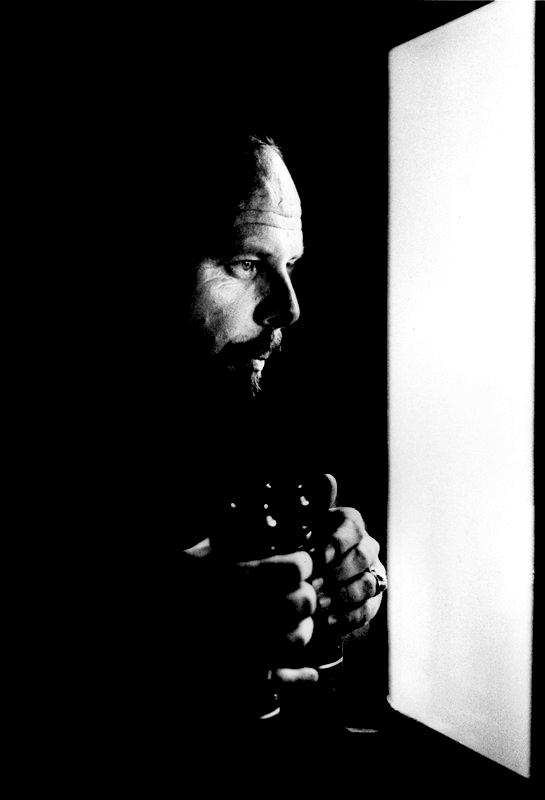
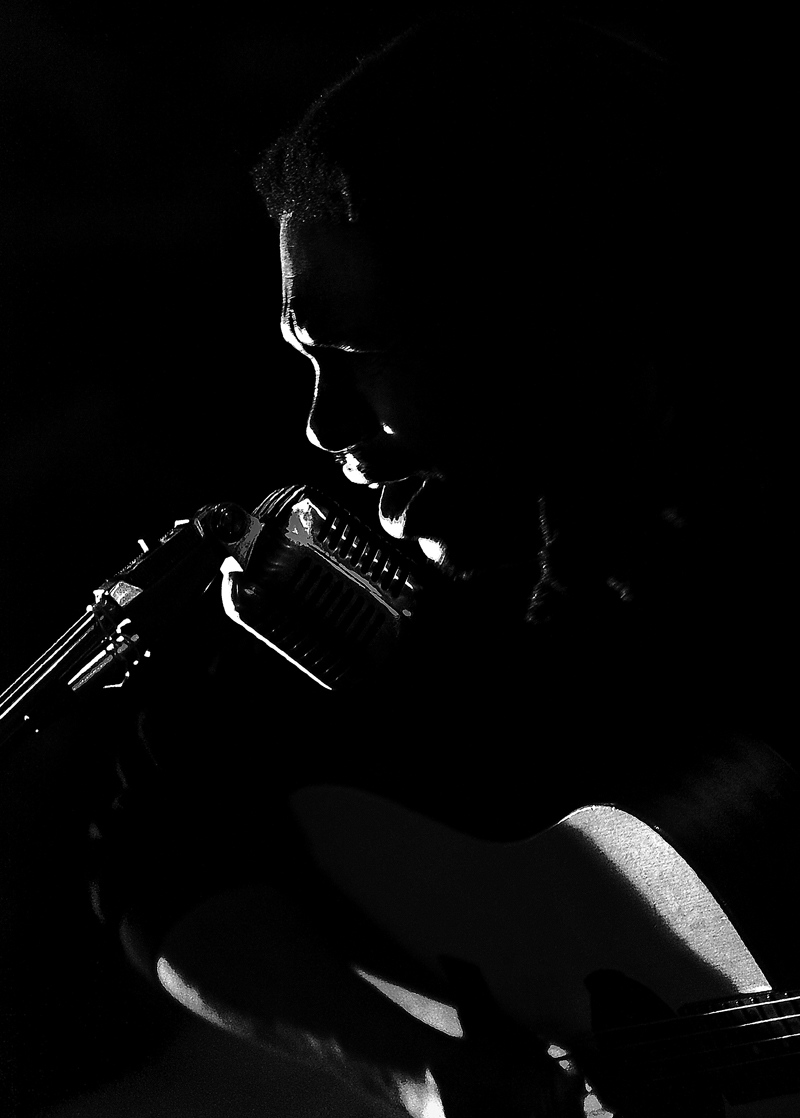
I think that high dynamic range, detail in the highlights and detail in the shadows is overrated in general and more so when shooting people/photojournalistic type photos.

Trackers-1---HP.jpg

Film- Nikon F2 w/Tri-X

2CBL5560aB-X3.jpg

Digital- Canon 1DsMKII
 
Dang, those are awesome. Nominated 2nd one Mar POTM. Best photo I have seen on here.

Sent from my XT1254 using Tapatalk
 
Last edited:
I think that high dynamic range, detail in the highlights and detail in the shadows is overrated in general

I don't think the problem is with dynamic range, I think it depends on what you're doing. These images wouldn't make sense with long exposure range, though I think it is taken a bit too far IMO.

Some filmmakers in particular are pretty amped about all this new-found dynamic range and feel the need to use every ounce of data captured with equal importance.

Now I love lots of detail. But shadows should be dark and hilights should be bright. That doesn't mean you need to go clipping everything out, but it does take a fair amount of finesse.
 
I can see the desire for detail, as a general rule, for commercial/studio, architectural, landscape work, but for many other genres too much detail dilutes the story. (The above are extreme examples of not diluting.)
 
Status
Not open for further replies.

New Topics

Back
Top Bottom