limr said:
One thing I'll add that hasn't been said is that I feel at a certain point, images created and modified solely in digital format become less about photography and more about graphic art.... There's overlap for sure, and I'm not sure where the line in the sand is to be drawn.
Yes, I agree with that. Working with a camera and film is "photography", while working with a digital camera and computer is "digital imaging". The two activities are similar in many ways, but the fundamental difference is that analogue photography uses a permanent, fixed image, captured in an emulsion as the basic "source" of the images. There actually is a single, finite "image" that has ben captured and made permanent, and it can be held in the hand, and seen, and peered at. The digital image exists only when a computer can decode the binary data. Because of the way film captures, and the way digital images are captured, there are some differences in how the pictures are made, and also some differences in the way the cameras and lenses are best optimized.
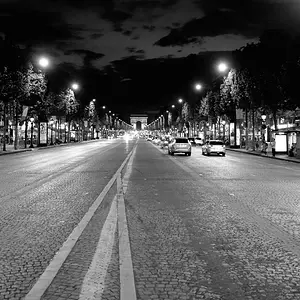
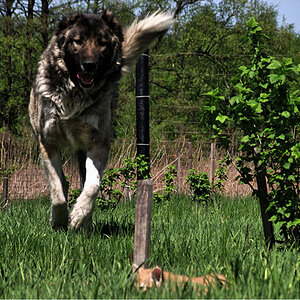
I looked at the four sample photos and it was dead easy to spot the film/digital, then digital/film pairings. The dirty lens on the second photo was an odd thing, I thought. In the second pair of images, the way the film image literally jumped out at me was the way the highlights and the tones just below highlight are rendered; a lot of young people mighty not be familiar enough from actual experience, but the way to spot REAL film is often to look at the brightest highlights, and then to look for tones that are just a bit darker, and then darker still; in the film shot, you can see some grain, and some tonal variation, and in the brightest highlights, there might (or might not) be some minute variations in density between paper white (in digital "blown white", 255) and just-holding-detail whites.
In the sky and building tones near the brightest areas, the digital shot just suddenly has sky tones that are pure, detail-less, ugly white. THere is a very abrupt "clipping". In B&W film, the upper mid tones become lighter and lighter and lighter, and then fade into highlights; there are also medium bright highlights, bright highlights, the brightest highlights, and in some scenes, pure, specular white highlights that are "paper white".
In the second set of pictures, all I did was I to look straight for the rooftops and sky juncture area...the digital and film shots revealed themselves in about 1 second each. In the first set of pics, the lack of grain and higher overall look of sharpness makes the digital image stand out against a film image. Overall, small-format digital has mostly surpassed the "sharpness/detail" look of most small-format B&W films that I grew up with.



![[No title]](/data/xfmg/thumbnail/32/32697-bccb29f21520b31443b92c054e608ca0.jpg?1734162251)


![[No title]](/data/xfmg/thumbnail/32/32699-3434a76363cb383404e00a3cd5ed5728.jpg?1734162254)





![[No title]](/data/xfmg/thumbnail/39/39511-592cbd68b1d797ffce7e41e4fbfed890.jpg?1734173657)