What's new

First time flash user. C&C

I must respectfully disagree with Kundalini's example.
Fair play, but did you notice the color of the wall? If you know that you can bounce clean white light towards the subject, wouldn't that make more sense than trying to color correct in post? Also, if there is no wall behind you nor any ceiling above you, you can still use this method in open shade towards the subject. It produces nice soft light. It won't solve all your problems and you may never feel the need, but someone may and it can be effective in certain situations. Just file it back so that you can pull it out if it fits your conditions.
 
I wasnt talking about the reflector behind you Kundalini, I was talking about the stoffen. But yes, clean white is always better.
 
I wasnt talking about the reflector behind you Kundalini, I was talking about the stoffen. But yes, clean white is always better.

I know you know this, but there isn't always a clean white wall at an appropriate distance behind you. It's always nice to have options. While I don't use a modifier on my speedflash 90% of the time, the other 10%, the shot wouldn't have worked without it.

Sometimes, you just gotta go direct flash or even just angle it back a bit, get close to the subject, and let the spread from the diffuser illuminate your subject. There isn't always something to bounce off of, and when there is not, I would rather have a diffuser than not.

 
Sto-Fen type diffusers work well in a pinch.

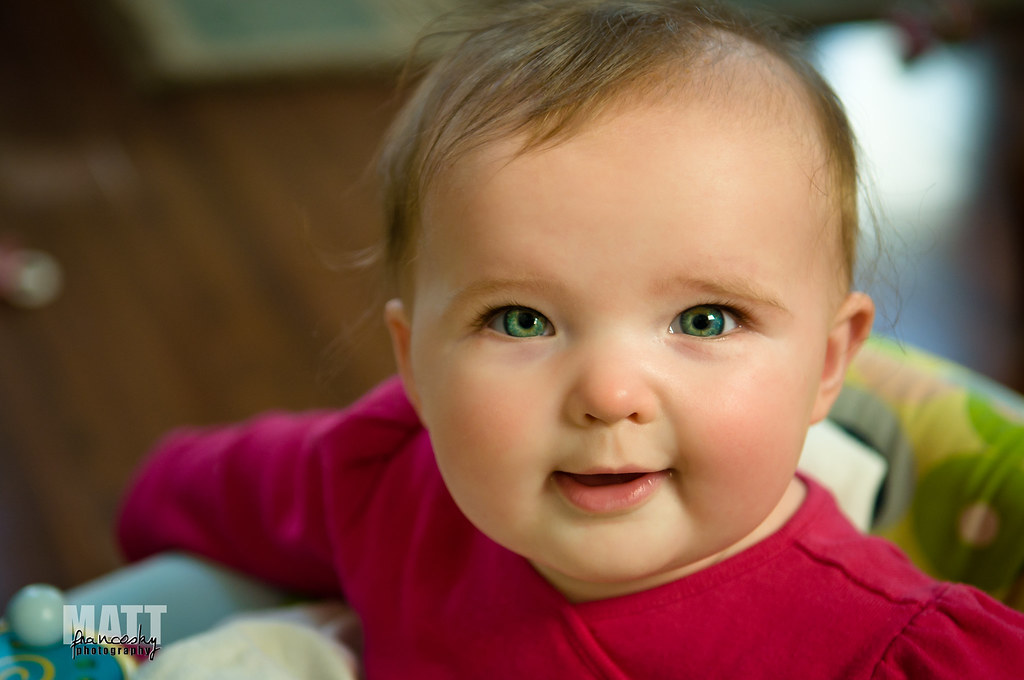
SB-600 fired on camera with a Sto-Fen, flash pointed 90* up....

DSC_7981ww by Matt Francosky, on Flickr


p!nK

That catchlight doesn't look like the flash was pointed 90 degrees up...unless you took advantage of a ceiling that isn't flat.

You do know what a Sto-Fen diffuser is right? Nothing was really bounced off any ceiling.

And yes, they are not perfect or ideal- but in some situations, they are the lesser of all evils.


p!nK
 
, I was talking about the stoffen.
Sorry, but it was unclear to me. The reflector is the modifier for this example. The Difussion Dome will also spread the light before it hits the reflector, thus creating a greater light source. I'm very close to my subject and want to get the largest possible spread of difussed light..... in this situation. But at a cost of recycle time.
 
Sto-Fen type diffusers work well in a pinch.

SB-600 fired on camera with a Sto-Fen, flash pointed 90* up....

DSC_7981ww by Matt Francosky, on Flickr


p!nK

That catchlight doesn't look like the flash was pointed 90 degrees up...unless you took advantage of a ceiling that isn't flat.

You do know what a Sto-Fen diffuser is right? Nothing was really bounced off any ceiling.

And yes, they are not perfect or ideal- but in some situations, they are the lesser of all evils.


p!nK
Yes, generally, a Stofen diffuser would spread light equally in every direction. This particular photo has a relatively large, pronounced catch light at approximately 2 o'clock. I can't see how that catchlight would be possible with a camera in landscape orientation with a flash pointed directly up. There was light coming from above and to the right of the subject. How you managed that with a flash pointed directly up is beyond me. Like I said, my guess is the ceiling was not flat or you mistook this photo for one taken under different circumstances. With a flash pointed directly up, the catchlight would have been closer to 12 o'clock. It simply is not possible to get that particular 'softbox' type catchlight with a flash pointed directly at a flat ceiling with the subject looking directly at the camera. Light follows pretty simple rules, mainly being that the angle of incidence equals the angle of reflection. In this particular photo, it is obvious that the main light is coming from the right. The catchlight shows it...the shadows show it. The only thing that doesn't agree is the description of how the shot was taken.

Nice shot by the way, regardless of how you made it.
 
pink can slow down time, so bending light is a flick of the wrist. I've heard that he likes to walk up to a seated Batman while he is sipping on his morning coffee scouring over the morning edition of the Daily Planet, and let out one of those wram ones that roll down your trouser leg and you have to linger a moment or two so that it separates from your leg on its own. Since his ofactory nerves are in s state of heightned tension, he chase to precise moment to bid farewell. You should see the look of contempt on Batman's face.
 
pink can slow down time, so bending light is a flick of the wrist. I've heard that he likes to walk up to a seated Batman while he is sipping on his morning coffee scouring over the morning edition of the Daily Planet, and let out one of those wram ones that roll down your trouser leg and you have to linger a moment or two so that it separates from your leg on its own. Since his ofactory nerves are in s state of heightned tension, he chase to precise moment to bid farewell. You should see the look of contempt on Batman's face.

That explains it. I didn't realize we were dealing with people who could take a flash shot and reposition the camera before the sensor had a chance to record the light and shadows.
 
Back to the OP. You can place a reflector just out of frame from below to not only remove the raccoon eyes, it can control the shadow beard from under the chin.

994477072_JM2yB-XL.jpg


They also make reflector arm that mount on your light stand, which gives you more options for placement.


953526796_BNbdS-XL.jpg


Reflectors are very usefil IMO for creating a more sculpted light pattern, add light where you want and remove light where you don't want it, rather than being restricted with a flash alone.
 
Which part of your bed does the pink monkey sleep in? She sure gets a lot of love from you :).
 
In Kundalini's example above, if the subject is reasonably close to the camera, it's quite easy to use the supplied Nikon diffuser cap, or a Sto-Fen slip-on diffuser cap, with the flash unit pointing forwfrd, and upward at a 60 degree tilt, which both bounced light UP, but also scatters some light into the whiote plastic of the diffser cap, and that creates a small bit of eye-sparkle.

Before Sto-Fen was popular, we used to tape a white plastic SPOON (yes, a spoon!) to the flash, and allow the spoon to "throw" a small amount of light forward, for eye catchlights. ALso, there are flash units that have a very small,secondary flash tube, below the main tube, that always points straiught ahead, and which allows the main,larger flash to be bounced off of walls and ceilings, but which also sends light straight ahead from the small flash window which is located right on the camera-to-subject axis. The Metz 58 AF-2 Digital flash is a good example: Metz Flashguns

Same goes for the Metz 45 CL4 Digital handle mount flash, or the older Nikon SB-16 flashes.
 
Im with you. I use bare flash 90% of the time. The other 10% I just use a little bounce card. Really, I must say stoffen is pretty much useless when there is no place to bounce. The size of the light source is pretty much as big as your flash head plus you drain your battery because significant % of the flash will go to the sky, ground, left and right. I rather shoot it with a bareflash. When there is a place to bounce it, I rather use nothing. The only time I use a bounce card is when I have weird colored wall. I still want to bounce it but I still want something hitting the subject with clean flash (no colored reflection from the wall). So my subject will have minimum colored reflection thanks to the "direct" flash via bounce card, and the surrounding is illuminated by the bounced flash from ceiling or wall.
I wasnt talking about the reflector behind you Kundalini, I was talking about the stoffen. But yes, clean white is always better.

I know you know this, but there isn't always a clean white wall at an appropriate distance behind you. It's always nice to have options. While I don't use a modifier on my speedflash 90% of the time, the other 10%, the shot wouldn't have worked without it.

Sometimes, you just gotta go direct flash or even just angle it back a bit, get close to the subject, and let the spread from the diffuser illuminate your subject. There isn't always something to bounce off of, and when there is not, I would rather have a diffuser than not.
 
Wow, a lot of good info here! I have a lot of reading to do :o( lol
 

Create an account or login to comment

You must be a member in order to leave a comment

Create account

Create an account on our community. It's easy!

Log in

Already have an account? Log in here.

New Topics

Back
Top Bottom