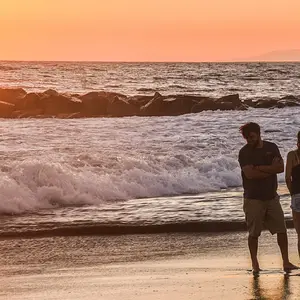
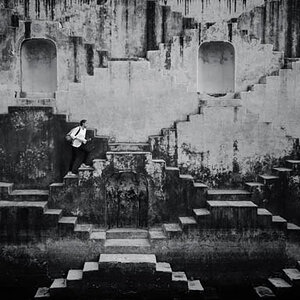
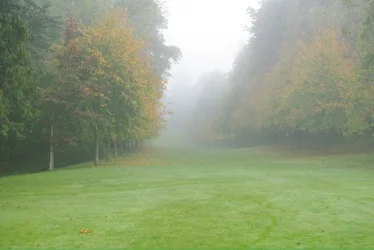
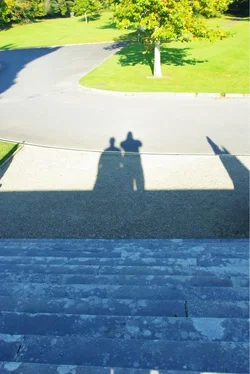
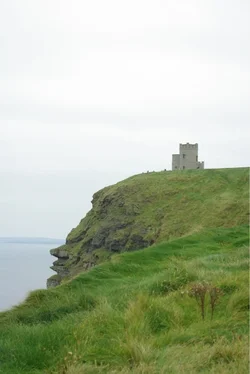
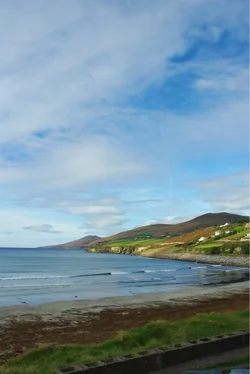
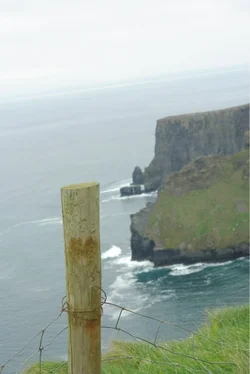
In landscapes, a strong, interesting foreground object can REALLY help. The old castle on the bluffs---the sky is bald and weak--wait for better lighting. The fog scene....all that grass in the foreground is dull: the real "hook" is the way the trees disappear in the fog, so use a telephoto to crop out the majority of the grass, and make the TREES the foreground, and then have them fade into the fog. The ocean-scape: that railing at the bottom right corner is not a strong enough foreground object: that shot does not work well as a "tall"--it would have been much better as a landscape-oriented shot. The stairs and dual-person shadow shot....hmm--have her "attack" you with an imaginary hammer in the shadow-play, perhaps???
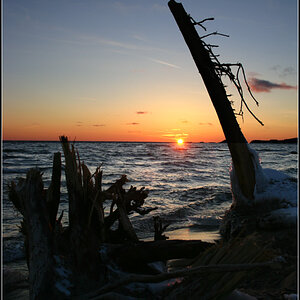
I do not want to sound condescending, but what you have done here is to aim the camera and snap the shutter; making truly interesting photos from landscapes requires a LOT of thought as to where the BEST camera position is, and what to show, and also, most importantly, what to LEAVE OUT. Getting closer is one key. Changing the camera's vantage point is another. For example, the castle on the bluffs--okay, bald, ugly sky...what to do THEN, without waiting for better light??? Move 3/4 of the way up the bluff, or go even closer toward the castle and shoot with a 18mm focal length, in silhouette!!! A strong simple graphical image that works WITH the light, instead of against the prevailing light. How??? By shooting "against the light" aka contre jour, in sucky backlighted conditions, you could have created an interesting silhouetted castle that would use its simple shape,size, and form as the "hook".









![[No title]](/data/xfmg/thumbnail/36/36603-a830ccec573081105d6aafcccc650605.jpg?1734169056)
![[No title]](/data/xfmg/thumbnail/31/31758-546fe80b548bda08983001811ab5be60.jpg?1734160480)