f/stop refers to the size of the aperture, or hole in the lens.
The most confusing thing for newbies is that a large f/stop number (such as f/16 or f/22) actually means a small aperture, while a small f/stop number (such as f/2 or less) means a large aperture.
The aperture is used to control how much light can reach the film. Obviously more light comes through a big hole than a small hole. The other control is shutter speed, which controls how long light is allowed to come through the aperture.
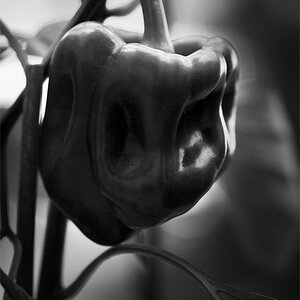
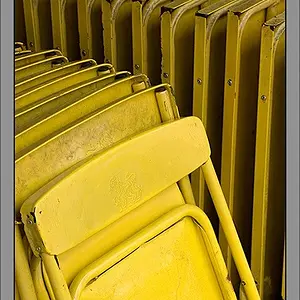
Aperture also affects depth of field (DOF). DOF is the area in your photograph that is acceptably sharp. A larger f/stop (smaller hole) has more DOF; a smaller f/stop (larger hole) has less DOF. Common examples of use would be:
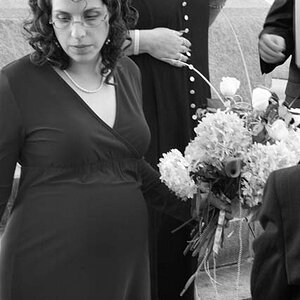
f/2 (large aperture/less DOF) for portraits to simplify the background by blurring it out, leaving only the subject in focus.
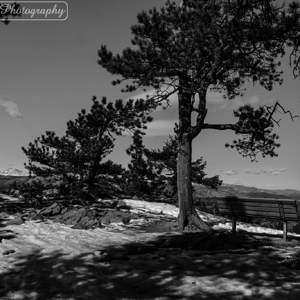
f/22 (small aperture/greater DOF) for landscapes to make sure everything from the foreground to the background is in focus.
Lenses are listed stating their maximum aperture (lowest f/stop number). Typically a lens with a smaller f/stop number will be more expensive than a similar designed lens that doesn't open up as much. Check out the price difference between a f/4 or f/5.6 28mm-105mm zoom lens, and one that'll open up to f/2 or f/2.8, and you'll see what I mean.




![[No title]](/data/xfmg/thumbnail/35/35956-7047189d31e1c1f6029266079390f54a.jpg?1734167778)

![[No title]](/data/xfmg/thumbnail/32/32716-bd7f0a0030263f160d995f8547043458.jpg?1734162345)