What's new

I am just the worst...

Mamarazzi514

TPF Noob!
Joined
Nov 8, 2011
Messages
28
Reaction score
0
It just dawned on me that I'm shooting like a dummy when I'm doing studio shoots and I'm tired of it. I want to shoot the right way. I don't have a light meter... is it necessary for studio shoots? Is that the key? I usually keep my camera strings to 160/200 shutter speed and my aperture to 5.6. I don't even know what I set my alien bee flashes to I just adjust if it's too dark or too light. I want to cut down on post processing and want good SOOCs!!! Which is why I'm learning the zone system. Can the zone system apply for studio as well?
 
Light Science and Magic is an oft recommended book for helping to learn flash. I'd consider it a good starting point, from there you can look to specific books for studio setups.

The key is learning your fundamentals, once you learn those the adaptations and complex side comes far more easily because its mostly manipulation of the fundamentals. Get yourself a teddy or doll to practice with (they stay still and don't complain like friends/family/models ;)).

Considering that you don't have a flash meter the process of shoot - review exposure - adjust - reshoot is a very valid approach to the subject; esp with a DSLR where you can instantly review your image and histogram. If you want to improve on this score a flash meter combined with some basic math of exposure values would help a lot; that lets you meter the light at the subject from the flash as it falls on your subject; you can then balance the outputs of the various light sources to give the light coverage you want.
Again I'd start with the book and work your way through it, you can also try out the Strobist 101 blog.
 
I had a look at your posting history, and the kind ofquestions you have asked. You've been given lots of very good advice. Perhaps the issue is that you have to start learning some of the theory that you're been shown, and to then start applying it. Trying to do too much at once,without having the fundamentals in place, is frustrating, and ultimately self-defeating. The main issue at the moment, from what I can see, is that you don't have a good feel of how light works. That's not a sin, very few of us understand at the beginning (the book that Overread recommends is excellent, and has helped me get a much better idea of how to approach lighting). But building up the knowledge of how to use it and how to shape it takes time and lots of practice. So let's break it down a bit.

First, do you know your dynamic range of your camera? How many stops above mid-point can you go and still retain detail? Same question on the other side.Why is this important? Because it allows you to decide to to expose for the highlights and the shadows. Say, you know that your camera has a 4-stop range on the upside, and a 5-stop range on the downside. You can take an average meter reading of your subject and say get 1/200sec at f/5.6. Then you spot-meter the highlights (the ones where you still want to see detail), and let's say you get 1/1000 at f/5.6 That's 2.5 stops above the midpoint, well within your 4-stop range. But if the highlight was metered at 1/4000 at f/5.6, you'd be blowing it.

Next, do you understand the concept of Depth-of-field? If you are photographing a person at say, 6ft. with a 50mm lens at f/5.6 and a crop camera, your DOF is roughly 11 inches (6 inches beyond the point of focus and 5 inches in front). That DOF is enough to get the whole head in focus. But if you had another person standing behind them, then that person would be “soft”. Your desired DOF drives your aperture, which in turn drives your power setting of your flashes/strobes.

Another area to look at is your light placement. Start with a single light and move it around. Learn about short lighting and broad lighting. Learn about Rembrandt lighting. Then get a feel for the inverse-square law, which affects the light intensity as it relates to distance. Get a feeling for the degree of light fall-off when the light source is close, and when it is far. Next, look for filling in the shadows with either reflectors or fill light. Once you get that nailed, learn the use of highlights and ways of separating the subject from the background.


These are all technical details that should be part of the fundamental knowledge of any photographer. Once you have them, you can concentrate on the posing, the arrangements, etc., because you don’t have to worry about getting the basic images properly lit and exposed. But without these fundamentals, you will have a very uneven set of results.

 
I find that using a light meter with studio lights doesn't make life that much quicker.

If I want to shoot with studio flashes and have a certain aperture in mind, with a light meter I have to keep metering and adjusting the lights until correct power is reached anyway, so I might as well just take test shots using my eyes and adjusting the flashes accordingly.

It's the same either way. I'd say don't get hung up about it - just do what you have to do.
 
It just dawned on me that I'm shooting like a dummy when I'm doing studio shoots and I'm tired of it. I want to shoot the right way. I don't have a light meter... is it necessary for studio shoots? Is that the key? I usually keep my camera strings to 160/200 shutter speed and my aperture to 5.6. I don't even know what I set my alien bee flashes to I just adjust if it's too dark or too light. I want to cut down on post processing and want good SOOCs!!! Which is why I'm learning the zone system. Can the zone system apply for studio as well?
Are you familiar with the concept of a 'stop'.
 
I find that using a light meter with studio lights doesn't make life that much quicker.

If I want to shoot with studio flashes and have a certain aperture in mind, with a light meter I have to keep metering and adjusting the lights until correct power is reached anyway, so I might as well just take test shots using my eyes and adjusting the flashes accordingly.

It's the same either way. I'd say don't get hung up about it - just do what you have to do.


You have got to be joking, with a light meter you can get it right almost first shot
 
I'm with gsgary. A hand-held light meter used properly is far and away the fastest way to set up lighting.
 
It just dawned on me that I'm shooting like a dummy when I'm doing studio shoots and I'm tired of it. I want to shoot the right way. I don't have a light meter... is it necessary for studio shoots? Is that the key? I usually keep my camera strings to 160/200 shutter speed and my aperture to 5.6. I don't even know what I set my alien bee flashes to I just adjust if it's too dark or too light. I want to cut down on post processing and want good SOOCs!!! Which is why I'm learning the zone system. Can the zone system apply for studio as well?

YES, buy a light meter. I wasted too much time going off my camera, histogram, etc. It will also help you understand how you adjust your flashes. Since you have AB's, why not go with the cyber commander system? Paul C. Buff - CyberSync Cyber Commander There's a few good YouTube tutorials on how to use it. Boom! Problem solved.
 
I find that using a light meter with studio lights doesn't make life that much quicker.

If I want to shoot with studio flashes and have a certain aperture in mind, with a light meter I have to keep metering and adjusting the lights until correct power is reached anyway, so I might as well just take test shots using my eyes and adjusting the flashes accordingly.

It's the same either way. I'd say don't get hung up about it - just do what you have to do.


You have got to be joking, with a light meter you can get it right almost first shot


First shot, yes. But you have to spend time to set the power of your flashes correctly, so it's time taken either way whether you use a light meter or the camera.

If I want to use an aperture of f/3.5 to get a shallower DOF but not exceed the flash speed with the shutter for example, I'll need to adjust the power of the flash to acheive the correct exposure which will require either a few test flashes with the light meter or a few test shots with the camera. Or are you telling me your strobes are always correct first time?
 
The amount of steps I took to the lights and back decreased dramatically once I got a meter.
 
I find that using a light meter with studio lights doesn't make life that much quicker.

If I want to shoot with studio flashes and have a certain aperture in mind, with a light meter I have to keep metering and adjusting the lights until correct power is reached anyway, so I might as well just take test shots using my eyes and adjusting the flashes accordingly.

It's the same either way. I'd say don't get hung up about it - just do what you have to do.


You have got to be joking, with a light meter you can get it right almost first shot


First shot, yes. But you have to spend time to set the power of your flashes correctly, so it's time taken either way whether you use a light meter or the camera.

If I want to use an aperture of f/3.5 to get a shallower DOF but not exceed the flash speed with the shutter for example, I'll need to adjust the power of the flash to acheive the correct exposure which will require either a few test flashes with the light meter or a few test shots with the camera. Or are you telling me your strobes are always correct first time?


I'm very used to my lights i can guess roughly before i meter, i also shoot film as well as digital so i need a meter or it could get expensive
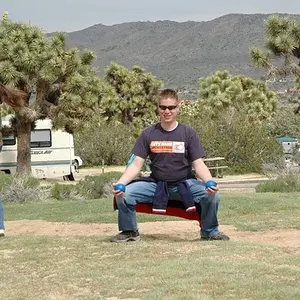
with a meter i got this first shot (24 years out of date 120 FP4)
Scan054-L.jpg
 
gsgary raises a good point.

With experience, one should be able to get it all pretty darn close just by using their Mark I eyeballs.
 

Create an account or login to comment

You must be a member in order to leave a comment

Create account

Create an account on our community. It's easy!

Log in

Already have an account? Log in here.

Back
Top Bottom