What's new

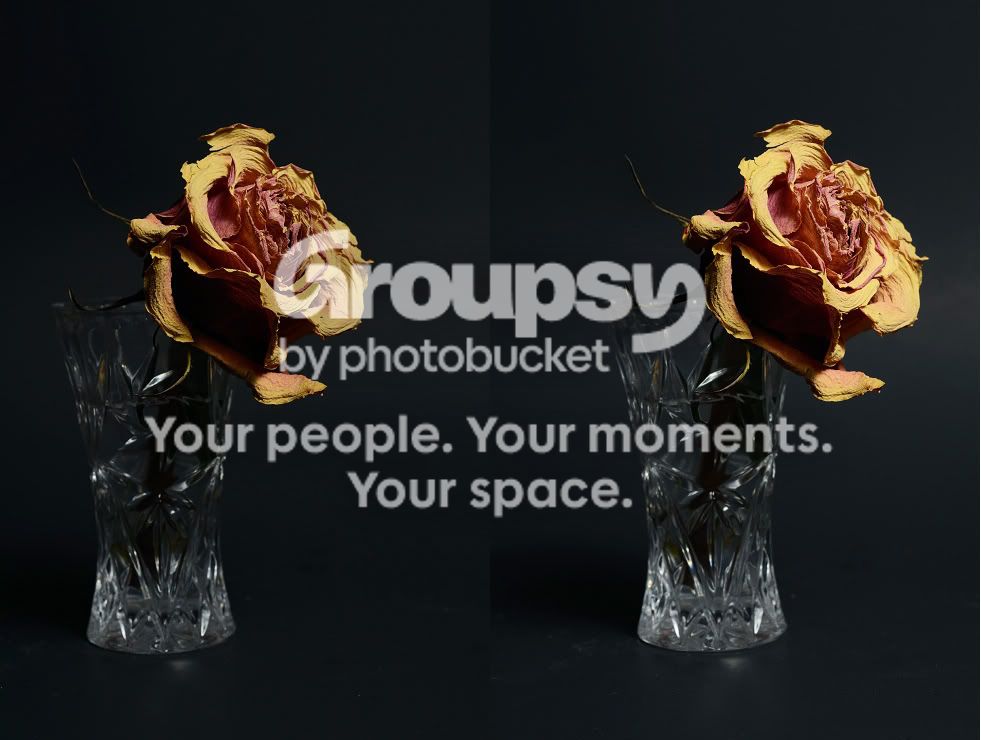
I just discovered stereo images...... Wow....

Oh, that is COOL! Took me a bit of practice, but I was able to get them all to be 3D. Very neat!
 
Shot along the California Coast:
Pebble_Beach_3D_0167.jpg


I hope you have this one printed large and hanging on your wall......
 
Wow, these are awesome. I've heard of "3D" photos, I guess this is what it means.
 
Last edited:
Do you mean to literally cross your eyes, or just throw your eyes out of focus like you would with those 3D illusion books?
 
Do you mean to literally cross your eyes, or just throw your eyes out of focus like you would with those 3D illusion books?

Literally cross your eyes. Sit a couple of feet (at least) back from the image, and slowly cross your eyes until there are three images of identical size. Try to concentrate on the middle image. If you are physically capable of seeing the image, your eyes should eventually lock focus on the center image, whuch should be in 3D.

If you are having problems with that, many people have had success (apparently) by holding their finger up between their eyes and the picture, about four inches away. They focus on their finger until, in the background, there are three images. While holding their focal point at the finger, they slowly remove their finger form the FOV without moving their eyes.......

Amounts to about the same.
 
Can someone do me a favor please ???? Can someone Google the topic "How to UNcross your eyes" ??? :er:

thanks.......
 
Ah stereoscopes .... had to play with those things in a mapping class back in college, hated them and the math of measuring building heights using them lol. As a geographer, I'm glad I had the experience with them, but also glad I don't have to use them ever again haha.
 
Awesome, I looked at a lot of Magic Eye books when I was a kid - never seen it done with photos. Can't wait to try this with!
 
Last edited:
Uh oh, I think a lawsuit is headed this thread's way....


:mrgreen:
 
Last edited by a moderator:
Congratulations, you are obviously excited by this discovery :thumbup: , but for background you might be interested to know that this is a technique that has been used for decades by the various governments around the world to photograph their country from the air, for example, Canada is entirely covered with aerial stereoscopic photography, most of it a a scale of 1:50,000. (see Air Photos 101 - Principles of Aerial Photography - Concepts of Aerial Photography ) I have spent countless hours (years ago in an old job) looking at these types of photography with a sterescopic viewer as shown here Stereoscopy - Wikipedia, the free encyclopedia at the top right side of the first page (I have trouble with the cross-eyed method - not always successful). Stereo aerial photos were used extensivley during WW II to determine and assess the effects of Allied bombing in Europe. With the viewer, you do not have to cross your eyes to see the effect. This was also the basis for the old Viewmaster imaging - stereo imaging - (boy am I dating myself) - not sure if you can still buy this stuff. I do know that the US is also covered with stereo aerial photographs, but I don't know at what scale.

Kodak and a bunch of other manufacturers made stereo cameras for the masses (well not really the masses- they were expensive) as shown here... hhttp://en.wikipedia.org/wiki/Stereo_camera,

They were a fad that soon faded, because they required special processing of the film and the cameras were relativley expensive at the time You can get the same effect today with two cameras mounted on a rack, side-by-side and then fired at the same time.

I hope you enjoy your new found process, sounds like it might be fun to try.

Cheers,

WesternGuy

 
Last edited:
Cool, the buddah works really well, i can't focus on the leaves.
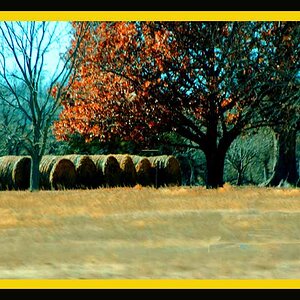
 
These are great... It helps the photographer to better communicate with the viewer (assuming the viewer is capable of viewing as intended). For example, Buckster's coast shot by itself appears very flat to me because the colors are the same and the lighting is fairly flat and diffused (no offense), but in 3D, I really see what he was seeing and am amazed by the depth and details of the scene.

So what is the process here exactly, do you just move the camera perpendicularly a few inches for each shot, or do you also have to change the angle? How far do you move the camera?
 
So what is the process here exactly, do you just move the camera perpendicularly a few inches for each shot, or do you also have to change the angle? How far do you move the camera?
I move about half a foot to a foot directly perpendicular generally. The idea is to simulate two eyes at the same plane from the subject, seeing from slightly different angles, the way eyes do in real life. To enhance the effect though, it can help to increase or decrease the space between. The closer the main subject, the less I move (think macros - you would only move a tiny bit). For subjects further away, I get the two shots from further apart. I saw an image once of clouds shot from an airplane that might have been several hundred feet apart, and it worked really well.
 

Create an account or login to comment

You must be a member in order to leave a comment

Create account

Create an account on our community. It's easy!

Log in

Already have an account? Log in here.

New Topics

Back
Top Bottom