Well - if you are really serious about photography, I woudl advise to rather get a used older semiprofessional DSLR, like the aforementioned Nikon D90. For Canon, that would be a 50D or 60D.
The main reason is that if you are really serious about photography, you will not feel the need to upgrade too quickly, because you will already have advanced features like HSS, which you very likely will want very urgently once you get a bit into the field. Also these cameras have quite a bit more controls and thus allow you to work much faster.
All you really lose by using an older camera is some (really not too much, unles you go for the really old cameras) high ISO performance. Since you want to do landscape and portraiture, you can basically always work at ISO 100 anyway, so that doesnt matter much. You can also basically use good old (and cheap) manual lenses as well, since you wont work with fast moving subjects (*).
Lenses, hrr. Well theres generally 3 philosophies:
- Get a kit or convenience zoom, plus a tripod, for landscape, and a "nifty fifty" 50mm f1.8 for portraiture.
- Get a 2.8 normal zoom for both. Theres a pretty good cheap lens from Sigma for that.
- Get a wide zoom and a telephoto zoom(*). Either ignore the gap in between or, if you later find you actually miss it, get a 35mm f1.8 for that.
A comment on the fields:
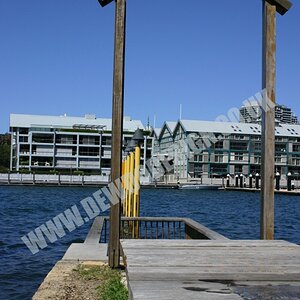
Landscape means you want a lot of range in the focal lengths. Basically 18mm, even better 16mm, and maybe even less for wide angle. And some telephoto range, too. You also want a tripod and very likely set of filters - like traditionally a gradient neutral density and probably also a polarizer. Make sure you get only one such set of filters, for the largest size you need, and get translation for your lenses with smaller filter threads. A tripod is really essential for landscape photography - for example you can get great effects by long exposures, and often you'll have drastic dynamic range and will want to do braketing - multiple exposures at different levels, so different parts of the picture are correctly exposed and can be combined into one picture later in the computer.
Portraiture happends at any focal length, really, but the many people love to have a prime, because they are very bright and allow shallow depth of field. This means the background will drown in blurr and the viewer of the picture will be forced to focus the attention on your subject, i.e. the person portrayed. For portraiture, you might quite quickly want a good flash that can do HSS and can be turned in order to provide indirect light.
(*) Only an option for Nikon - Canon lenses are all autofocussing.
(**) You might prefer Canon for this option - they just released a great APS-C wide angle zoom thats very affordable. For Nikon, the only really cheap options are from third party, like the famous Tokina 11-16mm f2.8.



![[No title]](/data/xfmg/thumbnail/34/34556-60d61b1903f6554f7373cddfe5823280.jpg?1734165526)