What's new

Need crisp, clear photos.

Large lens aperture when shooting and sharpening tools in post processing.

To further illustrate the above points, "sharpness" is relative. To create a really "sharp-looking" photo, it will help a lot of you have areas of out-of-focus to enhance the visual effect. That's where large aperture comes to play.
You will also(most of the time) need further sharpening in RAW or photoshop to sharpen details that you want people's eyes to focus on. Just be careful how much you sharpen your image. It should still look natural, and not something that will create a sense of suspicion a.k.a fake-looking images.
 
Having a steady hand (or use a tripod), learning proper focusing techniques, and understanding DOF is a good start.

Sharp glass is a must for sharp images.


FYI: posting images you don't have rights to is a forum no-no.
 
Tried to edit it but I can't get rid of the thumbnail....
 
Tried to edit it but I can't get rid of the thumbnail....

Hi Samantha, I deleted them for you - attachments are kind of tricky. :) Just use links when you're discussing work that is not your own, and you'll be fine here!
 
A nice wide-aperture prime lens like an 85mm f/1.8 or 85mm f/1.4, or a 135mm f/2.8 or 135mm f/2 lens, or a 70-200mm f/2.8 lens, any of those lenses would be helpful for those types of shots.
 
One of the best tips I was ever given for keeping shots sharp was to not try and hand-hold anything under 1/60th of a second. I've broken it a few times, but in conjunction with a nice wide aperture lens, and some good lighting, it's still something I keep in mind all the time. In the beginning of my photographic experience, my biggest issue was always trying to shoot in light that pushed the shutter speed slower than 1/60th! Also, make sure you really learn how to use your Auto-focus points in the viewfinder. So many times I see people who are in the right lighting, but they can't focus it on the eyes like they're supposed to.
 
I am going to be honest here so please don't take this too harsh, it is based on decades of experience, and is only meant to help you out. When beginners ask "how do I get clear crisp or sharp photos", what they are essentially asking how do I become a really good photographer. Unfortuntately, many want a quick tip or fast route to get there and it just won't happen. What you need to do is study the basics and master them and your photography will slowly improve. In getting a good, clear image, hundreds of variables can be at play, from lens selection, to lighting, to hand shake, etc. And all of those things will somehow relate to the basic fundamentals of photography. So if you don't master that, frustration will be the name of the game.
 
Last edited:
I suspect that it's not so much how "crisp" or "clear" this is (at this small-ish size, it's actually hard to judge. I can take a soft soft image, but in a small size you might not notice) -- but rather than selective focus that really helps the subject "pop".

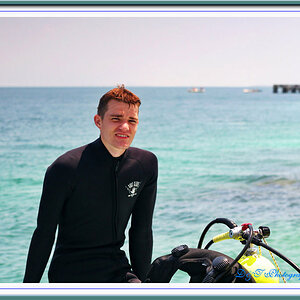
Notice how soft the background is? Even the foreground is a bit soft. When you have a focused subject with a deliberately non-focused background (created by using a low focal ratio) you can really call attention to your subject because you are using selective focus.

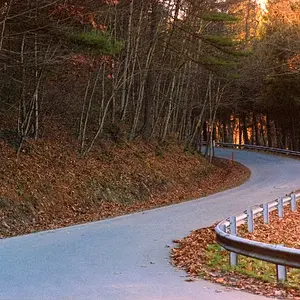
If you look at the roadway in the 2nd shot, you can see the image coming in and out of focus - the depth of field is quite visible here.

The "focus" part of the shot is obtained by using a fairly low focal ratio. f/4 will do provide some effect... f/2.8 will provide a stronger effect. f/2 will provide a very strong version of the effect -- lots of "creamy" background. Below f/2.... e.g. f/1.4 will start to create a depth of field which is so thin that you are in danger of not being able to completely focus your intended subject (e.g. you might notice their "eyes" are focused, but there nose and ears are already going soft.) Use f-stops below 2 with care.

There's a bit more going on here... the photographer is putting the sun behind the subject. You'd think it would be better to put the sun in front of the subject -- so that the sun is on your subject's face. But this often results in squinting subjects -- not in a flattering way. Care must be taken to avoid rendering the subject as a silhouette when doing this -- fill flash or reflectors can help.
 
I think you have some handshake. Try to increase the shutter speed next time. Better to have it faster than the safety shutter speed.
 
I am still learning and I also struggle with this. Two things I found is tripod helped a lot with a remote. Also the lens, and what I mean by this is quality of the lens. If you taking a kit lens that only goes to f4 and then take a more expensive lens that goes to f1.8 you get totally different quality pictures. Often it is nothing to do with the camera body but more with the lens you put on the body. So for me now I will hire a really nice lens until I can afford my own.
 
Some folks still spend considerable bucks to buy fixed focal length ('prime') lenses, and my understanding has been that such lenses can provide better image quality (and other benefits) than variable lenses. Maybe the advantage is marginal, but a good 50mm lens should allow the photographer to capture 'sharper' images than a variable lens shot at 50mm because of better optics. Is my generalization correct?
 
Last edited:
Sort of.

It really depends on which prime and which zoom lenses you are comparing.

With 50 mm lenses there are 3 grades:
The inexpensive consumer grade 50 mm f/1.8's (5 to 7 lens aperture blades, less attention to the correction of optical aberrations)
The prosumer 50 mm f/1.4's (7 to 9 lens aperture blades, better optical aberration correction)
And the pro grade 50 mm f/1.2's (9 lens aperture blades, best optical aberration correction)
 

Create an account or login to comment

You must be a member in order to leave a comment

Create account

Create an account on our community. It's easy!

Log in

Already have an account? Log in here.

New Topics

Back
Top Bottom