What's new

Need help with hockey rink shooting

Gordy

TPF Noob!
Joined
Oct 4, 2013
Messages
2
Reaction score
1
Location
Vancouver, BC
Can others edit my Photos
Photos NOT OK to edit
I am a novice photographer with a Canon S5 IS 8M pixels camera with lens specs: zoom 12X, 6.0-7.2mm, 1:2.7-3.5 USM.
I managed to find a setting which worked well, and I have a photo from few years ago that I am happy with.
However, now when I try the same settings I am not able to achieve the same results.
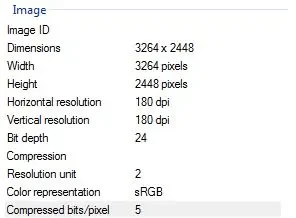
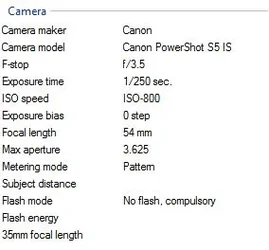
Here is the link to the photo taken by the same camera with very good result:
http://i1225.photobucket.com/albums/ee391/gordyg1/IMG_0104.jpg
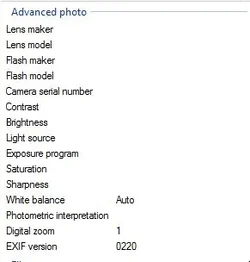
$104a.webp$104b.webp$104c.webp


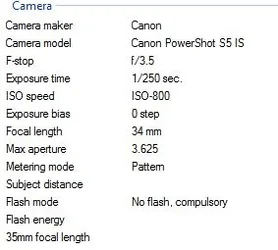
Here is the link to the photo which was taken with the same settings, however it isgrainy and darker.
The rink is not the same one however very similar in lighting.
http://i1225.photobucket.com/albums/ee391/gordyg1/IMG_0640.jpg
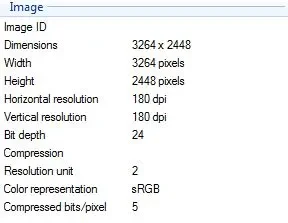
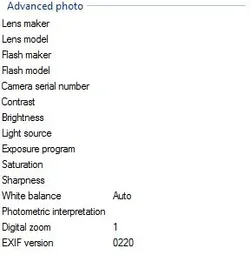
$640a.webp$640b.webp$640c.webp

I am currently shooting in Manual mode and I believe the first photo was also taken in manual mode.
I have set the 3 main items, Fstop, Exposure time, and ISO to exactly the same setting but did not get the same results.
One thing I was wondering about is if the zoom makes any difference. I do have the digital zoom turned off, however does the amount of optical zoom make a difference here?
I tried different combination of Fstop, Exp time, ISO, but still did not achieve desirable results.
Any suggestions to improve the photo quality please?
 
The information you have posted does not tell us how much light there was at each venue.
The camera does not work like our eyes do, and what looks the same or nearly the same to you looks very different to the camera.

It looks like the metering mode for both was Evaluative (pattern), which averages the light in a scene.
Without changing the lighting, when Evaluative metering is used, just changing the focal length can change the exposure needed, because the amount of light reflected from the scene is different.

The light meter in the camera is a reflected light meter.
For critical lighting measurements, many pro photographers use a hand held light meter that can measure reflected light, incident light, and strobe light.

Understanding Camera Metering and Exposure
Camera Exposure: Aperture, ISO & Shutter Speed
Digital Camera Image Noise: Concept and Types
 
I've done a lot of hockey at local rinks in my area and I've found that the light can vary from one end of a rink to the other, and from rink to rink. The conditions for each of your two photos may have seemed similar but the lighting at the second rink may have darker than it looked. Any time I've gone to a rink for the first time I try to notice where the light might be better to figure out some good vantage points to shoot from around the rink.

If you're zooming out or using a longer lens the light needs to travel the length of the lens in to your camera, so you'd probably need to recheck your settings after you've been shooting more close up and then zoom out (or vice versa).

You could raise your ISO to help you be able to set the camera at a fast enough shutter speed to freeze the action. In better lit arenas I can use a faster shutter speed but in some local rinks that are not well lit I learned how to make 1/125 work (which is slow for sports). If you can get a 1/250 speed as in your photos that should be enough to freeze some action; 1/500 or faster could be better but if it's not well lit that may not be an option.

I'd probably try raising the ISO, keeping the shutter speed at 1/250 at least, and adjust the aperture til the meter indicates you have the amount of light needed for a proper exposure. If you want to shoot someone closer to your side of the rink a larger aperture could work for more of a close up and out of focus background; if the player is farther from you a smaller aperture would keep more of the rink in focus. I usually set up along the side at one end and shoot within that half of the rink; I like shooting from about at the blue line toward the crease.

What I've found works for me is to get framed and focused on the net and wait for the action to come to my end into my viewfinder, then adjust the framing and focus as needed. If I can't get a real fast shutter speed due to low light I'll watch for when there's a stoppage, a puck drop, when they're tied up along the boards, or for moments when the play turns and there may be a pause before they head down the other way.
 
Good points! ^^ There's not going to be a lot you can improve on. Your camera is very limited in what it can do, and this sort of work is very challenging; there's a reason a pro shooting for a magazine would have you used $20,000 in gear to get the same shot. The zoom will very definitely affect your shots. If you look at the specs you've posted, "1:2.7-3.5" that means at the shortest focal length (widest view) the lens has a maximum aperture of f2.7, but at maximum zoom its maximum aperture is reduced to f3.5. That may not seem like much of a change, but it's a lot, especially in these low-light situations.
 
I used to shoot an S5 (mostly for hiking)... and while it will give adequate snapshots in places like this if you know what you are doing... you really need better gear. The S5 is holding you back....
 
That is very good info Vantagesnaps, I will try your suggestions next game.
I will see if I can improve it some what by tweaking it.
As Tirediron has mentioned, it is a real challenge with the camera that I have.
Appreciate everyone's input, very helpful indeed.
 
If you're zooming out or using a longer lens the light needs to travel the length of the lens in to your camera, so you'd probably need to recheck your settings after you've been shooting more close up and then zoom out (or vice versa).

Assuming that you are metering in manual mode and the aperture you selected is not limited by your zoom(ie. 5.6 on a 3.5-5.6 lens), would the zoom still affect the exposure settings? For example, if I frame a subject at 50mm on my 18-200 lens and I get an exposure of 1/200th at f8, and then zoom in to 200mm still at f8. Would my exposure change? Sorry to derail the thread.
 
If you're zooming out or using a longer lens the light needs to travel the length of the lens in to your camera, so you'd probably need to recheck your settings after you've been shooting more close up and then zoom out (or vice versa).

Assuming that you are metering in manual mode and the aperture you selected is not limited by your zoom(ie. 5.6 on a 3.5-5.6 lens), would the zoom still affect the exposure settings? For example, if I frame a subject at 50mm on my 18-200 lens and I get an exposure of 1/200th at f8, and then zoom in to 200mm still at f8. Would my exposure change? Sorry to derail the thread.


(Quoted from Wikipedia)

-------------------------------------------------------------------------------------------------------------------------------------
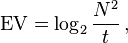
In photography, exposure value (EV) denotes all combinations of a camera's shutter speed and relative aperture that yield the same exposure for a given scene luminance


367d07c30fbf0be40e354b3ba4a6bbb2.png


-------------------------------------------------------------------------------------------------------------------------------------


As you can see, the exposure is not related to the focal length as long as the f-number stay the same (Physical diameter of the opening do change in order to maintain the same aperture or say, the f-number)
 
If you're zooming out or using a longer lens the light needs to travel the length of the lens in to your camera, so you'd probably need to recheck your settings after you've been shooting more close up and then zoom out (or vice versa).

Assuming that you are metering in manual mode and the aperture you selected is not limited by your zoom(ie. 5.6 on a 3.5-5.6 lens), would the zoom still affect the exposure settings? For example, if I frame a subject at 50mm on my 18-200 lens and I get an exposure of 1/200th at f8, and then zoom in to 200mm still at f8. Would my exposure change? Sorry to derail the thread.


(Quoted from Wikipedia)

-------------------------------------------------------------------------------------------------------------------------------------
In photography, exposure value (EV) denotes all combinations of a camera's shutter speed and relative aperture that yield the same exposure for a given scene luminance


367d07c30fbf0be40e354b3ba4a6bbb2.png


-------------------------------------------------------------------------------------------------------------------------------------


As you can see, the exposure is not related to the focal length as long as the f-number stay the same (Physical diameter of the opening do change in order to maintain the same aperture or say, the f-number)

OH MAN....Nobody said there would be a math test with this thread. :x
 
No kidding, how did math get into this?! I was mistaken, I was thinking about prime lenses not zooms because I use mostly primes. I was thinking that the longer a telephoto lens is the further the light has to travel into the camera.

Basically I check and adjust settings periodically if I move from the blueline to the end of the rink where the light may be different, or if I turn and face a different direction, etc. - I use the meter to determine how to adjust settings as needed.
 
Sorry about the *math* stuff <roll eyes>

To sum up, if f-number, shutter speed and iso value are the same, changing the focal length will not change the exposure.
 

Create an account or login to comment

You must be a member in order to leave a comment

Create account

Create an account on our community. It's easy!

Log in

Already have an account? Log in here.

New Topics

Back
Top Bottom