What's new

Newbie interested in macro photography

EDL

No longer a newbie, moving up!
Joined
Apr 25, 2012
Messages
697
Reaction score
53
Location
Western Pennsylvania
Can others edit my Photos
Photos OK to edit
Hello,

My first post here. I'm pretty much a total newb, but I have a strong interest in macro photography. I have an old Olympus C3030 (3 MP, just a point and shoot, not even a DSLR) that I got a number of years ago. While playing with it I discovered this thing called "macro", took some pictures of insects just playing around. The kids got a kick out of it, so from that point on, every bug that was found required dad to get the camera out. I ended up with a set of Raynox screw on "lenses" (2x and 4x) which helped a lot, but now I have a desire to "do it right".

I've done some reading, covered the basics of photography in general and have a fair understanding overall. What I don't have is the voice of experience to guide me in purchasing a proper macro rig.

I've been sort of looking around and so far I'm interested in the Sony Alpha's...A35 or A55 (the transparent mirrors are intriguing), and the newly announced Nikon D3200. Yeah, unfortunately the wallet only speaks entry level.

The camera also needs to be decent for general photography too.

I've also looked at the Tamron 90mm and 180mm macro lenses, but have read good reviews of the Canon 100mm macro as well.

What are your opinions of my camera choices? Decent to get going, or would there be a better choice for the macro realm?

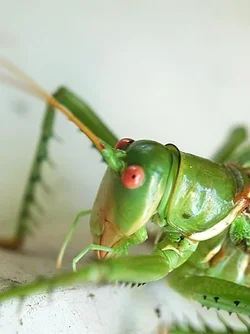
Here's a picture of a grasshopper I got with the old Olympus. This was in Texas (when I was in the Air Force). The view is looking straight up (it was perched on the door frame).
 

Attachments

  • $grasshopper.webp
    $grasshopper.webp
    25.4 KB · Views: 253
Basically it doesn't really matter.
Pretty much every prime macro lens on the market performs to a very similar and very high optical standard. The major differences are focal lengths, features and price - more minor differences are present but need a much more discerning eye to really see and to worry about.
Same goes for the entry level camera bodies - whilst there are highs and lows there are no major differences; however Sony are a bit more limited with respect to flash items because they use a propitiatory flash mount which is not universal. Canon and Nikon both use the common mount and either brand is a good choice.


The only thing that might sway your choice if if you've a keen interest in very close up photography - beyond what 1:1 is capable of (start thinking the eye of a butterfly filling much of the frame in a single shot). High magnification photography is possible (to a high level of quality) with any brand; however only Canon produces a lens capable of it from the box in their MPE65mm macro - it is a very specialist lens and one of the hardest to use and not recommended to beginners. However do a search and see if its products are what would interest you. Might be a suggestion to go with Canon from the outset - if its too much for you then the field is open.


As for going back to lenses - focal length is the key major influence. The longer the focal length the more distance there is between subject and the lens itself. In macro the Working Distance is often quoted and is the distance from lens front to subject; whereas minimum focusing distance refers to the sensor/film to subject (often marked on the camera body with a circle with a line through it). Generally 90mm or longer is the advised starting point for people in macro photography. The Tamron 90mm being a popular budget choice for many.


Also note you'll want to get yourself a flash, this helps a lot in macro in letting you use a small aperture (f13 or so) to get the depth of field you want. You might find this more challenging in DSLRs over the Olympus as many point and shoots (and older cameras) had very tiny sensors, which lets them have a much greater depth of field).
A 430EX2 would be an ideal compliment for Canon - whilst nikon has its own range of speedlite design flashes (these flashes also being of use in many fields of photography as well as macro - whilst many macro specific flashes - esp ringflashes- are far more limited in their scope and don't always provide the most easy light to work with).
 
Hi, you have a fairly decent macro shot there. I have seen very nice macro using very basic setup. Many don't use the macro lens. I am using Raynox too. Personally, as long as you can get close enough and achieve 1:1 magnifying, whatever lens is a good one. At the end of the day, macro is not just magnifying, otherwise just use a microscope. It has to include composition, contrast, lighting, etc. I love macro because I started macro when I learn photography 1 year ago. It require me to look into details and that help when I venture into other areas of photography.
 
IF you just want to mess around some lens extention tubes are a good first step into macro photography. Pretty bad image-wise but fun and cheap.
 
thanks guys, appreciate the feedback. I do understand the "working distance" thing, which is why I often see the Tamron 180mm lens as popular for working with insects (don't have to get as close to them and scare them away), but that Canon MPE 65mm lens has me very interested. A 5:1 would be very cool! Understand how it could be difficult to work with but this is definitely not something I do (or would do) professionally, it's all for my own enjoyment, so there's no pressure to "get that shot". On the plus side, no film costs, no developing costs so I can fire away like a mad man and just delete the bad stuff.

I've also read a bit on extension tubes, and reversing lenses, etc but not really interested in doing a lot of "fiddling" with stuff like that (at least not yet). Just interested in purchasing a respectable entry-level set up that I can take out of the box and go. I realize that macro is a specialized form of photography and as such "entry-level" is a relative term. I think I'm good when it comes to the lenses and such, was just curious of there a particular body that might be better than another for macro.
 
Body doesn't really matter a lot, the lens is much more important.
You could probably get real nice results with an entry level DSLR like the D3100 / D3200 if you have a nice lens.
 
Extension tubes work. But really, it's hard to work with. With tubes on, your maximum and minimum focal distance decreases, with more tubes, the shorter the range it is able to focus in (maybe only an inch at closest focusing and an inch and a half at the furthest focusing). It varies on the lens used and how many tubes used. Furthermore, with more tubes stacked, more light is lost, resulting in slow shutter speeds making it hardly ideal 1:1 shots handheld (unless flashes are used, then this wouldn't be a ptoblem). But though it has cons, it does provide lossless image quality (doesn't affect lens quality) and its cheap.

I agree with the above poster. It's the lens that matters more.
 
but that Canon MPE 65mm lens has me very interested. A 5:1 would be very cool! Understand how it could be difficult to work with but this is definitely not something I do (or would do) professionally, it's all for my own enjoyment, so there's no pressure to "get that shot". On the plus side, no film costs, no developing costs so I can fire away like a mad man and just delete the bad stuff.

EDL,

I own the Canon MP-E 65mm. You can get some really nice shots with it, but, I have to tell you, it is can be difficult to work with.

For starters, the lens is a manual-focus lens. If you want to focus the subject in the camera, you need to either move the subject or the camera. This can be a bit frustrating once you've got everything set up and then find that the subject is slightly out of focus. Working with this lens, there are many times that I wished I owned a focusing rail for my tripod.

The camera also eats up light at higher magnifications. If you're going to shoot stuff at 4 or 5x magnification, make sure to have very good lighting on your subject.

The depth of field on this lens is going to be paper-thin. You may want to take several shots at different lengths (oh, how I wish I owned a focusing rail) and then focus-stack them.

Lastly, with this lens, you have to get thisclose to your subject. I've shot a dragonfly with my 100mm macro lens, but that's because I could use that at a distance. With the 65mm, the maximum distance you can be from your subject is no more than a few centimeters.

It's a great lens, and you can have a great deal of fun with it -- but be sure to also expect a fair amount of frustration as you begin to master it.

Zev Steinhardt
 
As well as the Tamron also consider the Sigma 180mm macro - I've read more users of the sigma than the Tamron (I think the sigma might have superior AF -- even though its unlikely to be used in macro work its certainly a good boon to have better AF for regular work with the lens).

Zev Steinhardt has gone into more detail about the MPE65mm and I agree with the points raised. Further I would point out that this lens can't work at normal distances. 1:1 is where its focusing range starts and 5:1 is where it ends. It's got no ability to focus on anything further off at all.
As such even for the dedicated macro fan, the MPE is specialist and the ownership and use of a regular macro lens is still a very big part of their shooting (I even know some who go out with two cameras just to be able to switch between MPE and normal lens quickly).
So even if you consider getting the MPE in the future you can happily get a regular macro lens for the now - furthermore your Raynox close up lens attachments (which are quality products) should be able to be attached to the macro lens to give even more magnification to play with (there are a range of options to do this so you can play around with higher magnifications to get a feel for them before pushing for an expensive dedicated lens).
 
but that Canon MPE 65mm lens has me very interested. A 5:1 would be very cool! Understand how it could be difficult to work with but this is definitely not something I do (or would do) professionally, it's all for my own enjoyment, so there's no pressure to "get that shot". On the plus side, no film costs, no developing costs so I can fire away like a mad man and just delete the bad stuff.


EDL,

I own the Canon MP-E 65mm. You can get some really nice shots with it, but, I have to tell you, it is can be difficult to work with.

For starters, the lens is a manual-focus lens. If you want to focus the subject in the camera, you need to either move the subject or the camera. This can be a bit frustrating once you've got everything set up and then find that the subject is slightly out of focus. Working with this lens, there are many times that I wished I owned a focusing rail for my tripod.

The camera also eats up light at higher magnifications. If you're going to shoot stuff at 4 or 5x magnification, make sure to have very good lighting on your subject.

The depth of field on this lens is going to be paper-thin. You may want to take several shots at different lengths (oh, how I wish I owned a focusing rail) and then focus-stack them.

Lastly, with this lens, you have to get thisclose to your subject. I've shot a dragonfly with my 100mm macro lens, but that's because I could use that at a distance. With the 65mm, the maximum distance you can be from your subject is no more than a few centimeters.

It's a great lens, and you can have a great deal of fun with it -- but be sure to also expect a fair amount of frustration as you begin to master it.

Zev Steinhardt

So what you are really saying is that you have a $1000 specialty lens and are too cheap to buy the $35 rail that you need to make it work better? :lol: Seriously, buy the freaking rail and make love to it already!
 
As for purchases. I would say go with the a55 and a 90mm tamron. Good combo. I shoot sony and am happy with it. Prices are good for what you get and lenses are cheaper. Sigma also makes a 105mm that is really nice but cost much more. The a55+90mm tammy combo will keep you on budget with a little room to spare. if you went with the nikon 3200 which might be really nice they make a 60mm macro that is really nice.
 
I like the EF 100mm f/2.8 macro because it has IS and it makes a good portrait lens. (I really don't like investing into very specialized equipment) But for insects, 100mm may not be enough.

Nikon D3200 could be a very interesting body because it has a huge megapixel count which will let you crop your images more. Otherwise like others have said, the body is a secondary priority, first one is the lens.
 
but that Canon MPE 65mm lens has me very interested. A 5:1 would be very cool! Understand how it could be difficult to work with but this is definitely not something I do (or would do) professionally, it's all for my own enjoyment, so there's no pressure to "get that shot". On the plus side, no film costs, no developing costs so I can fire away like a mad man and just delete the bad stuff.


EDL,

I own the Canon MP-E 65mm. You can get some really nice shots with it, but, I have to tell you, it is can be difficult to work with.

For starters, the lens is a manual-focus lens. If you want to focus the subject in the camera, you need to either move the subject or the camera. This can be a bit frustrating once you've got everything set up and then find that the subject is slightly out of focus. Working with this lens, there are many times that I wished I owned a focusing rail for my tripod.

The camera also eats up light at higher magnifications. If you're going to shoot stuff at 4 or 5x magnification, make sure to have very good lighting on your subject.

The depth of field on this lens is going to be paper-thin. You may want to take several shots at different lengths (oh, how I wish I owned a focusing rail) and then focus-stack them.

Lastly, with this lens, you have to get thisclose to your subject. I've shot a dragonfly with my 100mm macro lens, but that's because I could use that at a distance. With the 65mm, the maximum distance you can be from your subject is no more than a few centimeters.

It's a great lens, and you can have a great deal of fun with it -- but be sure to also expect a fair amount of frustration as you begin to master it.

Zev Steinhardt

So what you are really saying is that you have a $1000 specialty lens and are too cheap to buy the $35 rail that you need to make it work better? :lol: Seriously, buy the freaking rail and make love to it already!

Hmmm. Most of the focusing rails I've seen have been quite expensive. Perhaps I've been looking in the wrong place. Where can I get a decent focusing rail for that price? I'd be most appreciative.

Thanks,

Zev Steinhardt
 
Hmmm. Most of the focusing rails I've seen have been quite expensive. Perhaps I've been looking in the wrong place. Where can I get a decent focusing rail for that price? I'd be most appreciative.

Thanks,

Zev Steinhardt

I bought a 4-way off ebay for $45.
 
4 Way Macro Shot Focusing Rail Slider Canon 5D Mark II 7D 50D 60D 500D 550D 600D | eBay

Just an example, but head to Ebay and search for "focusing rail" and you'll get that model appear sold by a range of retailers. I think Adorama even brands and sells the same design and model under their own name. There are a few other kinds of rail on sale, but those are about the best design for this price point.
I've a set and they work very well for the MPE and similar macro lenses.

They are not top brand, top would probably be Novoflex which, unless you find them in a bargin bin/second hand are going to cost a fair bit. Better yes, but with a hefty price tag. After that you've also got Stopshot to consider - the motorized focusing rail.

Personally I find it easier to work handheld with the MPE than with a tripod (I can never find the subject with a tripod and rails....) though if you're shooting a static subject and have time to setup a tripod approach is ideal (Manfrotto Junior Geared head is perfect for work with the MPE - strong and accurate enough to work well without being overkill - again there are better options, but high end geared tripod heads are not only very heavy but also very expensive).
 
As an eBay Associate we earn from qualifying purchases.

Create an account or login to comment

You must be a member in order to leave a comment

Create account

Create an account on our community. It's easy!

Log in

Already have an account? Log in here.

Back
Top Bottom