What's new

photo free association

I don't use the forums gallery; but I just right clicked and copied the image address then pasted it between image tags like so =
[ img ] paste image url here [ /img ]

Rustic by some standards; but it works easily so long as you get the image address (ends in /jpeg
 
Okay since the OP didn't have any specific question just general feedback here's my take.

The focus of those 3 images have absolutely nothing to do with each other. It looks as if the software is just looking for a dominant colour and in this case it looks to be muddy slate grey.

In order for something like this to work it's the feel of the photo I would want to match not just the dominant colour and that's where the problem lies. Even the mighty Mr. Gates hasn't been able to crack the feel algorithm yet.

It may have some use if your matching very simplistic things such as colour but at present looks like it's going to fall short on any real matching criteria.
 
Okay since the OP didn't have any specific question just general feedback here's my take.

The focus of those 3 images have absolutely nothing to do with each other. It looks as if the software is just looking for a dominant colour and in this case it looks to be muddy slate grey.

In order for something like this to work it's the feel of the photo I would want to match not just the dominant colour and that's where the problem lies. Even the mighty Mr. Gates hasn't been able to crack the feel algorithm yet.

It may have some use if your matching very simplistic things such as colour but at present looks like it's going to fall short on any real matching criteria.

I'd agree with ZS on this, now that I can actually see the photos. They really don't seem to have much of anything in common other than color. Which also begs the question, what if the photographer shoots black and white?

As for the rest, well I'd still like to know what the ultimate purpose the software itself is supposed to serve.

For a professional picking pictures for say a gallery showing, well they are going to choose images based on the mood they wish to convey as an artist. This software obviously can't accomplish that. No software ever could.

For a professional shooting events, weddings, portraits, etc - well they are going to let the client choose which images they want. So again, not much purpose served by the software.

For amateurs, well what need does an amateur have for this? What purpose does it actually serve? The only thing I could think of is if maybe I wanted to do some sort of collage, but again the software can't give me matching images based on an overall mood or story - so it would serve no purpose, yet again.
 
Thanks zombiesniper, your name is a perfect counterpart for phobrain :)

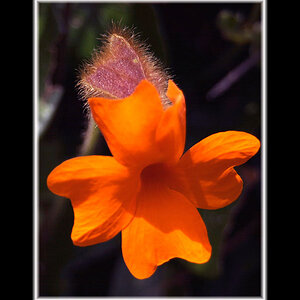
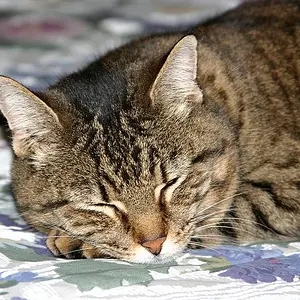
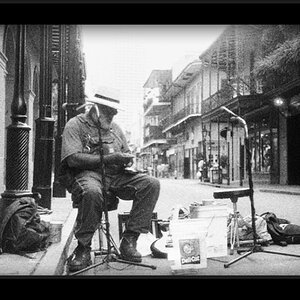
I have the benefit of knowing that Sift matches on features, and I'm not sure how much color comes into play, though it sure looks like it in these three pics. (I've also been playing with color match algorithms.. rubbing hands.) So in this case I look at the shading and e.g. on the first the combo of the pink petal with the green leaves vs. the textures in the next pic. Then the next pair is like the focus point is mirrored, top then bottom.

The structural similarities and disparate themes together give me a feel that I might hang in an exhibit, though to no acclaim it appears.

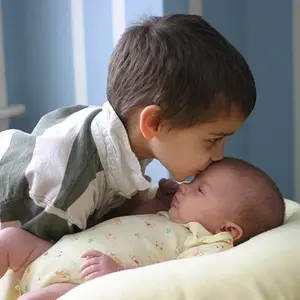
robbins.photo, thanks for staying with me, I am beginning to consider you a fan because you keep thinking of how you would use the software yourself. If anyone were to make a consumer product out of this sort of thing, the ability to find images with the same subject matter will probably be key. I think image sites will offer this in the next 2+ years, but using more advanced tech. Sift is kind of obsolete, but my glimmerings of the new deep learning tech is that it's very expensive for now, so maybe Google will offer it for sites to plug into, based on the new deep learning hardware they've developed. Here's Sift's next match in that series, which is more what you'd want for those purposes (this time I right-clicked on the image itself to get the URL, rather than posting the page URL):

34404-1472679805-d50e4782026d477cc0a5a0a027db428d.jpg


I'm more interested in when the algorithms fail to find close matches and jump to the nearest similar, which is why I got excited about these, and wouldn't post a 'sensible' match except to illustrate a point (not a salesman :). I have to admit it is impressive when it does a good match like the one above though, and one of the first such methods I tried found some dupes I had.

For fine art photographers, these methods would be interesting for people putting shows together based on lots of photos, since you can click through interesting matches til the cows come home, and then some, though it would be for the few of the few I expect.

Finally, I have ideas to make my site 'speak' to the individual, become a sort of lion or witch in the wardrobe, and image matching is a low-hanging fruit to get started with, but building the whole thing is beyond me for now. I'm just collecting interesting combos to train a neural network if I ever figure out how to build one.

 
Last edited:
For anyone convinced that software can't produce real art, you may be unaware of the latest deep learning results, e.g. see ostagram.ru for a tip of the iceberg.

Put another way, in 5-10 years you will not be able to tell if a photo was completely synthesized, and this will be normal. Deep learning will change our lives as much as the net has.
 
Last edited:
Ok, so read through all of that, still haven't seen an answer to either question, both of which have been posted more than once.

Look, this is real simple. If your ultimate goal us to market this software then the very first question you need to answer is, what would I use this for.

So far you've ducked that question every time. So I'll give it one last shot, what would this software used for that would make people want to buy it?

I realize you keep obfuscating your lack of response by trying to make this about me, but seriously this should be falling off a log simple to answer. What does this program offer to the end user that would make them want to buy it?

Sent from my N9518 using Tapatalk
 
Thanks, robbins.photo, I am liking you more and more!

If your ultimate goal us to market this software then the very first question you need to answer is, what would I use this for.​

What if you come up with a plan? I haven't been able to, I'm just trying to find people to talk to. Maybe if you see more examples, you'll have an idea.

Here is a pair I came up with in my head, for comparison:

34405-1472684867-cc8e06ca9153d2278dc0df0d503a68de.jpg
34406-1472684905-4cd523e99eaf0ec0a05e8b2820d9006a.jpg
 
Last edited:
Now that I see the images in the OP, I can only respond with, "I don't get it."

An app that will spit out an image of a pink flower petal, an aerial image of a barren landscape and last, but not least, an image of what looks like a primate defecating.

What common connection do those three have? And why would I need to do this?
 
480Sparky, give me a roomful of programmers and another of hardware, and I will make it adapt to your taste. See my earlier response for why I think the images go together. For the foreseeable future, you are clearly paying too much money for it :) How do you like the manually-associated pair?
 
How do you like the manually-associated pair?

I think this is where people are having a problem.

Manually pairing like photos based on what the individual likes may they be complimentary or contrasting has many variables, but give a two yrs old a bunch of photos and they can pair them quite quickly and effectively into pleasing sequences.

The software from what we can currently see isn't on par with a 2 yrs olds pairing ability and therefore likely will not make pairings that people would have chosen or liked.

Is the concept valid? Maybe for collages or something similar. Is the software there? Not yet.

In short. If I group them it's quick and I get what I want. If the software does it and I don't like the pairing I have to click through a bunch of random pairings to find something that matches.
 
480Sparky, give me a roomful of programmers and another of hardware, and I will make it adapt to your taste. See my earlier response for why I think the images go together. For the foreseeable future, you are clearly paying too much money for it :) How do you like the manually-associated pair?

Since there's an infinite number of reasons why a given individual may like the associations between two or three images, I think you'll have your work cut out for you in programming and infinite number of possibilities. You've explained that you like them together, but really not why.

But of course, given an infinite amount of time randomly banging keys on an infinite number of typewriters, an infinite number of monkeys will eventually produce all the works of Shakespeare.
 

Create an account or login to comment

You must be a member in order to leave a comment

Create account

Create an account on our community. It's easy!

Log in

Already have an account? Log in here.

New Topics

Back
Top Bottom