What's new

Photos look flat!

Lmphotos

TPF Noob!
Joined
Dec 10, 2012
Messages
390
Reaction score
77
Location
Missouri
Can others edit my Photos
Photos OK to edit
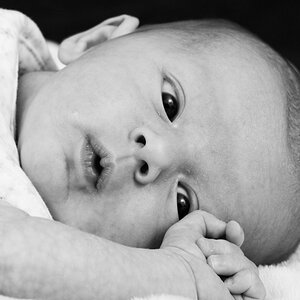
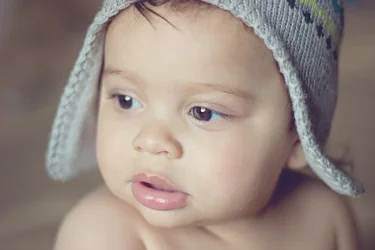
Any advice would greatly help It seems all my portraits lack dimension. Some peoples photgraphs look like you could reach out and touch the person and mine look very one dimensional and flat. Heres an example..... $day2web.webp this is mine it seems to just be so so
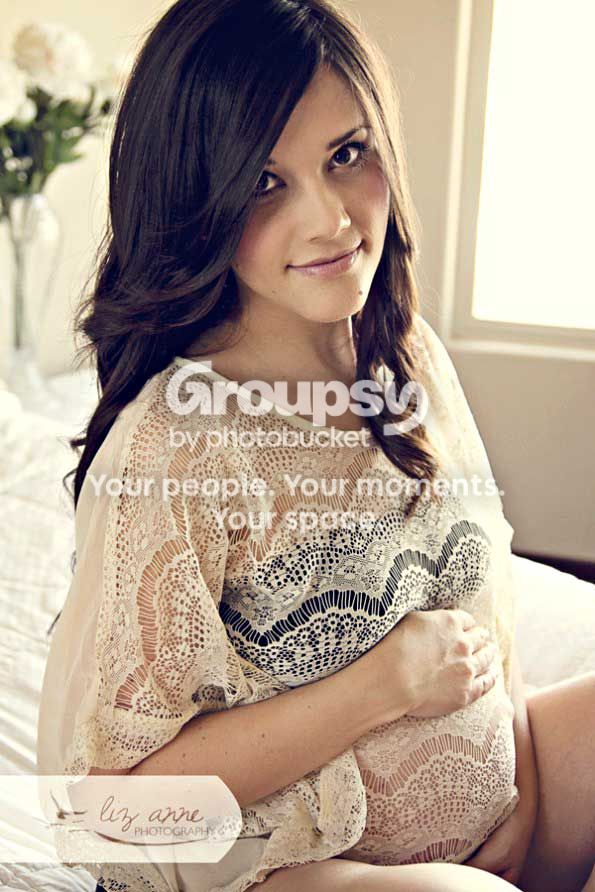
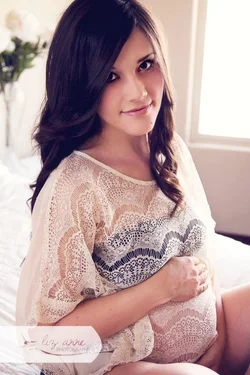
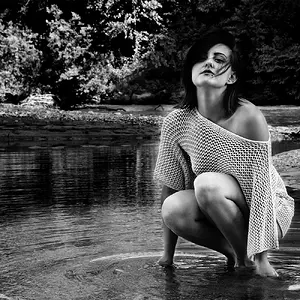
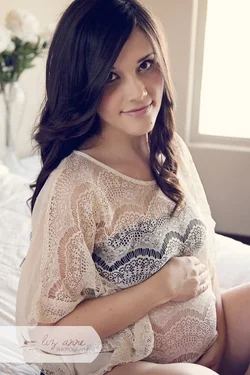
I want my pictures to look more like this.....$blog9-595x892.webp It just seems her skin is more brighter and 3d that mine??? Any tips would help!
 
I'm not sure exactly what you're noticing but it looks like you shot at too shallow aperture for the portrait of the child. If both of their eyes are in focus you will probably get more of the pop you're looking for. But that's my best interpretation of what you're saying based on the images you've posted. What aperture do you typically shoot at?
 
I think, besides DOF being too shallow on baby, color balance is off (too blue, too cyan) and the both need local contrast enhancement.

day2webllllllew.jpg


blog9-595x892lllllew.jpg
 
Some curves adjustment to increase contrast and color balance.

$day2web.webp

$blog9-595x892.webp
 
It looks like the baby is directly facing the light source in your picture, which can give you flat lighting. In the second picture the woman looks to be turned about 90 degrees from the light source and the light is hitting the side of her face, which gives more dimension.
 
It's called contrast.

To have contrast you need a difference between the highlights and shadows and you need them close enough together so that you can see both at the same time as you focus on each element of the photograph.

On the baby photo (btw, if the other one isn't yours you either need to provide proof of permission to use it or just link to it. using someone else's shots -even if you don't claim them- is bad, not good) you could either add light to build contrast or subtract some by using a dark reflector (:) a piece of black cloth or a 5in1 with a black cover). Subtractive lighting is a highly useful technique in natural light photography.

Subtractive Lighting: Creating Drama with Contrast - ESSENTIALS For Photographers

Portrait Tips and Techniques » Blog Archive » NATURAL LIGHT – subtractive techniques

The Portrait Photographer: Subtractive Lighting

Subtractive Lighting

Also, you should always make sure that your lenses and sensors are clean and to use a lens hood, shooting into the sun can also lead to a lack of contrast.
 
Beautifull Pics, but you need more "OEMPH" Try this new magic i found, just took some amazing pictures in South Africa Robbin Eiland... Try these simple tricks im sure you will do great and will really enjoy them as much as i do... 0)


spam
 
Last edited by a moderator:
The photos look flat because of the lighting, as alluded to by Mike_E

By only using available light a photographer is severely constrained by the available light color temperature, direction, and intensity.

Kind of like trying to tie your shoes with one arm tied behind your back.

As it is, doing available light photography requires as much, if not more gear as doing strobed light (flash) photography does.

http://neilvn.com/tangents/flash-photography-techniques/

Strobist: Lighting 101
 
Last edited:
Yes it was shot at 1.8 but its the lesser of two evils for me I despise noise more so than the other eye being out of focus. I shoot on a t2i and I have learned the lesson of having an ISO with that camera. Now I always keep it lower than 400 (even with noise reduction software i still do not like ISO over 400) I like the contrast tweaks but then it looses that soft look like the othe picture has? I also hear conflicting information on available light all the time. I hear put it over your shoulder when it is diffused but a window make them face it? It seems if I side light the face I also loose catch lights. I keep trying different things but my photos never have that range or dimension I see in others.
 
so you want it to look soft, but also with depth? Those are generally mutually exclusive goals.

The primary ways the human brain interprets depth are:

1) binocular vision (not available to the photographer)
2) diminishing perspective of obvious reference objects
3) focus/sharpness/contrast (they're all ultimately different aspects of the same thing
4) color shifts/atmospherics (this only really works for large scale images though, not portraits)

As you can see, the only two you really have available to you are perspective distortion and contrast/focus. Perspective distortion is generally unflattering and isn't much of an option to show depth on a beautiful female. Thus leaving you with just contrast/focus. This is where your 'soft dreamy lighting' that you like is killing the depth of your images. It's destroying many of the non binocular depth cues that the human visual system uses to see depth. This is why 'soft' lighting is also often referred to as 'flat lighting'. It makes images look flat and without much depth.
 
Yes it was shot at 1.8 but its the lesser of two evils for me I despise noise more so than the other eye being out of focus. I shoot on a t2i and I have learned the lesson of having an ISO with that camera. Now I always keep it lower than 400 (even with noise reduction software i still do not like ISO over 400) I like the contrast tweaks but then it looses that soft look like the othe picture has? I also hear conflicting information on available light all the time. I hear put it over your shoulder when it is diffused but a window make them face it? It seems if I side light the face I also loose catch lights. I keep trying different things but my photos never have that range or dimension I see in others.

Perhaps improve your lighting? With even one strobe or speedlite and some sunlight coming in through a window I was able to shoot at 1/200 f/11 on my T1i, ISO 100. I'm certainly not an expert nor do I produce breathtaking shots like you describe, but, certainly there is no need to shoot wide open with off-camera flash. Seems like f/8-f/11 is the sweet spot for sharpness in most of my lenses. With a 50mm lens, you could certainly shoot down into lower shutter speeds and raise the aperture up as close to f/8 as you can, at ISO 400, even with available light I imagine. Even if it's a tad underexposed and you fix the exposure in post.
 
Our eyes use various clues to "see" depth. One of them is the degree of shadow - a curved surface would show a gradation of shadow which signals to the brain that the surface is curved. The shape and definition of the shadow is determined by a number of factors: the apparent size of the primary light source, the balance between the primary and secondary light sources, the positioning of the light sources relative to the surface, and so on. The trick is to have enough primary light to put the highlights on the right places, and have secondary light sources that allow the shadows to delineate shape while still having enough detail. So the real trick to having images that have good three-dimensional feel to them, is to understand how to use light to create that blend of highlights and shadows that make for a pleasing image.
 

Create an account or login to comment

You must be a member in order to leave a comment

Create account

Create an account on our community. It's easy!

Log in

Already have an account? Log in here.

Back
Top Bottom