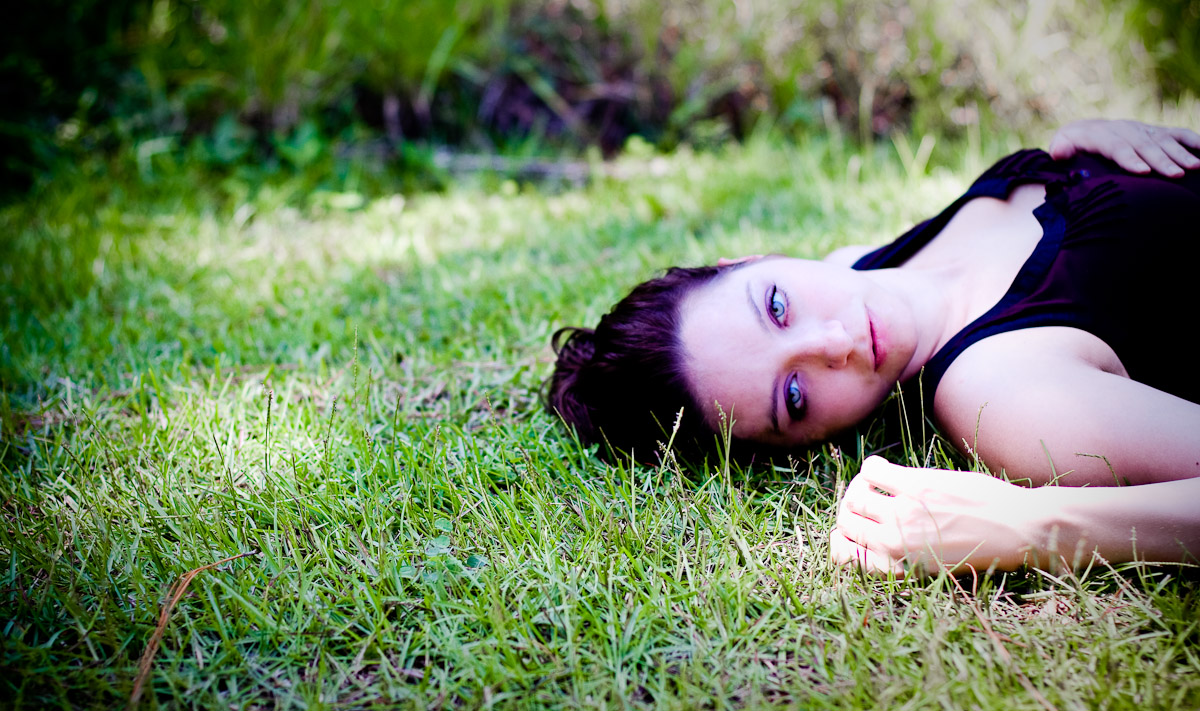
The image of wifey on the ground is, well, not one I'm much interested in. Her hand is burned out, yet her hair and blouse are inky and devoid of texture. Her hairline looks purple,and I can see some evidence of posterization of tones on her right bicep from the vignetting. It looks really bad.
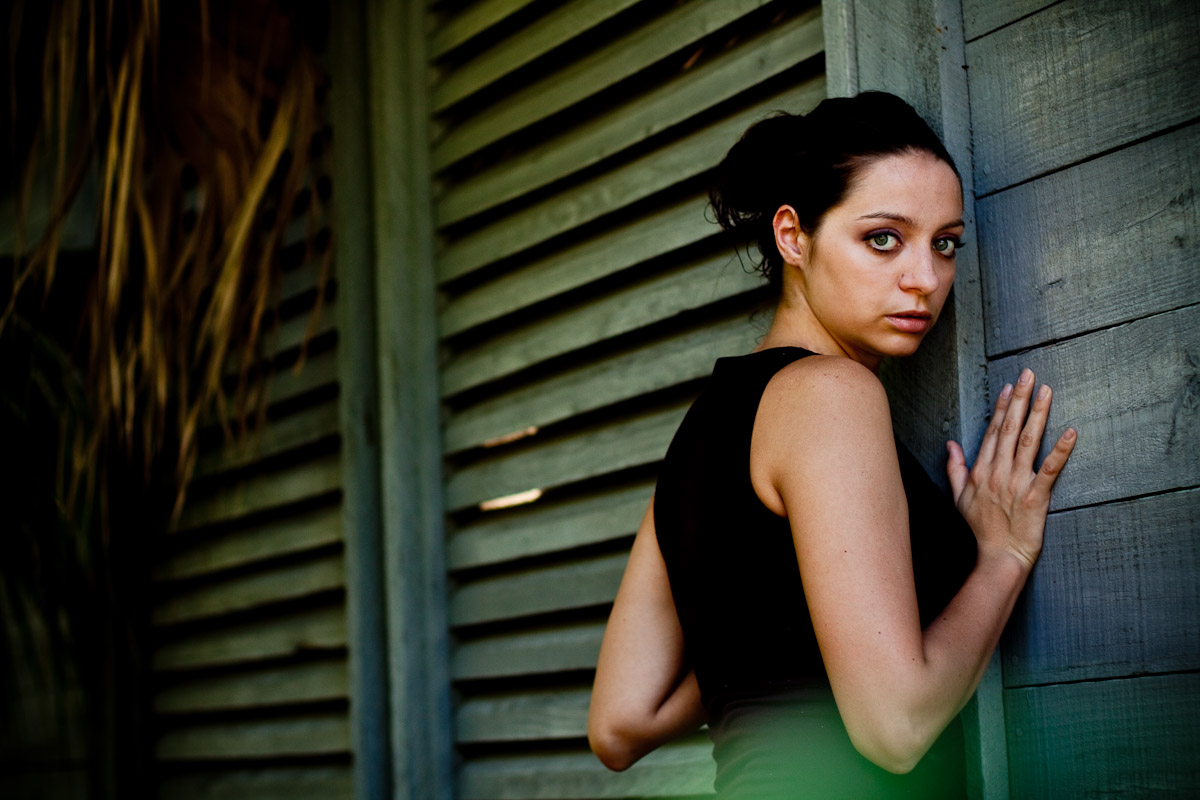
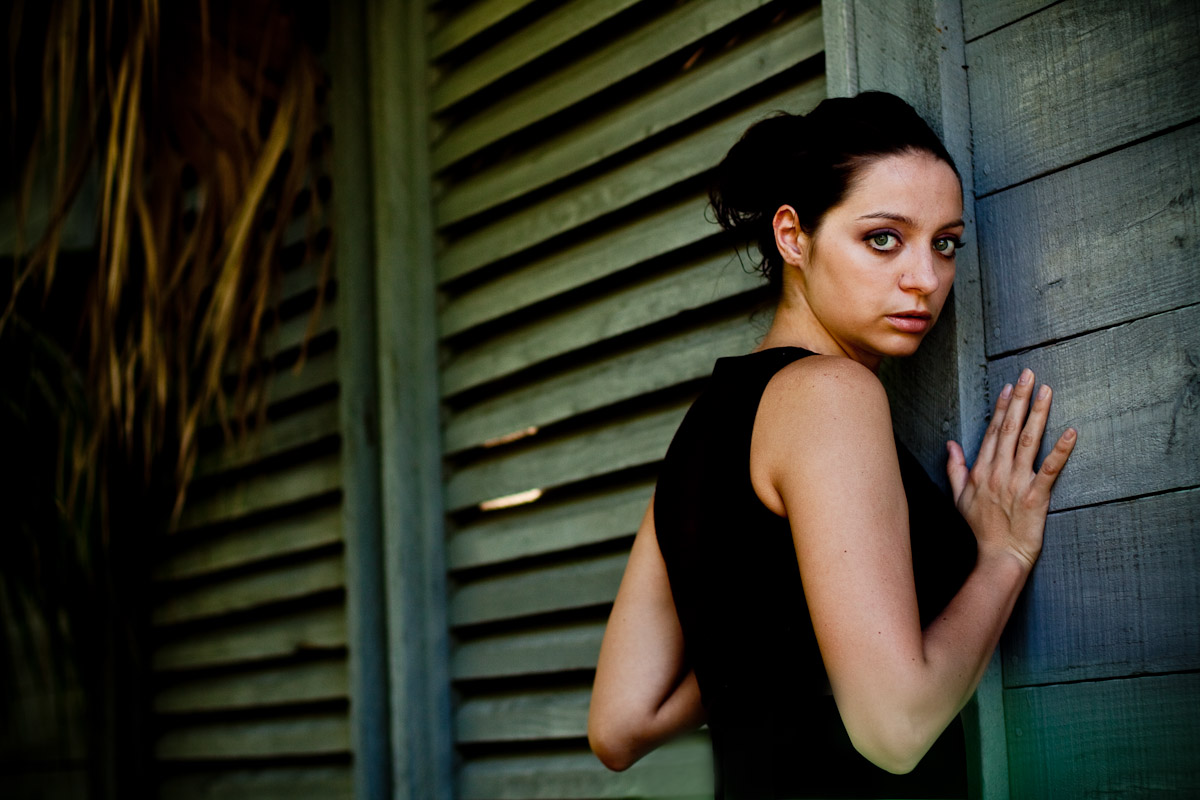
On the first image, I think there is too much dead space to the left, but what is *really* distracting is not her left arm (she does have two arms, right?), but the two small illumintaed bits that show up through the window shutters. There is an old design memory rule, "Light advances, dark recedes," and what the two spots of light do is advance out of the shadows,and really draw a serious amount of attention away from the wall, and away from wifey, and away from her eyes, which because they are the brightest thing related to her space, draw a lot of viewer attention. If you were to simply clone out the two distracting yellowish spots on the window shade slats, her eyes would really "pop",and the original photo would be much better.
Cloning out her entire left arm? I think that would make a very awkward pose, and it would look like she were humping the wall. As far as the OOF foreground grasses, that technique is very good if it is done with full commitment, but I think honestly you need more foreground foliage to make it look intentional,and to convey that feeling of looking past the foreground to the subject, in the way that so many Jaapanese photographers have done for so many decades; had you included a BUNCH of grasses, the effect would actually be more powerful and would tie the grasses on the house to the foreground grasses.
As for the horizontal composition of the original shot, I just don't think it works very well. I also think the original shot is excessively saturated,with inky hair and no detail visible in the back of her shirt EXCEPT at the bottom of the frame, where the green grass functons almost like,well,like a diffusion filter. Just as an aside, I think if you want to work in this genre, you might want to consider buying a couple of black net diffusion filters, and maybe a white diffusion filter as well. ANyway, back to the in-camera diffusion effect that the green grass provides--this is an example of how in-camera filters affect an image in ways that Photoshop does not; the diffusion of the green grass has spread some of the light,mgreen values INTO the blacks at the edge of the frame, and you can see that there *is* detail at the bottom portion of the back of her shirt. This effect happened organically, in the field, and again, is the type of effect that you could take advantage of by using some diffusion in-camera.









![[No title]](/data/xfmg/thumbnail/30/30863-8c53522e4ed851e96cb7411e74b9fe59.jpg?1734158825)