What's new

Question for the experienced/pro photographers

ancha930

TPF Noob!
Joined
Jul 3, 2011
Messages
19
Reaction score
3
Location
Wash, DC
Can others edit my Photos
Photos OK to edit
I understand that photography is an ever evolving art and you never stop learning, but where did you start? I have so many questions because I genuinely want to learn and push myself to become better, but I'm unsure of what I should master first and how I should go about doing so. Are there books, websites, etc that you can point me to? I'm sure I could get every answer I need just by asking here, but I don't want to flood the boards with my nonsense.
 
I studied the old masters, HCB,Lang,Capa,Erwitt and most of the Magnum photographers
 
I learned a lot from The Amateur Photographer's Handbook; the Time-Life Library of Photography series; reading about 15 years' worth of both Popular Photography and Modern photography, and classes in junior high,and then in high school. At the university level, I studied photography in the fields of photojournalism and mass communication, fine art, art history, and science departments. Each point of view is a bit different; "science" classes on photography are vastly different from those approaching photography from a fine art or art history point of view. Personally, I think the fine art and art history classes were THE MOST VALUABLE ones for me. The technical,mechanical,proceduaral, and practical aspects of photography are well-taught by many hundreds of fine books available all over the world.

I prefer older books about "photography", to the newer books that are basically recipe books, or cook books of digital imaging, capture, and image manipulation. And, while it is possible to polish a turd, why polish a turd when you can do a bit of mining and begin with a gemstone instead???
 
My suggestion and what has worked for me so far. Start with the most important part of photography. Exposure. No matter the content if nothing you shoot is at least CLOSE to properly exposed you will be disappointed. Go to the library and pick up a copy of "Understanding Exposure" by Bryan Peterson. Take that, your camera manual go out back of your house read and practice. Learn exposure in every situation you can. Learn that and get it as mastered as you can. Then move on to "Composition" and subjects that you find you are in weak in. At least that is what I did =)

EDIT: Sorry, I saw this as being directed at the experienced/Pro Photographers. I am by NO MEANS either of those. So, sorry for posting in here.
 
Last edited:
My suggestion and what has worked for me so far. Start with the most important part of photography. Exposure. No matter the content if nothing you shoot is at least CLOSE to properly exposed you will be disappointed. Go to the library and pick up a copy of "Understanding Exposure" by Bryan Peterson. Take that, your camera manual go out back of your house read and practice. Learn exposure in every situation you can. Learn that and get it as mastered as you can. Then move on to "Composition" and subjects that you find you are in weak in. At least that is what I did =)

EDIT: Sorry, I saw this as being directed at the experienced/Pro Photographers. I am by NO MEANS either of those. So, sorry for posting in here.

No, no! Don't feel bad. You actually gave great advice! By experienced I mean, someone who can do more with their camera than just pick it up and snap a picture. I can do that just fine, I'm just terrible with the technicalities of it all.
 
I read a lot. Books, websites, magazines etc.

I agree with Derrel, look for books about 'photography'...not specifically digital. The basics of exposure have been the same for 100 years, so you don't need books that were written in the last few years.

I've taken many of the photography classes that are offered in my area. I attend seminars. I make friends with other photographers. I teach photography to others, which is itself, a great learning tool for me.
 
I am sure to get flamed for this but here goes...

In my opinion, a nice film camera, a safe light, a tank and some chemicals are the best way to start, here is why...

1) While if you are extremely dilligent, you can do the same with digital, film requires you to either get the shot right in the camera, or waste time and money doing it over again. I find that with most people, this forces them to think much more than if those same people used digital.

2) You gain some insight into both sides. Since normal people can not disect a sensor, developing film give you greater understanding as to what is actually happening when the light strikes a photo-sensitive surface.

3) You gain a great respect for what digital can do since you start with technology where normal people can't shoot above ISO 400, this also forces you into tripods and long exposures which you will continue to use later even at higher ISOs.

4) 99% of what you learn with film is transferable to digital. Most people don't think about this, but short of a few minor things, everything you learn with film directly moves over (including using different developers, different temps, longer development time, etc. Don't think so? You haven't spent enough time in the darkroom then).

5) Many people think you have to spend a fortune on film equipment, then sell all that and buy digital. This simply is not true. Sure, you do have to sell the old if you want to, but the investment can be as low as $25 for a nice old manual film camera, and another $25 or so for your darkroom supplies. You can get film cheap, especially if you are willing to bulk load your own.

Now I am sure lots of people will disagree, and that is fine, we all have our opinions. But from my personal experience, photographers who were brought up on film (either back in the day, or even recently) grasp the concepts and advance much faster than those brought up strictly on digital. 99% don't stick with film, at least not in a serious way, and that is fine too. Whatever it takes to help you learn.

Allan

 
Last edited:
I'm no way a professional photographer, I'm new as well but just wanted to chime in for some advices if it's worth any.

Learn the basic, the exposure triangle - ISO, Shutter Speed, Aperture. Read books like Understand exposure to get understand the triangle. You don't have to go out everyday to learn how to shoot. Take photos inside your house, cups, bowl, food, your family members. There you see how the photo will look and how adjusting ISO, Shutter Speed, and Aperture will improve your photo. Don't be afraid to ask friends and families to go out for a photoshoot. That way you will learn hands on how to compose, adjusting on the spot, and post it on here for people like Big Mike and Derrel who will give advice and tips. My first shoot, I shot most of it at 1/80sec shutter speed. When I got home, I found out there were some good shots that were blur due to camera shake or the subject moving. I learned that it's okay to bump my ISO up to 200, or even 400 to keep my shutter speed higher for sharper photos and no blur.

Continue to read books, practice and read a lot of threads on here. I'd learned a lot looking at other people C&C threads and having some of the pros here pointing out their mistakes and I learned from the OP's mistakes. Don't feel discourage if it seem like you're not improving or posting for C&C and some people say some harsh things. I bought my first DSLR in August but never really got into it so I had it on the shelf until a month ago. I got the concept but still make a lot of mistakes. But the past month I've been reading, and going out to practice. Everytime I post some of my work, I learned something new and see things that other people point out that I wouldn't notice. I look at professional photos and use it as motivation to one day achieve those looks. Like I said before, if you can get someone that help you take photos, you'll learn a lot faster because you're more motivated to go and more opportunity to shoot.

When you're out on a shoot and envision a photo that you think is nice, take the photo a few times, switch to different angle, different setting and take some more. It's okay to take some extra photos because once you see it on the computer, you can see which one looks better, and you can see the setting and see why and learn from it. Anyways, that's just my .02 cents for what it's worth.
 
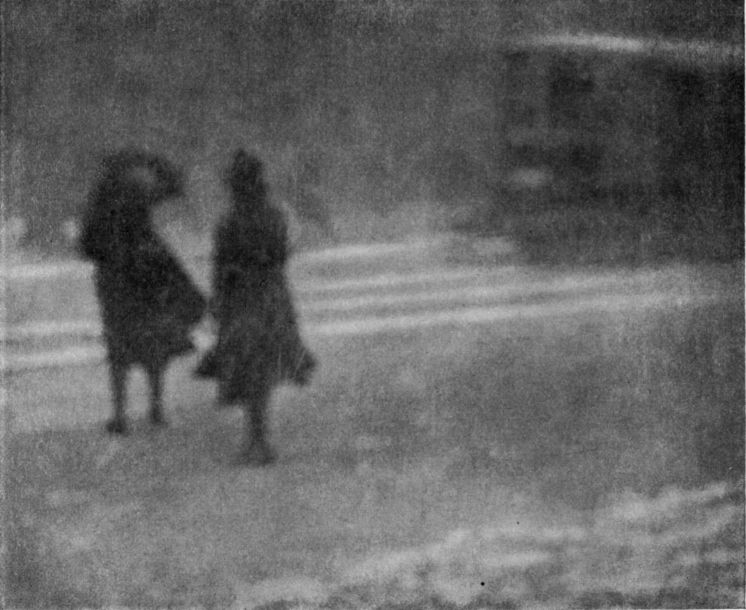
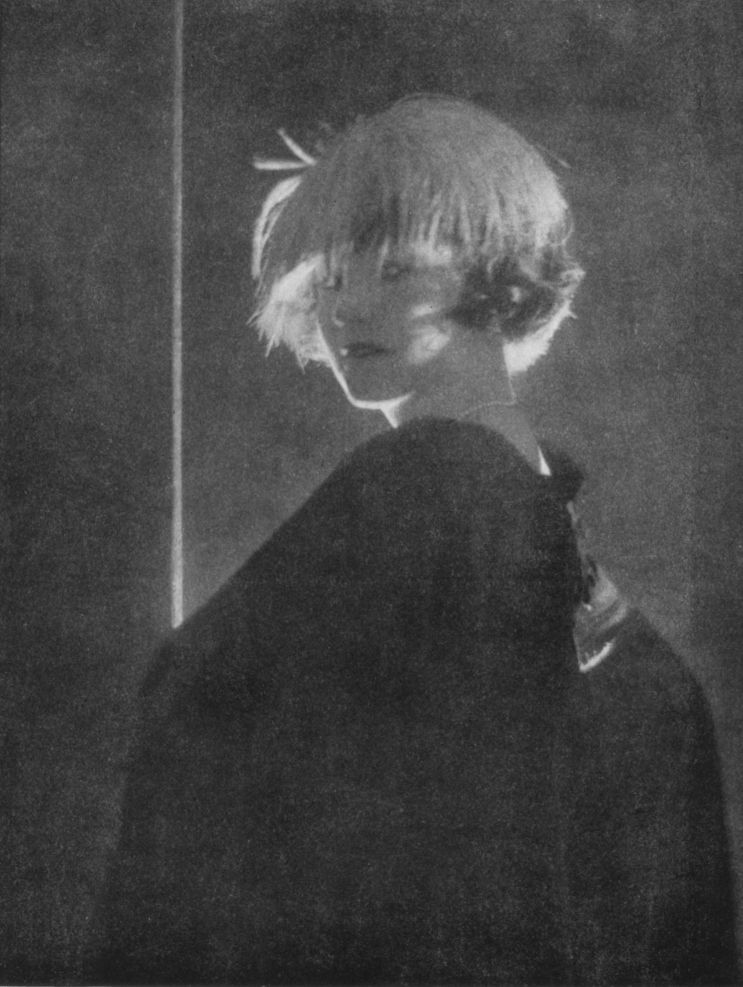
Read tons of books on art and photography. Read about well known photographers through history, and learn why they were important, or ground breaking. You can start way back, for free via the Gutenberg Project, with books like "Pictorial Photography in America, 1920". It's a period where photographers were trying to get photography recognized as fine art. This is a time of lenses that were soft, lending a painterly, or drawn quality to the images.

flurries.jpg


mscastle.jpg


While you are learning about proper exposure, think about creative exposure as well.The technical aspect of photography isn't difficult. The creative side is. I always opt for learning more than you need to know, rather than focussing your learning on, let's say, portraiture. Learning all you can gives you a larger visual vocabulary that can lend itself to portraiture.

You will forever be learning about composition. I still read anything I can get my hands on, looking for new insight, and varied applications of what I already thought I knew.
 
Bitter, I just downloaded "Pictorial Photography in America, 1920" Can you recommend any others from the Gutenberg Project?
 
I think there are the years 1921 and 1922 as well.
I don't know of any others, because I found those, and never remembered to look for an index for the project.

Please PM me and tell me what you think, how it challenges your ideas of focus and ideal exposure!


To the OP, I forgot to add, as you learn composition, look for it EVERYWHERE!movies, TV, print ads, cartoons, architecture. There are foolish people here that tell you "rules are meant to be broken". Hogwash! As you recognize the theories of composition being applied all around you, everyday, you will see their value.
 
Will do! i look forward to reading it :thumbup:
 

Create an account or login to comment

You must be a member in order to leave a comment

Create account

Create an account on our community. It's easy!

Log in

Already have an account? Log in here.

New Topics

Back
Top Bottom