What's new

Slow shutter focus vs blur

Starskream666

No longer a newbie, moving up!
Joined
Jul 6, 2011
Messages
598
Reaction score
56
Location
England, West Yorkshire
Can others edit my Photos
Photos NOT OK to edit
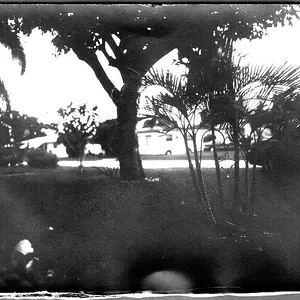
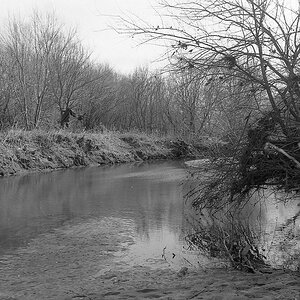
I've got a question. Why when the shutter is down for a long exposure (say 30 seconds) why can a tree be in focus and sharp, ye the camera picks up the movement of water and clouds and turns them silky smooth. Why does it not blur the motion of the branches moving in the wind or the grass blowing in the wind, why is everything not one big blur
 
I think a lot of long exposure shots of running water are ruined by the moving trees/leaves...

but really, think about the amount of movement captured in water compared to a tree that might be gently swaying in a gentle breeze. It's going to be roughly stationary over the span of time. I'm sure if you zoomed in 3:1 you'd see plenty of motion captured.
 
my other point i forgot to mention is that. If you stand in the frame and try to stand as still as possible (as still as a twig ;) ) the movement is seen easily and its blurry
 
The wind doesn't always blow. But when it does, and strong enough to move tree limbs, then they will get blurred. It's also possible to take two images.. one with a long exposure to blur the water, and a short one to get the trees sharp, then combine them in post.
 
my other point i forgot to mention is that. If you stand in the frame and try to stand as still as possible (as still as a twig ;) ) the movement is seen easily and its blurry

but if you were laying dead, just as inanimate as the twig, you'd both be perfectly in focus...
 
I've got a question. Why when the shutter is down for a long exposure (say 30 seconds) why can a tree be in focus and sharp, ye the camera picks up the movement of water and clouds and turns them silky smooth. Why does it not blur the motion of the branches moving in the wind or the grass blowing in the wind, why is everything not one big blur

It does.
 
my other point i forgot to mention is that. If you stand in the frame and try to stand as still as possible (as still as a twig ;) ) the movement is seen easily and its blurry

you moved.
 
I've got a question. Why when the shutter is down for a long exposure (say 30 seconds) why can a tree be in focus and sharp, ye the camera picks up the movement of water and clouds and turns them silky smooth. Why does it not blur the motion of the branches moving in the wind or the grass blowing in the wind, why is everything not one big blur

Ok, well first thing is motion is relative. It's going to depend on how much something moves and how fast it moves as to how much blur will result. It will also depend on how close or how far away the object is from the lens. The tree in your example is nice and sharp because it isn't moving relative to the camera. So your long shutter speed doesn't matter - the tree is in one position when the shutter opens and remains in that same position for the entire 30 seconds. As for the branches, it depends on how much they move in that 30 second time frame and how quickly they move. If their relative motion is small then the branches can remain sharp depending on your DOF. If they are moving violently most likely you'll get blur. Blow up the photograph and look at the individual leaves, my guess is you see some motion blur there - but most likely they are small enough in the original that you don't notice it.
 
One of the considerations of long exposures is the effect of something in a specific position 'long enough' to register on the sensor.

36 years ago, I took a 30 second or so shot of the Magic Kingdom Castle at Disneyland in Anaheim at dusk. Someone walked through the frame while the shutter was open. There's no 'residue' of them walking through, BUT, their white tennis shoes were in one place long enough to leave 8 nice tennis shoe 'walking' images through the bottom of the frame. Just last week, I was taking some 8-10 second exposures of decorated Christmas trees and someone walked through the image. They didn't even register at all.

So...why did the leaves appear to not be moving? As mentioned above, zooming in on the picture you might see some blurring. But, if the leaves spent 90% of the exposure time in their 'normal' (un-blown) position and 10% in 100 minutely different positions, the 10% wouldn't be apparent and the 90% is what you'd see.
 

Create an account or login to comment

You must be a member in order to leave a comment

Create account

Create an account on our community. It's easy!

Log in

Already have an account? Log in here.

Back
Top Bottom