If you can't get a sharp image of the moon, it may not be your fault... astro-photos are subject to a problem called "seeing". Atmosphere turbulence creates distortions making images slightly wobble and blur.
By way of analogy: imagine you've got a penny laying on the bottom of a swimming pool. You are trying to read the date on that penny by looking at it through a powerful scope. If someone starts splashing in the pool to create lots of waves it will be EXTREMELY difficult for you to get a sharp image of the penny. But if the pool is completely calm, it'll be much easier.
You can use this website to check the "seeing" conditions where you live (this website is very popular among amateur astronomers... especially if they are imagers):
Clear Sky Chart Homepage
The factors listed are cloud cover (which is obvious), transparency (the transparency of the air usually attributed to the amount of water vapor in the air), "seeing" (the turbulence), and "darkness" (light pollution from ground-based light sources -- which doesn't matter a whole lot when you're trying to look at the brightness of the full moon.)
Special lenses are typically NOT required to photograph the moon. If you think about it, the Sunny 16 rule should apply to the moon (Sunny 16 says that when shooting a subject in full-sun, you can set the f-stop to 16 and set the shutter speed to the inverse of the ISO speed. E.g. if using ISO 100, then set the shutter to 1/100th). While the moon is "technically" in full sunlight, I've never been able to expose it at the Sunny 16 exposure... usually I'm 2 stops down from that (I could shoot at f/16, 1/100th, and ISO 400).
BUT... if the "seeing" conditions are not favorable (and they're usually even worse when shooting objects near the horizon because you're looking through a lot more atmosphere) then even with a fast shutter speed and a solid tripod and a remote release and all the other tricks to avoid shaking the camera, you'll still struggle to get a sharp image of the moon.



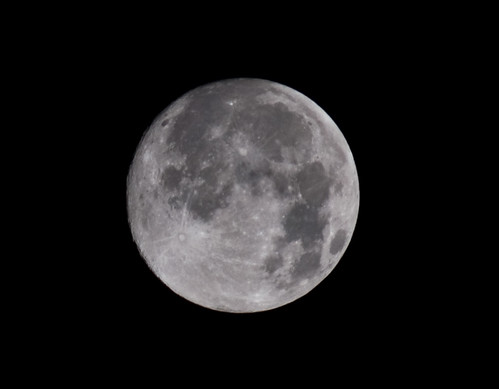
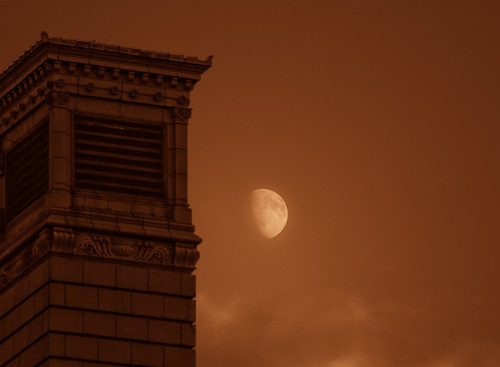
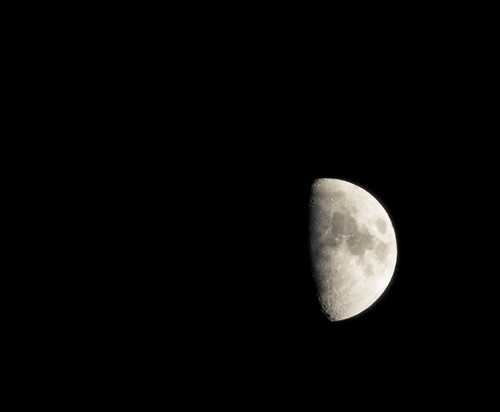


 Tried it with an eclipse several years ago (different camera) and they came out in the OK-not-great category.


![[No title]](/data/xfmg/thumbnail/36/36660-bd2cdec38aac6e50675fa36657307cba.jpg?1734169171)

![[No title]](/data/xfmg/thumbnail/36/36659-4b8fd1b317df0e73ccfe5775494a6f5a.jpg?1734169171)