What's new

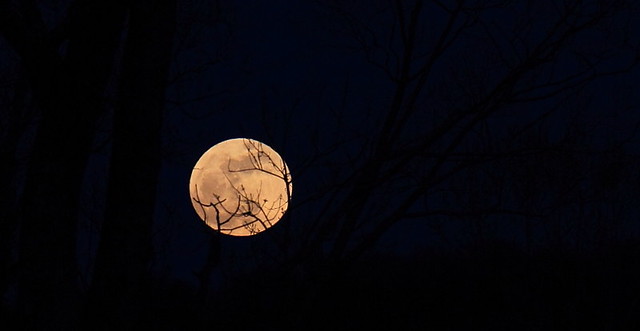
Supermoon this Sat. Beginners who like to shoot full moon, get ready.

Hi to all... I sure was excited shooting the Super Moon... with my D90. Sure enough, never done it before. So I hit the web, forums, wiki... and most recomendations in between.
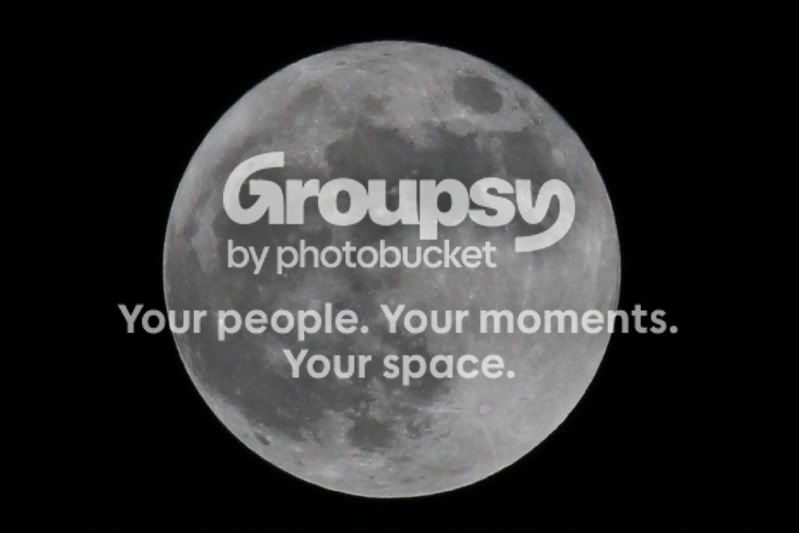
So even after almost 30 shots with different settings, I can not get passed the fuzzy white ball. No features... and defffinitly overexposed look. Here is range os settings I have tried:
Manual
Focus to infinity
F/16 or 11 or 8 (some 5.6)
ISO 1 or 200, 400
Shutter 1/125, 250-400
Pause 10 sec.
Menu/Custome Setting Menu/ (d)(Shooting/display)/ (d10) Exposure delay mode/on
Meetring 10

Please help.

Here is a link to all MOSTLY failed shots: Flickr: sanelbabic's Photostream

I also shoot with the D90. Here are a few things that I found helpful:

Put focus point on single point focusing (pick the center point). Then, when your are happy with the focus, switch to manual so that the camera won't mess with the focus again.

Put the metering mode on spot metering, then meter off the moon. Since the moon is still a very small spot, you'll still have to adjust the shutter speed a bit. Keep your aperture to f8 or f9 as that is supposed to be the sharpest.

Set your ISO to 200 and pick an aperture. Get your focus. Then the only variable to play with regarding exposure is your shutter speed.

Don't forget to sharpen the image in post.

Don't expect to see many craters in a full moon. You need tangential light falling on the craters to create shadows that will give it a 3 dimensional look.
 
Last edited:
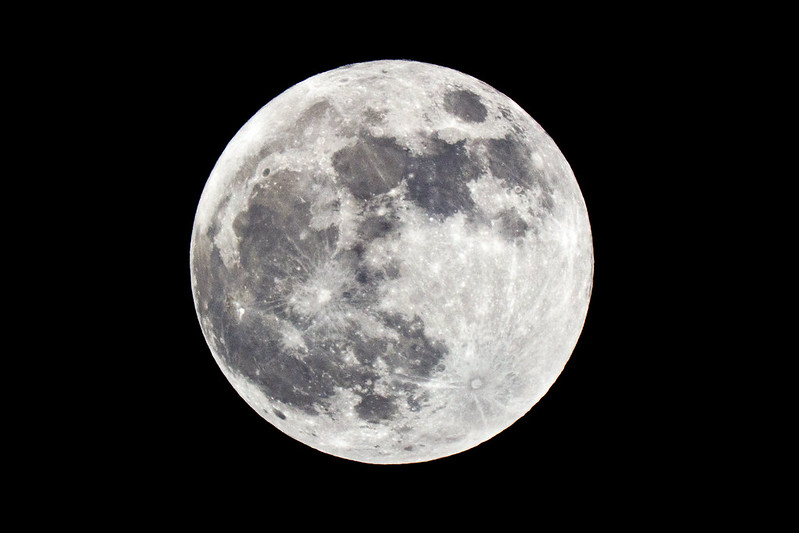
My first attempt ever. I probably should have captured these RAW but I didn't.

Canon T2i, M mode, 1/640sec, F/14, ISO400

2012_05_05-0028Moon.jpg
 
Super Mooooooooon!


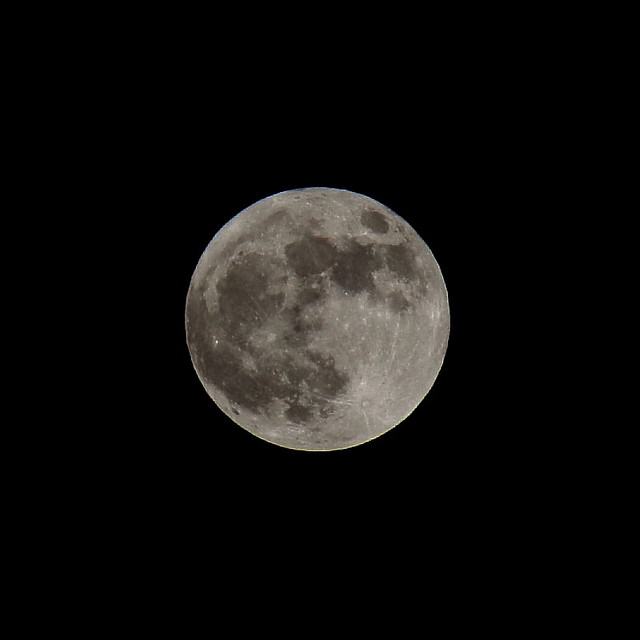
Canon EOS 60D
0.008 sec (1/125)
f/25.0
800 mm
ISO 500
 
sigh.. i had to pick up my parents at the airport. It was super big! By the time I got home, cloud everywhere!
 
Hi to all... I sure was excited shooting the Super Moon... with my D90. Sure enough, never done it before. So I hit the web, forums, wiki... and most recomendations in between.
So even after almost 30 shots with different settings, I can not get passed the fuzzy white ball. No features... and defffinitly overexposed look. Here is range os settings I have tried:
Manual
Focus to infinity
F/16 or 11 or 8 (some 5.6)
ISO 1 or 200, 400
Shutter 1/125, 250-400
Pause 10 sec.
Menu/Custome Setting Menu/ (d)(Shooting/display)/ (d10) Exposure delay mode/on
Meetring 10

Please help.

Here is a link to all MOSTLY failed shots: Flickr: sanelbabic's Photostream


Your image (DSC_0174) Has an iso speed of 400, an aperture of f/5.6 and an exposure time of 1/30, and appears over-exposed by one stop. In contrast, the previous image (DSC_0173) has similar settings except for an iso of 3200. That is three stops of exposure more than you ended up needing in the image DSC_0174.

When I shoot the moon, I ignore the meter and autofocus. If you have live-view, focus on the moon with the magnified live-view (which means VR should be off, and AF should be off), and set the exposure manually. I prefer to use the lowest ISO (100 in my case, 200 in yours), an f/stop which is the sharpest for your lens (usually 2 stops from wide open), and a shutter speed in the 1/30 to 1/125 sec. Then you examine the image – if too dim, reduce your shutter speed and try again.

The histogram is usually useless because the moon makes up such a small part of the overall image (unless you are using a lens in the 1000mm range). But the basic rule is that if the details of the moon are washed out, reduce your exposure, and keep reducing it until you have the level of detail you want.

Of course, other things also help ensure a sharp image – a solid tripod, mirror-lockup if you have it, a remote shutter, and a shutter-delay will all help to eliminate the camera shake vibrations that can blur the detail.

When you shoot the moon in context (ie, low on the horizon and you want to see the foreground), then timing is critical. The full moon occurs just when the sun sets, and the illumination level falls rapidly. At the same time, the moon tends to be dim when just on the horizon, due to the amount of atmosphere that the moon light has to go through. So the brightness difference (dynamic range) between the moon and the surroundings is low at the beginning. As the moon climbs upward, it becomes brighter (less atmosphere), and at the same time the landscape becomes darker (as the twilight progresses to night). So within minutes the brightness difference between the moon and the detail on earth become sufficiently strong as to exceed the dynamic range of the camera.

What this means is that if you want to shoot a "full" moon with foreground detail, it is best to do this one or two days BEFORE the actual full moon, as the moon will already be in the sky before the sun sets, and the dynamic range difference between the moon's brightness and the earth will be low. This is what TCampbell noted in another post.
 
pgriz said:
What this means is that if you want to shoot a "full" moon with foreground detail, it is best to do this one or two days BEFORE the actual full moon, as the moon will already be in the sky before the sun sets, and the dynamic range difference between the moon's brightness and the earth will be low. This is what TCampbell noted in another post.
Would the same apply one or two days after?
 
Ah thanks, that makes sense.
When I was googling trying to figure that out I came across an article that said the next full moon will only be a couple % smaller than this one was so since I failed to get the shot I wanted this time round I'm going to give it another go then :)
 
Why are people using lens apertures like f/25, f/11, f/14, f/16?

There can be no DoF benefit from a small aperture since the moon is about 13.2 billion feet from the earth (about 250,000 miles).

Use your lens 'sweet spot' - sharpest focus lens aperture and avoid any chance of softening focus from diffraction.

You're already battleing having to shoot through 50 miles worth of moving atmosphere that is going to soften your focus to some extent. That's why they put a telescope in earth orbit, to get it above the sharp image killing atmosphere.
 
Why are people using lens apertures like f/25, f/11, f/14, f/16?

There can be no DoF benefit from a small aperture since the moon is about 13.2 billion feet from the earth (about 250,000 miles).

Use your lens 'sweet spot' - sharpest focus lens aperture and avoid any chance of softening focus from diffraction.

You're already battleing having to shoot through 50 miles worth of moving atmosphere that is going to soften your focus to some extent. That's why they put a telescope in earth orbit, to get it above the sharp image killing atmosphere.

I read an article on shooting the moon. When shooting a BRIGHT moon, the sunny 16 rule applies, especially when shooting at a focal length of 300mm or more. So that is probably why they are using fstops so low. I only have an 18-55mm lens, I shot RAW, so I wasn't able to get the detail, but here was my 1st attempt at the moon. because I didn't have the lens, I didn't need to use a low aperture. I shot RAW and at least it doesn't look like a white glob. Wish I would have had a better lens!
ISO 100
A 4.0
SS: 1/250


$moon0.webp
 
My first attempt ever. I probably should have captured these RAW but I didn't.

Canon T2i, M mode, 1/640sec, F/14, ISO400

You have the "My Photos Are NOT OK to Edit" sign, so I cannot upload my version of your moon. But, please increase sharpness and contrast, and result will be more pleasant, even starting from JPEG.
 
It was such a busy day -- lots of household chores, and of course it was Derby Day, Cinco de Mayo, and Super-moon day simultaneously!

This meant I was obliged to drink at least 1 mint julep, 1 margarita, and take at least 1 photo of the moon. It turns out I only did 2 out of those three things. ;)

I actually was thinking that I'd take the moon photo. It was forecast to be mostly cloudy, but the skies were starting to clear. I thought I was going to get lucky. But as the sun started to set, the clouds rolled back in and all I'd have ended up with is a very nice photo of the bottom of some cloud.
 
Why are people using lens apertures like f/25, f/11, f/14, f/16?

F/11 was apparently my sweet spot after some quick research, I really need to do my own testing at some point.
 
Here are my best shots. Totally missed the shot I wanted because I was in entirely the wrong spot so worked with what I had.


Last edited:

Create an account or login to comment

You must be a member in order to leave a comment

Create account

Create an account on our community. It's easy!

Log in

Already have an account? Log in here.

Back
Top Bottom